
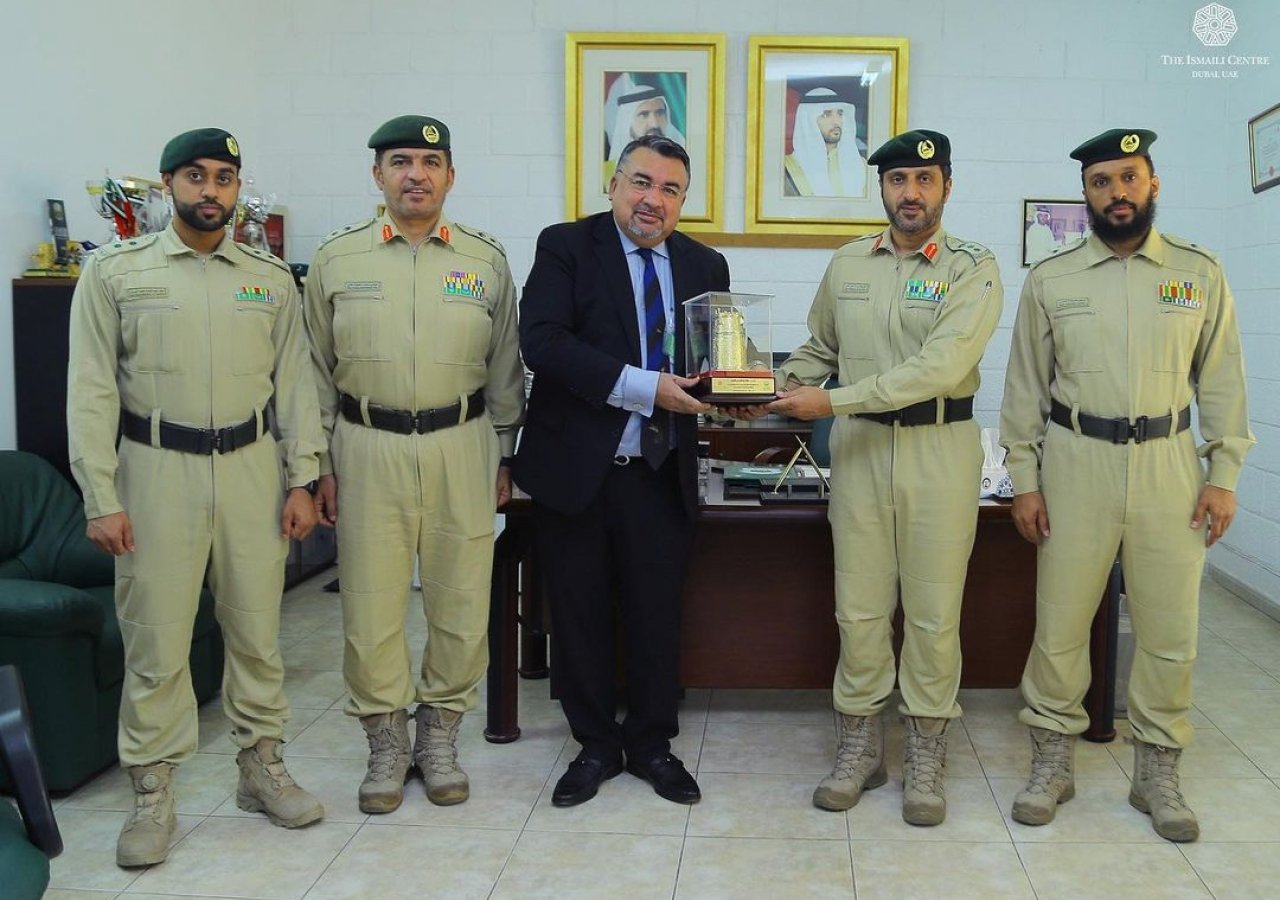
The United Arab Emirates is characterized by the professionalism and discipline of the police, as well as modern management of the law. The role of the police force in the cities such as Dubai and Abu Dhabi has been critical in ensuring that the populations are safe, the tourism sector is enhanced and also to secure the lives of the residents of these areas.
The knowledge of the UAE Dubai police helps an individual to be aware of the way the system operates, who is in charge, and the way duties are arranged in the police force.
When you have ever noticed the police officers in Dubai who have various badges and shoulder insignias, you may have questioned yourself about what those ranks are all about.
This is a guide to the entire UAE police rank in simple terms to make it easy to understand the level of hierarchy that is applied throughout the nation.
Among the interesting facts, it is worth noting that the UAE police ranking system depends on the global policing models, but it is adjusted to a local leadership culture.
Highlights:
- UAE Dubai police rank in full hierarchy.
- Description of the rank of officers and enlisted personnel.
- Dubai Police contribution to the safety of the population.
- Promotion system and training explained.
- Common questions regarding the policing system of the UAE.
Overview of UAE Police Rank Structure
Police forces in the UAE are also organized in structure, just like the military organizations. This guarantees a good command, discipline and efficiency.
Dubai Police and Abu Dhabi Police which are the major police departments are under the ministry of interior.
Ranks are broken down into three major levels.
- Officer ranks
- Ranking Noncommissioned officer.
- Enlisted police personnel
There is a different level of responsibility and authority.
The higher levels are concerned with leadership and strategy whereas the lower levels deal with operational policing and work in the field.
UAE police rank at senior officers’ levels
The senior officers are leaders, and they lead big departments or divisions of the police force.
These ranks are in charge of implementing the policy, law enforcement strategy, and coordinating with the government authorities.
Common senior ranks include:
- General
- Lieutenant General
- Major General
- Brigadier General
- Colonel
An emirate has a General who normally heads the whole police organization.
Abdullah Khalifa Al Marri is an example of the Commander in Chief of Dubai Police.
The senior officers are usually long serving and experienced officers in leadership.
Mid-Level Officer Ranks
The middle level officers are in charge of the operational teams, and they oversee the police units.
These ranks are the mainstay of the police activity and serve as a conduit between the top management and the officers on the street.
Examples of common mid-level ranks are:
- Lieutenant Colonel
- Major
- Captain
- Lieutenant
The officers in this rank are in control of specialized units which may include:
- Traffic departments
- Criminal investigation departments.
- Patrol divisions
- Security units
They also liaise with emergency services and the government agencies.
Enlisted Ranks and junior Officer
Junior ranks deal with the day-to-day policing activities such as patrol, traffic surveillance and incident response.
These are the officers that are the most visible in the police force.
Common lower grades are:
- First Lieutenant
- Sergeant Major
- Sergeant
- Corporal
- Police Constable
These are the officers who are directly working with the community and uphold law and order in the open places.
Their duties include:
- Patrolling neighborhoods
- Managing traffic
- Assisting tourists
- Responding to emergencies
Efficiency of officers at such levels of operation is part of the reason why Dubai is regarded as one of the safest cities in the world.
Comparison of the UAE Police Ranks
The following is a simplified version of a table depicting the ranking of the UAE police ranks in the highest to lowest order.
| Rank Level | Rank Title | Primary responsibility |
| Senior Command | General | Head of police force |
| Senior Command | Lieutenant General | Deputy leadership |
| Senior Command | Major General | Department leadership |
| Senior Command | Brigadier General | Regional command |
| Senior Command | Colonel | Unit leadership |
| Mid Level Officers | Lieutenant Colonel | Operational command |
| Mid Level Officers | Major | Department Supervision |
| Mid Level Officers | Captain | Team leadership |
| Junior Officers | Lieutenant | Field officer leadership |
| Enlisted | Sergeant | Patrol supervision |
| Enlisted | Corporal | Field Operations |
| Enlisted | Police Constable | Entry level Policing |
This is a hierarchical structure that guarantees command and control.
Rank Insignia and Uniform Identification
The police officers in the UAE have a very unique insignia displayed on their uniforms, which signifies their position.
These badges are found on shoulder boards and collars.
For example:
Stars indicate officer rank
The signs of national emblems signify the high rank leadership.
The ranks of noncommissioned officers are usually marked by stripes.
Tourists in Dubai are likely to experience these symbols when they communicate with police officers at the airports, malls or during events in the city.
Dubai police uniforms are modeled in a way such that they appear professional but at the same time they have strong national identity.
Understanding police ranks assists people in respecting authority and identify the leadership hierarchy that ensures the safety of cities.
Dubai Police Contribution to Public Safety
Dubai Police is acknowledged at international level due to its integration of technology and conventional policing solutions.
The department implements high sophisticated tools such as:
Smart police stations
AI powered surveillance
Luxury patrol vehicles
Drone monitoring systems
These inventions enable officers of all ranks to be swift when responding to emergencies and upholding high security levels.
Dubai is one of the cities that is frequently ranked as one of the safest cities in the world.
Training and Promotion at UAE Police
The UAE has professional training institutions of police officers.
Dubai Police Academy is one of the large training centers.
Training includes:
- Law enforcement education
- Physical fitness programs
- Investigation techniques
- Public safety management
- Technology training
The police force relies on experience, performance and leadership skill as a factor in promotion.
During their career, officers can advance in different ranks.
Women in UAE Police Forces
The role of women in the law enforcement in the UAE becomes more significant.
Female officers work in most of the departments such as:
Criminal investigation
Border security
Community policing
Cyber-crime units
Their input is used to make the police force more inclusive and effective.
Over the last several years, Dubai Police has been encouraging gender diversity.
UAE Police Recognition at the International Level
UAE police have become the world leaders in their efficiency and innovation.
Dubai Police is known to have a fleet of luxury patrol cars such as Lamborghini and Ferrari cars that it uses in its tourism policing.
These cars ensure that one can reach out to the tourists and make people associate the city of Dubai as a modern city.
Although the luxury image is there, the central agenda is the excellence in the public safety and law enforcement.
FAQs
What is the topmost police position in Dubai?
Dubai Police have the highest rank, which is the position of General, generally, the Commander in Chief.
Who leads Dubai Police?
Abdullah Khalifa Al Marri is the Commander in Chief of Dubai Police.
Does UAE police experience a parallel with military ranks?
The UAE police rank system does adopt military-type ranks; the ranks include General, Colonel and Major.
What is the number of ranks in UAE police?
It has various ranks such as Police Constable at the base level up to the top leadership rank of General.
Is it possible to include foreigners in police of the UAE?
The UAE nationals are mostly assigned to most police jobs, though the foreigners can work in the specialized fields like consultants or experts.
Do women serve in UAE police?
Yes, women are in different positions such as investigation, administration and community policing.
Conclusion
The UAE Dubai police rank system is aimed at ensuring discipline, efficiency, and good leadership in the law enforcing agencies in the country. There is the entry level officers that patrol the streets and the senior generals that handle the strategies of national security and each rank has a significant role to play.
The fact that Dubai was ranked as one of the safest cities in the entire world is a sign of how well the police force is professional and that there is clear hierarchy which contributes towards effective policing.
The knowledge of this structure enables the residents, tourists, and researchers to appreciate the way in which law enforcement works in the UAE.
With the country still embracing the use of modern technologies and expanding the public safety programs, UAE police officers of all ranks will be still at the core of ensuring that order is maintained and communities are safe.