
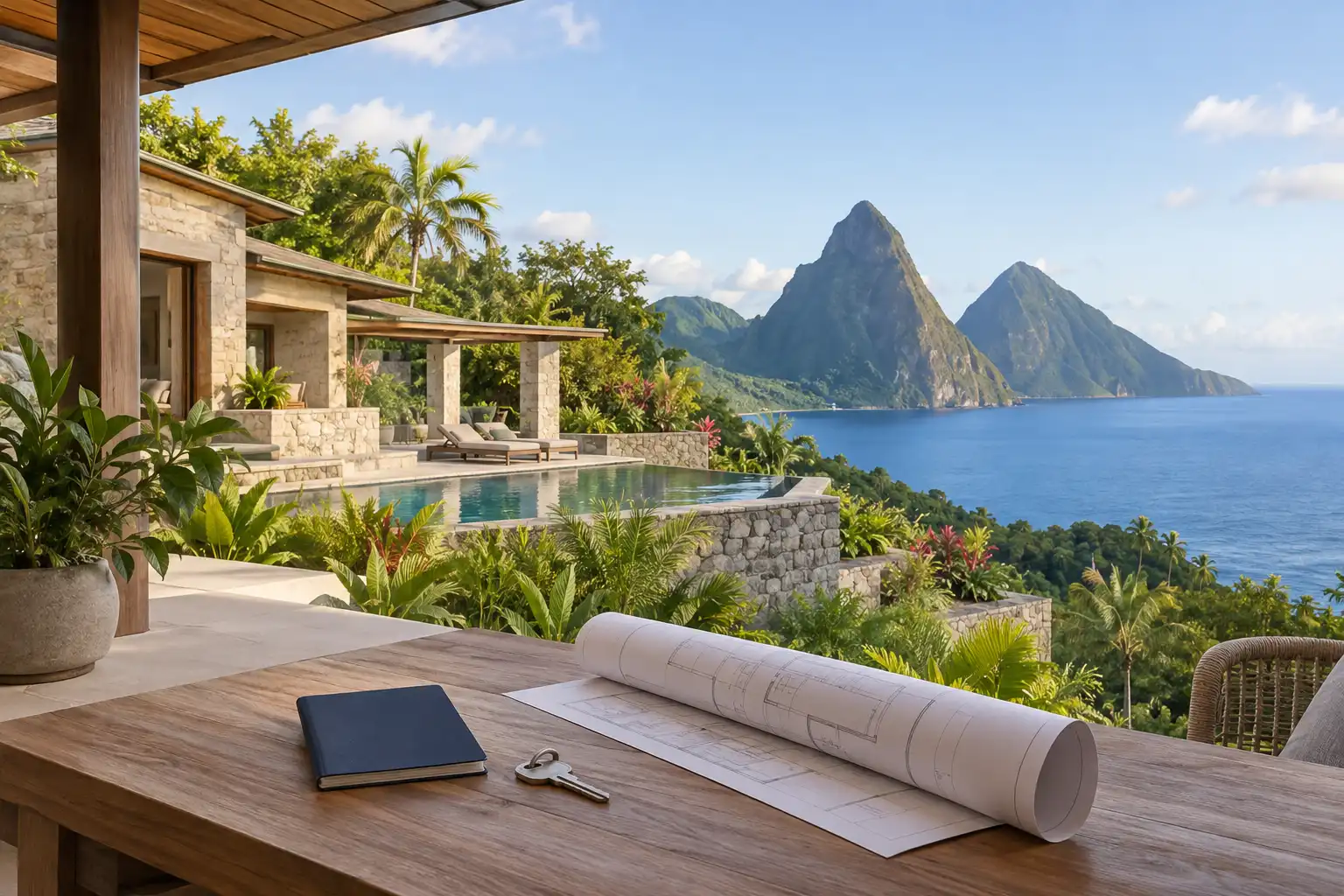
Citizenship by investment St Lucia and the property deals behind it
A developer sends over a presentation for a resort villa in Rodney Bay, and the margins of your printout fill up with questions. Good. Migrate World’s page on St Lucia citizenship by investment real estate describes a route that runs through qualifying resorts, villas or condominiums, so the asset you choose sits at the center of the whole application.
Anyone weighing citizenship by investment St Lucia through property has two jobs at once. The asset has to be sound, and it has to qualify. A glossy brochure rarely answers either question, so every answer should land on paper, not in a sales call.
St Lucia citizenship by investment real estate and the minimum investment
Start with the entry requirement, because everything else hangs on it. Through property, an applicant commits a set minimum to sanctioned real estate projects, and the exact figure belongs in writing before any deposit moves. The word to underline is sanctioned. The money has to go into projects approved for the route, not into whichever listing happens to catch your eye.
The qualifying assets are resorts, villas and condominiums. So ask the developer for written confirmation that your specific unit sits inside a sanctioned project. Then compare the sticker price in the presentation with the investment figure in the paperwork. If the two don’t match, find out why before anything gets signed.
Location comes second. Rodney Bay, Marigot Bay and Castries are the names buyers keep returning to, and each shapes rental demand and resale in its own way. But a great address can’t rescue a project that doesn’t qualify, so treat location as a filter you apply after eligibility, not before.
One habit pays off early. Keep a single running document that records every promise made out loud, with the date and the person who made it. When the written terms later differ from what was said in the room, that log gives your attorney something concrete to work with.
Citizenship by investment in St Lucia and the five-year holding period
Buying is only the first half of the deal. Investors who take the real estate route hold the asset for a mandated five-year period, and during that time they can earn returns through dividends or rental income. When the period ends, they can sell their property shares to recoup the initial investment. Ask, too, how those dividends or rental income are calculated, because a projected figure in a brochure and a payment that actually arrives are two different things.
That structure explains why the exit deserves as much attention as the entry. The route is designed so an investor can attain a second citizenship within a few months and recover the invested capital within five years. In practice, you’re parking money for half a decade, and the real test is how cleanly you can get it back out.
Before you commit, put these holding-period questions to the developer in writing:
- Who covers maintenance, insurance and management fees over the five years, and how do those costs reduce your return?
- Are returns paid as dividends or as rental income? Ask whether any figure is guaranteed or simply projected.
- What is the exit route when the period ends? Get in writing who buys the shares and on what terms.
- Are there transfer fees, approvals or conditions attached to selling your shares once year five has passed?
Vague answers are information too. A developer who can’t explain how shares change hands after year five is telling you something about the project.
St Lucia citizenship by investment programme and how to vet a property deal
Treat the St Lucia citizenship by investment programme as a financial decision first and a travel document second. A project can be eligible and still be a poor purchase. The criteria for property buyers run long, but they reduce to a handful of checks that protect your money.
Budget is where enthusiasm does the most damage. The minimum investment is the entry point for the route, not the total cost of owning the asset, so add legal fees, furnishing and ongoing costs to your own spreadsheet before you decide what you can afford.
Those checks, drawn from the criteria for buyers, look like this:
- Have a local attorney review the contracts and the legal and regulatory framework before you pay a deposit. Local experts spot what an overseas buyer won’t.
- Do your own due diligence on the asset itself, with a thorough inspection, instead of trusting renderings.
- Confirm how the purchase will be financed and what happens to your cash flow if rental income comes in below the projection.
- Weigh infrastructure and accessibility. A villa that’s hard to reach is harder to rent and harder to sell later.
- Look at environmental factors and the regulations that come with them, which matter for property near the coast.
- Research tourism trends and likely demand, since rental income depends on guests actually booking the place.
None of this is exotic. It’s the discipline a careful buyer would bring to any overseas purchase, with one extra layer, because the property also has to qualify.
Take the tourism point seriously in particular. Rental income only helps if the asset stays booked, and that depends on demand you can research rather than hope for. Developers who welcome these questions are the ones worth keeping on the shortlist. Ask each of them for the same set of documents, so the comparison stays fair.
Property types that fit different investment goals
Goals change the answer more than budget does. Someone who plans to use a villa personally for a few weeks a year weighs things differently from an investor who wants it booked all season. A family planning seasonal stays might favor a residential unit, while an investor who never intends to visit may care only about management quality. For citizenship by investment in St Lucia, the market offers six broad options, and each one carries its own trade-off:
- Residential units, such as homes, condos and apartments, offer flexibility, from personal use to vacation or long-term letting.
- Luxury villas with ocean views and premium amenities point toward rental income and potential appreciation.
- Vacation rentals like beachfront condos or villas lean on the island’s strong tourism industry to generate rental income.
- Land suits patient investors, since undeveloped plots open the way to future development or to holding for potential appreciation.
- Commercial properties, such as office or retail space, can yield steady income for investors who prefer tenants to guests.
- Real estate development can lead to substantial returns, though it suits larger budgets and an appetite for larger-scale commitments.
One caution applies to all six. The route asks for sanctioned projects, so a strong yield story means little until you’ve confirmed that the specific project qualifies. Eligibility first, return second.
Before the next meeting with a developer, collect three things. Get written confirmation that the project is sanctioned, the full cost set against the minimum investment, and a clear description of how and when shares can be sold. Then hand the paperwork to a local attorney. Handled in that order, citizenship by investment St Lucia becomes a property decision you can defend, not a leap of faith.