
Home Blog Page 23

Currency Pair Trading Strategies for UAE Investors

0
Currency Pair Trading Strategies for UAE Investors

Introduction: Advanced Approaches to Forex Markets

The United Arab Emirates has positioned itself as a sophisticated financial center where investors increasingly seek advanced strategies beyond basic currency trading. For UAE residents who have mastered fundamental forex concepts, developing refined trading approaches becomes essential for consistent profitability. The combination of the UAE’s strategic timezone location, excellent connectivity, and zero taxation creates an ideal environment for implementing sophisticated trading methodologies.

According to the Bank for International Settlements, daily forex turnover exceeds six trillion dollars, with the majority occurring during overlapping trading sessions that align perfectly with UAE business hours. This timing advantage allows Emirates-based traders to participate during peak liquidity periods when spreads tighten and price movements become more predictable. However, success requires systematic approaches, psychological discipline, and continuous adaptation to changing market conditions.

Understanding Different Trading Styles

Choosing Your Approach

Different trading styles suit different personalities and schedules. Day trading involves opening and closing positions within the same trading day, requiring constant market monitoring and quick decision-making. This approach suits UAE residents with flexible schedules who can dedicate several hours daily to active trading during European and American sessions.

Swing trading holds positions for several days or weeks, capturing larger price movements while requiring less screen time. This style works well for professionals with demanding careers who cannot monitor charts continuously. Position trading takes an even longer view, holding trades for months based on fundamental analysis and major trend identification.

Scalping represents the most intensive approach, making dozens of trades daily for small profits on each. This requires excellent execution speed, tight spreads, and significant time commitment. Most traders in Dubai and Abu Dhabi find swing trading offers the best balance between time commitment and profit potential, allowing them to maintain their primary careers while building trading income gradually.

Technical Analysis Fundamentals

Multi-timeframe analysis provides comprehensive market perspective by examining currency pairs across different timeframes simultaneously. Professional traders check monthly and weekly charts for major trends, daily charts for intermediate direction, and hourly charts for precise entry timing. This layered approach prevents fighting major trends while attempting short-term trades.

Price action trading focuses on candlestick patterns and support-resistance levels without indicators. Key patterns include pin bars at significant levels, inside bars during consolidations, and engulfing candles signaling momentum shifts. Support and resistance zones represent areas where previous buying or selling occurred in sufficient volume to reverse price direction.

Indicator combinations provide valuable confirmation when used selectively. The RSI shows overbought-oversold conditions, moving averages identify trends, and MACD reveals momentum changes. Combining these tools filters false signals that any single indicator might generate. However, avoid cluttering charts with dozens of indicators – professionals typically use only two or three alongside price action.

Comparing Trading Approaches

Trading StyleTime CommitmentTypical Hold TimeDaily TradesStress LevelBest For
ScalpingVery High (6+ hours)Minutes20-100Very HighFull-time traders
Day TradingHigh (4-6 hours)Hours5-20HighActive traders
Swing TradingLow (1-2 hours)Days to weeks1-5 weeklyMediumPart-time traders
Position TradingVery Low (30 mins)Weeks to months1-2 monthlyLowBusy professionals

This comparison helps UAE investors select approaches matching their available time and temperament. Those with demanding careers should avoid scalping or day trading despite their appeal, as insufficient attention leads to losses. Swing trading typically suits Emirates residents best, allowing participation without dominating daily schedules.

Risk Management Essentials

Effective risk control separates successful traders from those who eventually lose everything. These principles form non-negotiable foundations that every UAE trader must follow:

  • Never risk more than 2% per trade – calculate position size based on your stop-loss distance 
  • Use stop-loss orders on every position – never enter trades without predetermined exits 
  • Maintain maximum portfolio exposure of 6% – don’t have more than three positions risking 2% each 
  • Take partial profits at key levels – secure gains while letting portions run for larger targets 
  • Keep detailed trading journals – document every trade to identify patterns and improve 

Position sizing calculation proves critical but often misunderstood. If your account holds 50,000 AED and you risk 2% per trade, maximum loss should be 1,000 AED. If your stop-loss sits 50 pips away, calculate lot size allowing exactly 1,000 AED loss if stopped. This mathematical precision prevents emotional position sizing leading to overleveraging.

Fundamental Analysis for Currency Traders

Central bank policies drive currency valuations more than any other factor. Interest rate differentials between countries directly affect exchange rates. When the Federal Reserve raises rates while the European Central Bank holds steady, USD typically strengthens against EUR. Understanding each central bank’s mandate and economic conditions helps anticipate policy shifts before markets fully price them.

Economic data releases create regular trading opportunities. Employment reports, inflation figures, GDP numbers, and manufacturing indices provide insights into economic health. Strong data typically strengthens currencies while weak data pressures them. For UAE traders, following the economic calendar becomes essential as major releases trigger significant volatility.

Geopolitical events cause sudden currency movements. Political instability, trade disputes, elections, and international conflicts affect exchange rates substantially. UAE residents often recognize implications of Middle Eastern developments before distant traders, providing an information advantage when regional events impact global risk sentiment and energy-linked currencies.

Practical Implementation for Emirates Traders

Optimal trading hours for UAE timezone: The overlap between European and American sessions (16:00-20:00 UAE time) offers maximum liquidity and volatility. Major pairs like EUR/USD experience tightest spreads during this window. Asian session (02:00-10:00 UAE time) suits range-bound strategies since volatility remains subdued except during Australian or Japanese data releases.

Currency pair selection: Major pairs like EUR/USD, GBP/USD, and USD/JPY offer tightest spreads and most predictable behavior. Cross pairs like EUR/GBP provide opportunities during specific economic divergences. Exotic pairs involving emerging markets offer higher returns but with wider spreads and less reliable patterns unsuitable for beginners.

For investors seeking comprehensive market access and educational resources, platforms like fbs-ar.com/ar provide tools for tracking economic calendars alongside real-time charts and analysis. These integrated platforms help UAE traders make informed decisions by combining technical analysis capabilities with fundamental news feeds and risk management calculators.

Common Mistakes to Avoid

Overcomplicating Analysis

Beginners often add dozens of indicators believing more information improves decisions. Reality proves opposite – excessive indicators create conflicting signals causing hesitation. Professional traders use only two or three indicators alongside price action, having tested and understood them thoroughly. Master simple approaches completely before adding complexity.

Ignoring Market Regimes

Trading the same strategy regardless of conditions guarantees failure. Trending markets require momentum-following approaches while ranging markets demand mean-reversion strategies. Spend time before each session assessing whether major pairs trend or range, then select strategies matching those conditions.

Poor Trade Management

Many traders focus exclusively on entries while neglecting trade management. Where you enter matters less than how you manage positions afterward. Moving stops to breakeven too quickly, failing to take partial profits, and letting winners turn into losers by not having exit plans all undermine potentially profitable strategies.

Building Sustainable Success

Consistent profitability requires treating trading as serious business rather than gambling. Develop a comprehensive written plan documenting your strategy, risk parameters, and rules for various market conditions. This plan prevents emotional decisions during stressful moments when discipline wavers.

Maintain detailed records of every trade including entry reasoning, exit reasoning, and lessons learned. This journal reveals patterns in both successful and unsuccessful trades. Most traders repeat mistakes because they lack systematic feedback forcing conscious examination of decisions.

Continuous education remains essential throughout your career. Markets evolve constantly, and previously effective strategies may lose edge. Dedicate weekly time to studying price action, reading professional analysis, and reviewing your performance metrics. Consider specializing in specific pairs or setups rather than attempting to trade everything.

Conclusion: Your Path Forward

Forex trading offers UAE residents exceptional opportunities combining favorable regulations, zero taxation, and optimal timezone positioning. However, these advantages mean nothing without proper education, disciplined execution, and patient skill development. The path to consistent profitability requires dedication exceeding what most anticipate.

Start with comprehensive education covering technical analysis, fundamental drivers, and risk management. Progress through extended demo trading where mistakes teach without financial cost. When transitioning to live trading, begin with minimal position sizes focusing on process rather than profits. As competence develops, returns can increase proportionally.

Remember that professional traders spent years developing skills through thousands of trades. Approach forex as a marathon requiring sustained effort, not a sprint promising quick wealth. Markets reward patience and discipline while punishing impatience and emotional decisions.

 

New Zealand’s Restrictions Rules: Changes and How to Apply

0
New Zealand's Restrictions Rules: Changes and How to Apply

New Zealand is an amazing place to live, with stunning scenery, friendly people, and a slow and relaxed pace of life. In recent years, it’s been difficult to move there, with loads of paperwork to complete and difficulties meeting the rules around residency. That’s changing in 2025. With 73,400 Kiwis leaving the country in the last year, the government is interested in being more open to talented people coming to New Zealand.

This post will go on to discuss the new residency rules for New Zealand, what hasn’t changed, and how applicants can apply for residence. If you are interested in living in New Zealand, you will want to read this post to see what’s possible.

Why New Zealand is Changing Its Rules?

People are leaving New Zealand, doctors, tech workers, and tradespeople, because of high housing costs and better jobs elsewhere. The government’s worried about shortages in key jobs, so they’re relaxing residency rules. In February 2025, they eased investor visa rules, dropping English tests and time-in-country requirements. Now, they’re opening more paths for skilled workers. Immigration Minister Erica Stanford said they’re fixing the system to bring in talent. But there are still limits to keep things balanced.

What does Residency mean?

A Resident Visa lets you live, work, and study in New Zealand forever. You don’t need to renew it, and you get access to healthcare, schools, and the ability to buy property (with some limits for foreigners). After five years, you can apply for citizenship.

To get it, you usually apply through the Skilled Migrant Category (SMC) or other specific streams. You must be 55 or younger, speak good English (like IELTS 6.5), and pass health and character checks. A criminal record or serious illness like untreated TB can block you.

The benefit? You can settle in a country where the average wage is NZ$33/hour, and you can work remotely from small towns or cities. But the rules are strict to protect local jobs.


The Big Three Pathways to Residency

New Zealand’s residency options boil down to a few core routes. I’ll focus on the most popular ones: skilled work, investment, and family ties. Each has its hurdles, but they’re doable with planning.

1. Skilled Migration: If You Have the Expertise

This is the go-to for professionals. The Skilled Migrant Category (SMC) Resident Visa is points-based – think of it like a scorecard for your job skills, experience, and qualifications. You need at least 6 points to enter the pool, then get selected if you hit 180 overall (though that’s easing up).

Key requirements:

  • A job offer in a skilled role (ANZSCO level 1-3) paying at least the median wage (around NZ$31/hour as of 2025).
  • Relevant qualifications (bachelor’s or higher) or experience.
  • English proficiency (IELTS 6.5 or equivalent, unless exempt).
  • Up to 3 points for NZ work experience, but wait, that’s changing (more on that soon).

Then there’s the Green List, a fast-track for in-demand jobs. Tier 1 (Straight to Residence) covers 19 roles like doctors, teachers, and IT specialists. Apply directly if you have the qualifications and a job offer. Tier 2 (Work to Residence) lets you work two years in roles like electricians or chefs, then transition.

Restrictions here? Your job must be genuine, and some sectors (like low-skilled labor) are off-limits for residence. Family can join if you are the main applicant.

2. Investor Route: For Those with Capital to Deploy

If coding’s not your thing but you have got savings burning a hole in your pocket, the Active Investor Plus Visa (aka the golden visa) might fit. It’s for high-net-worth folks who invest in the economy.

As of April 2025, it’s simpler:

  • Two categories: Growth (NZ$15 million over 4 years) or Balanced (NZ$5 million over 3 years).
  • No English test needed.
  • Just 21-88 days physical presence per year (down from more before).
  • No age cap.

In September 2025, they added a perk: Investor visa holders can now buy or build one residential property, easing a big ban on foreign buyers. Applications have spiked, especially from the US and China. Restrictions? Investments must be “acceptable” bonds, shares, or new businesses, not passive stuff like art. And you can’t just park money; it has to grow the country.

3. Family and Other Paths: Tying the Knot or Starting a Business

Got a Kiwi partner? The Partner of a New Zealander Resident Visa is straightforward: prove your relationship’s genuine (shared finances, photos, the works), and you’re in after two years together. Parents and kids have options too, but waits can stretch years due to quotas.

Entrepreneurs can go for the Entrepreneur Work Visa: Invest NZ$100,000+, run a business for two years, then apply for residence. Or the Global Impact Visa for innovators tackling big issues like climate change.

Across all, common bars include serious criminal records or health issues that cost the system over NZ$52,000/year.

What Can Stop You?

Even with easier rules, there are still hurdles. After three years on an AEWV, you must leave New Zealand for 12 months before applying for another work visa. This stops people from staying too long without committing to residency.

Wage rules are loosening in 2025; thresholds for seasonal jobs and multi-entry visas will be introduced for experienced workers and short-term ones for recent graduates. However, the skilled jobs’ criteria still require a wage of at least the median wage, which is to protect local workers’ job opportunities.

Your family can accompany you, but your partner and children will need qualifications or proof that you can support them in total. Investors will need NZ$5-15 million for the Active Investor Plus visa category, though the rules regulating English and time in New Zealand have gotten a bit easier.

There are health criteria, and issues like HIV or active cancer may be blocked if not managed properly. A criminal record, like a DUI, would be a problem. English is required, though partners of citizens may get a waiver. Some things aren’t easy to bounce back from, like overstaying, accepting a job offer, and switching jobs without letting the immigration office know first. They would also be strict with employers in circumstances where they are not operating in accordance with the immigration instructions.

How to Apply?

Here are the main options:

  • Skilled Migrant Category: Earn points for age (up to 30 if under 30), qualifications (up to 70 for PhDs), experience (up to 30), and job offers (50 for high-skill jobs). You need 160+ points. New pathways make local experience easier.
  • Work to Residence: Work 24 months in 30 months in Green List jobs like doctors or chefs to go straight to residency.
  • Investor Streams: Invest NZ$15 million for Growth (3 years) or NZ$5 million for Balanced (5 years).

Start by checking your eligibility on immigration.govt.nz. Submit an Expression of Interest (EOI) for SMC; it costs NZ$530 and is not refundable. Look for jobs on Seek.co.nz or LinkedIn, and attend local industry events. Plan for NZ$3,000-5,000 in visa and moving costs. Processing takes 6-9 months, faster for Green List roles.

Tips to Make It Easier

Expats who succeeded shared advice. One Australian added community volunteering to his EOI for extra points. A Filipino nurse practiced English with free apps before arriving.

Do: Keep records of all jobs and qualifications. Get your credentials checked by NZQA early. Join expat groups on Facebook for support. Don’t: Focus on what New Zealand lacks; show what you offer. Don’t skip paperwork; it’s key for appeals if you are rejected.

Final Thoughts

New Zealand’s residency rules are getting friendlier, but they are still strict to manage who comes in. The 2025 changes, including new pathways in mid-2026, make it easier for skilled workers, tradespeople, and investors to settle. If you are a nurse, coder, or builder, this could be your chance. Check your eligibility, get your documents ready, and start applying. New Zealand’s waiting, why not take a shot?


Travel Made Easy at Abu Dhabi’s Central Bus Station

1
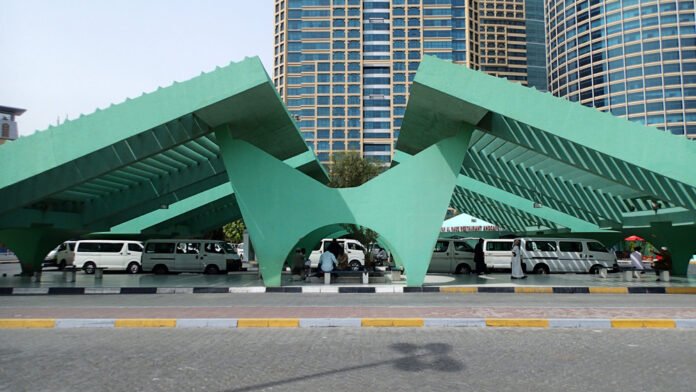
Abu Dhabi’s Central Bus Station

Discovering Abu Dhabi’s Hub: The Central Bus Station That Ties It All Together

Every urban center has that one location, where people’s paths cross, strange beginnings occur over coffee, the in-at-home rush home, and distracted visitors try to figure out what’s next. In Abu Dhabi, the Central Bus Station. Situated in the beating heart of the city, it is alive and buzzing with a space that is both chaotic and charming. Buses pull in to drop off tired beachgoers from Yas Island or shoppers from Dubai, while the air smells of fresh falafel from nearby shops. The station is more than a transit area; it is the start and end of your trip, with a bonus of not always knowing the specifics.

In this guide, we will provide you with the essentials as a tourist, where to find them on the map, and how to develop your perfect route. Whether you are a local trying to avoid some traffic or a visitor waiting for sunset, stick with us, and you will be navigating like a local in no time.

Abu Dhabi’s Central Bus Station Location

Once you get your bearings and know where you are, finding the Abu Dhabi Central Bus Station is pretty simple. It is located in the Al Wahda district, which is technically in Zone 1 on the street name, Rashid Bin Saeed Al Maktoum Street (locals call it 2nd St for short). You can find it with GPS under both names, or if you’re coming from the north, Sultan Bin Zayed the First Street will land you right at the entrance. It’s just a short detour from Muroor Road, too, if you’ve been weaving your way through the main corridors of the city.

Why is this profitably situated? It is centrally located without the chaos of some of the downtown locations. Al Wahda is connected to Ghent in daily life, and picture markets and over 100 high-rise buildings (mixed-use office blocks and family-style apartments). It is also about a 30-minute drive to Abu Dhabi International Airport to the east and about a short trip to the west for the stunning waterfront, known as the Corniche. Taxis line the drop-off zones, of course, and for those traveling on foot, it has shaded walking areas connected to spots around it, like Al Wahda Mall, where you can have an acai bowl after arriving. There is a reason this allurement is popular with hundreds of morning to late-night revelers alike; it makes accessing it easy.

Internal and External Routes

The true allure of the Central Bus Station is found in its routes, which are neatly divided into internal jaunts that are limited to the city area and external legs that carry you quite far across the borders of the UAE. Internal lines whisk you off to all the best things to do in Abu Dhabi. You can take bus A2 straight to the airport’s terminals 1 and 3, just about an hour’s ride for AED 3.67 to 11, and of course, there are always stops along the way, like the Mariam Bint Said Mosque. Interested in culture? You will be there in under 30 minutes, riding bus 094 to the Sheikh Zayed Grand Mosque for a flat AED 3.67. Adventure-seekers will note that buses 160 or 216 are available to take you to Ferrari World via Khalifa City on a 2-hour adventure for AED 7.35 to 11.02. And don’t forget #175 to Yas Mall, which takes 1.5 hours for between AED 3.67 to 7.35, and is a great way to combine shopping with some island fun!

The bus routes are also an exciting experience, which connect Abu Dhabi to its neighbors as a smoothly running system. Dubai’s central hub is at E100 to Al Ghubaiba or E101 to Ibn Battuta Mall, taking you 1.5-2.5 hours and costing AED 25-33 (every 30 minutes). Next, head east with the X90 to Al Ain Central Bus Station, a denial through the desert for about 2.5 hours for AED 25-30. Northbound, take the E100 or 117 to Sharjah’s Al Jubail (2-3 hours, AED 29-33), or keep going all the way to Ras Al Khaimah (4-6 hours, AED 66-99) past dunes and date palms. Even Umm Al Quwain is on the 117 bus route, although this takes about 5 hours along the coast for a price of AED 62-81. Each line is air-conditioned and reliable for long-distance travel.

Abu Dhabi’s Central Bus Station Local Routes

The local routes create a network from the station that connects Abu Dhabi’s neighborhoods like the rhythm of a daily routine. Multiple city buses take numbers like 101, 110, 120, and 162 to residential pockets and everyday life. For example, Bus 110 takes you to the industrial streets of Mussafah in a 34-minute ride for AED 3.67-7.35, a perfect trip for a worker or a run to the warehouse. At the same time, 034 or 022 goes to Marina Mall in 26-36 minutes, allowing you to see the waterfront views or spend time shopping for that price.

In addition to the mall, some other local lines, 32, 56, A1, 34, 54, 52, and 055 will travel the less densely populated, quiet pockets. Saadiyat Island, for example, is culturally alive and a laid-back neighborhood that offers family-friendly areas like Abu Dhabi Mall. For an island feel, 11 will take you to Yas, and transiting east from those routes, X60, X62, X65, X80, and X87 will serve the suburbs like the eastern fringes of Al Ain. The fare remains low, usually AED 2-5, with stops accessing locations like the shopping mall, schools, clinics, or souks. It will be a smart option for a budget-minded adventurer. Riders comment about the seamless rides, and trips usually take less than an hour without needing to connect to another bus.

Abu Dhabi’s Central Bus Station Schedule

Timetables at the Central Bus Station keep things predictable, but it never hurts to quickly check before heading out. Local buses start around 6 AM and finish by 11 PM, so you’ll have a full day of sunlight to explore. Intercity bus services run longer — usually from 5 AM until 10 PM with some like the E101 to Dubai 24/7, running every half hour starting with its first bus at 4:30 AM up until the last at 2 AM. The X90 bus to Al Ain runs every hour all day long, no biggie.

Slight changes may occur on weekends, mostly just varying crowds on Fridays, but, depending on the delay in getting through the check-in line at the station, this could change after Fridays of a long weekend. Between the hours of 7-9 AM and 5-7 PM, you’ll find the bus may be a little cramped; during those hours, ride if you have to, but plan to ride off hours for extra elbow room, trust me.

Apps like Moovit or Darbi will provide real-time updates on bus arrival times and bus departure schedules pulled from the Department of Transport timeframe. A real pro-tip: once you get to the Central Bus Station, take a photo of the electronic digital boards, posted as you walk in the door, because it will give you an accurate timetable down to the minute!

Nearby Attractions and Neighborhood

The station’s neighbourhood also serves as a gateway to laid-back fun. The vibe of Al Wahda is heavy on family and community feel: Crescent Park on the corner is awash with expat families grilling kebabs, and the streets are filled with young professionals grabbing shawarma after work. A little less than six more minutes into two parks is Delma Park, providing shaded picnics and play areas for a brief escape from the heat. If you walk to the Al Wahda Mall, just a lazy fifteen-minute stroll, you can expect a plethora of cinemas, hypermarkets, and food courts that are on offer anywhere else globally; you can get Lebanese mezze or Korean BBQ and not even leave the area.

Venture a bit beyond that, and the Gold Souq is only ten minutes on foot, nestled among the hustle of vendors, eye-catching gold jewelry, and vendor peddlers trying to engage you in bargaining with hand-carved crafts. Twelve minutes on foot brings you to Al Bateen Palace, and its gardens and waterfront views paint part of the history of the area. It is bathed in between the communities of Al Markaziya and Al Danah, working up from waterfront views, beautifully constructed apartment complexes share the streets near cafes where Emirati coffee will not stop pouring. This other local’s experience serves as a good representation of authentically Abu Dhabi – culturally diverse, open and welcoming, always one bus to Yas Island or Saadiyat Island, where the beaches or art await.

Facilities and Quick Tips

To begin, the station’s layout enables easy transitions between bus and waiting areas. The air-conditioned lounges are plush with plenty of seating and free Wi-Fi so you can rejuvenate. There are food courts dishing out everything from Arabic sweets and freshly made salads. You can access kiosks to purchase tickets using Hafilat cards, cash, and there’s luggage storage available (up to 32kg for regular bags and oversized luggage). Ask staff for help. There are clean restrooms and charging plugs in the hallways, and parking lot fares range from AED 2 to AED 5 per hour.

Travel tips: Arrive 30 minutes before your scheduled departure to get your seat, get your ticket, and avoid any lines. Hydrate (with water!) like it’s your job. The desert sun is extreme, and it is difficult to stay hydrated if you are not consistently drinking. There are dedicated places on the bus for special needs (including ramps). If you have trips, you can call 800850, and a Happiness team member will come to remedy the situation as soon as possible.

Conclusion

The Abu Dhabi Central Bus Station isn’t fancy, which is its advantage, a no-nonsense connector, allowing “getting there” to be part of the experience. The station will get you from quick loops around the local area to monumental road trips around the UAE. You will be handed the keys to explore without the hustle and bustle of booking a taxi or rideshare. When the plans call for a hop around the capital or an evening in Dubai, let this location do the heavy lifting for you. Purchase a ticket, pick a window seat, and watch the skyline develop. Abu Dhabi is waiting, and which route will call first?

UAE Petrol Prices: What is the Current Status at the Pump?

0
UAE Petrol Prices: What is the Current Status at the Pump?

Fuel prices affect everyone in the UAE – from daily commuting across Dubai’s busy highways to long road trips across Abu Dhabi’s large landscape. With global oil markets swinging wildly, drivers in the UAE often check their apps or news feeds monthly, asking themselves if the next petrol fill will cost a further hole in their wallets. The start of October 2025 brings a modest bump in prices, emphasizing how interconnected price increases are to global events. This is always a topic of conversation at coffee shops and family gatherings. While prices may have only gone up by a few fills, it adds up quickly for households and businesses.

The article will provide information on the new prices, the various changes, the experience with the current world prices, and how they relate to the price variation of Petrol fuel. The article will give readers clear facts and figures, a timeframe with a combination of tips, compared to stability, allowing readers to draw their own conclusions on managing shared gasoline and how prices affect very basic daily living.

Current UAE Fuel Prices for October 2025

Starting on October 1, 2025, the UAE Fuel Price Committee announced the new fuel prices, which are higher across the board compared to September. These prices will be the same throughout the nation at stations like ADNOC, ENOC, and Emarat. Here are the costs for each type of fuel:

  • Super 98: Dh2.77 per liter
  • Special 95: Dh2.66 per liter
  • E-Plus 91: Dh2.58 per liter
  • Diesel: Dh2.71 per liter

These prices are based on official announcements and are the poster price before VAT or other fees at the pump. Super 98, the high-octane option desired by high-performance cars, is the most expensive, while E-Plus 91 is the least expensive for everyday cars. The retail price of diesel, which is used by the truck and commercial fleet industry, is also more expensive than last month.

Drivers in Sharjah and Ras Al Khaimah will pay the same price in Dubai, which ensures consistency between emirates. These prices will stay in place until the end of the month, and there will be an adjustment at that point.

Recent Changes and Updates

October rates extend the rising trend of the last few months. Relative to September 2025, Super 98 increased from Dh2.70 to Dh2.77, up by 7 fills. Special 95 increased from Dh2.58 to Dh2.66, up by 8 fills. E-Plus 91 moved from Dh2.51 to Dh2.58, and diesel increased from Dh2.63 to Dh2.71.

This is in line with a trend in August, when Super 98 was Dh2.69 and Special 95 Dh2.57. In July, the levels were the same, with Super 98 at Dh2.70. Prices went down earlier in the year, in June, to Dh2.58 for Super 98, bringing some relief following higher prices in March (Dh2.73).

Price updates occur monthly, typically released on the final day of the prior month. UAE media such as Khaleej Times and Gulf News publish them promptly, usually with comparisons to enable monitoring of the changes. In October, the committee attributed the primary cause to increasing global crude oil benchmarks.

How Fuel Prices Are Determined in the UAE

Fuel prices in the UAE have a simple system implemented years ago in 2015, when the rates were liberalized to match global markets. The Fuel Price Committee, which falls under the Ministry of Energy and Infrastructure, has a monthly meeting to determine the figures.

They make decisions based on worldwide trends in oil, comparing S&P Global Platts benchmarks for petroleum products. That encompasses average crude oil and refined fuel prices. Regional demand and supply chain expenses factor into it, but the essence is linking local rates to global averages.

In contrast to fixed subsidies in other nations, this method is transparent and responsive. Prices are reviewed at the end of the month, with changes based on the previous period’s market performance. This maintains UAE prices competitive and spares excessive government interference.

Historical Trends in UAE Petrol Prices

Retrospection puts current numbers into perspective. Since deregulation in 2015, prices have oscillated in tandem with worldwide happenings, from oil booms to pandemics.

Here’s a table of recent historical prices, drawn from reliable records:

MonthSuper 98Special 95E-Plus 91Diesel
October 20252.772.662.582.71
September 20252.702.582.512.63
August 20252.692.572.502.78
July 20252.702.582.512.63
June 20252.582.472.392.45
May 20252.582.472.392.52
April 20252.572.462.382.63
March 20252.732.612.542.77
February 20252.742.632.552.82
January 20252.612.502.432.68
December 20242.612.502.432.68
November 20242.742.632.552.67
October 20242.662.542.472.60


Trends reveal highs in early 2025, such as February’s Dh2.74 for Super 98, probably because of winter demand and supply constraints. Low points in mid-year, such as June’s Dh2.58, were due to normalized markets. Averages around Dh2.60-Dh2.70 for top-grade premiums remained constant over the last year, with diesel behaving in similar patterns but occasionally differing depending on industrial requirements.

In the longer term, 2022 recorded highs of over Dh4 in times of global scarcity, while 2020 lows fell below Dh2 through lockdowns. These fluctuations depict the UAE’s vulnerability to global forces.

Factors Influencing Fuel Prices

A variety of factors drive the changes observed every month. The first is the global crude price, which is primarily influenced by OPEC+ actions, production cuts, and demand from large nations such as China and the US. Geopolitical instability, including conflict in oil-producing nations, could increase prices overnight. Eventual disruptions in supply due to maintenance, repairs, or shipping delays are also significant. Exchange rate fluctuations are also significant, given that oil is sold in US dollars and the dirham is pegged, providing some stabilization, but it does not eliminate the effects.

The UAE’s position as a global oil exporter offers an insulated impact domestically, as the imported and refined products are still based on wider markets. There are also seasonal fluctuations, which are most likely seen during the summer vacation. Green policies driving cleaner fuels may impact future trends, but existing rates center on more conventional benchmarks.

The Impact on Consumers and the Economy

Increased prices strike wallets straight. For the common driver refilling a 50-litre tank with Special 95, October’s price translates into approximately Dh133, against Dh129 in September, a difference small but noticeable upon repeated refilling.

Households experience it in transportation expenses, likely reducing consumption elsewhere. Companies, particularly logistics and building firms, experience increased operating costs, which may be transferred to consumers through costlier commodities and services.

Conversely, alignment with international markets benefits the UAE economy by promoting efficiency and easing subsidy costs. Oil revenues finance diversification into technology and tourism. Stable prices breed investor confidence, with expected costs facilitating planning.

For expats and locals, price-tracking and station-tracking apps become a must-have. On balance, hikes are painful, but transparency in the system makes it easier for all to adjust.

Tips to Save on Fuel Costs

Smart choices stretch each dirham at the gas pump. Begin with car maintenance: Regular tune-ups, tire inflation, and clean air filters improve efficiency up to 10%.

Drive smart, don’t accelerate too quickly, drive at steady speeds, and use cruise control on the highway. Group errands to reduce trips, and for shorter trips, try carpooling or public transportation like Dubai’s Metro for city commutes.

Use the appropriate fuel: Not all vehicles require Super 98; refer to the handbook for suggestions. Programs such as ADNOC’s or fuel finder tools identify less expensive stations; however, prices remain consistent.

In the long term, electric or hybrid cars become more attractive as the number of charging points increases. Governmental subsidies for EVs may balance increased initial costs against volatile petrol prices.

Conclusion

UAE fuel prices are an ever-changing aspect of everyday life, with October 2025’s changes highlighting the connection to worldwide forces. From today’s Dh2.77 for Super 98 to past fluctuations, comprehending the system enables more informed choices. This configuration mixes market realities with economic objectives, even amidst challenges.

Remaining updated through official means keeps surprises to a minimum. With the world moving towards renewable energy, these costs may change further. Meanwhile, drivers can concentrate on efficiency to make the strain easier to absorb, ensuring smooth traveling in the future.

Mina Rashid Screening Center Services & Facilities

0
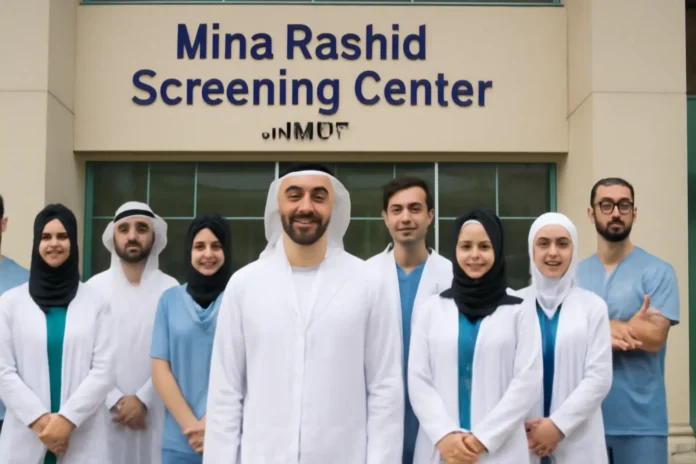
Mina Rashid Screening Center Services & Facilities

As a dynamic urban center for trade, tourism, and innovation – particularly with its remarkable ports – Dubai is home to many new health facilities, and the Mina Rashid Screening Center is one of its most established. Located within this busy setting, the Mina Rashid Screening Center is a bona fide health Center providing timely and dependable screening services as part of the city’s multifaceted lifestyle. Whether it is for ocean-going mariners preparing for voyages or residents searching for routine checks, the Mina Rashid Screening Center will provide modern, effective screening services for today’s clients.

In this article, we will take a closer look at the Mina Rashid Screening Center to discuss its services, role, and some practical tips for a smooth experience.

What is the Mina Rashid Screening Center?

The Mina Rashid Screening Center serves as a unique health care service located within Port Rashid in Dubai. The center focuses on disease prevention and provides a variety of healthcare-related services to maintain high standards of public health. People come to the center to get a quick diagnosis for illnesses, screening required by employers or residency programs, or to receive routine medical checks on their health. The Mina Rashid Screening Center is notable for its low costs and fast results, further demonstrating the UAE’s commitment to providing accessible healthcare to residents, visitors, and workers in Dubai, without breaking the bank for staff, travelers, and tourists.

While primarily providing healthcare services to the maritime industry, it is a public healthcare service, offering services from basic lab work to advanced standalone diagnostic services in the community to help people achieve their health requirements for employment or before traveling, general health and wellness checks. The Mina Rashid Screening Center is known for its efficiency, with the latest lab and diagnostic equipment, staffed with senior lab and diagnostic professionals prepared to take the patient’s health requirements for employment, even travel, or simply for health or wellness into quick, comprehensive care. In a fast-moving location like Dubai, being able to manage your health is a unique way of addressing the challenge of maintaining the urgent nature of health-responsive care without compromising care.

What makes it unique ties back to its port integration. Mina Rashid has historically functioned as a major hub for trade and cruises, and the screening center prioritizes health in this active zone. It started to fill the demand for dependable medical checks, particularly for mobile workers like ship crews and cruise personnel. Since then, it has grown to encompass community health initiatives, turning it into a reliable option for preventive measures.

Location and How to Get There

Positioned within Port Rashid, the Mina Rashid Screening Center lies close to the Seafarers’ Club and Dubai Customs. This central placement benefits marine staff, cruise visitors, and locals from neighborhoods such as Al Raffa, Bur Dubai, and Al Mina. Its spot in the heart of Dubai connects it well to major roads, steering clear of remote access issues.

Reaching it stays simple. Drivers can enter via the port’s main gate, following signs straight to the center. Parking is available at the entrance, but it gets crowded during high-traffic periods. Public transport options include the Al Ghubaiba Bus Station for buses, then a quick 10-minute taxi hop. The Green Line metro also stops at Al Ghubaiba for easy transfers. Ride-sharing like Careem or Uber can drop riders right at the door, just specify “Mina Rashid Screening Center.”

Steer clear of peak hours to dodge port congestion. Entry involves a fast security ID check that doesn’t drag on. The site’s mix of harbor atmosphere and city convenience brings a distinct vibe, complete with ship and sea views that highlight Dubai’s seafaring heritage.

Who Uses the Mina Rashid Screening Center?

A varied group depends on the Mina Rashid Screening Center, including visitors, residents, expatriates, and business clients. Marine employees lead the pack, given its tailored support for things like pre-sailing health verifications. Cruise passengers frequently visit for necessary tests before embarking or upon arrival.

Expats rely on it for residency extensions, where obligatory exams align with UAE health guidelines. Companies dispatch staff for yearly assessments or group programs, valuing the center’s speed. Nearby residents pop in for everyday tests, attracted by its ease and official DHA endorsement.

It also draws in people requiring approvals for work permits or trips, especially to places with tough health mandates. As global mobility picks up in 2025, it remains a trusty resource for health-focused individuals navigating demanding schedules.

Types of Tests and Services Offered

The Mina Rashid Screening Center offers an extensive lineup of tests and services. General check-ups feature Complete Blood Count (CBC), cholesterol assessments, blood pressure monitoring, diabetes evaluations like FBS or HbA1c, kidney and liver function analyses, and vitamin checks for D and B12.

For job and residency purposes, it includes chest X-rays, blood screenings for HIV and Hepatitis B & C, urine tests, and TB detection, with outcomes available in 24-48 hours. Infectious disease options encompass COVID-19 PCR (regular and fast-track), influenza A/B, hepatitis series, HIV, syphilis, and TB.

Cancer detection services provide mammograms, PSA for prostate, occult blood with colonoscopy links, HPV, and Pap smears. Imaging covers digital X-rays and ultrasounds. Vaccinations range from COVID-19 (as available), flu jabs, to travel essentials like typhoid, Hepatitis A/B, and yellow fever.

Additional specialized efforts include business health bundles, mobile testing units, and public drives such as complimentary mammograms or cardiovascular awareness events. This broad selection addresses both standard and pressing health demands.

Required Documents for Testing

Heading to the Mina Rashid Screening Center calls for straightforward prep; pack your Emirates Identity Card, passport, and any employer or doctor referral notes. These essentials accelerate sign-in and link you to appropriate services.

Travel-specific tests require your schedule or booking proof. Share contact info for result notifications through email or SMS. Masks are suggested in certain zones, even if not required everywhere. Prepping these items minimizes delays and streamlines the whole trip.

How to Book an Appointment

Securing a slot at the Mina Rashid Screening Center keeps things easy. Dial the toll-free line at 800-1717 to arrange one. Walk-ins get accommodated, though busier times mean extended queues.

Digital booking stands out via the UAE Health Services Portal, letting you choose services, slots, and verify with your Emirates ID. The DHA app delivers comparable mobile convenience. Reservations prove smart for quick tests or peak cruise times to guarantee availability.

On-site flow starts with registration, payment, and then sample gathering. Personnel assist throughout, maintaining smooth operations.

Opening Hours

The center’s timetable suits Dubai’s energetic pace, running from 8:00 AM to 8:00 PM on Sundays through Thursdays and Saturdays. Fridays are trimmed to 8:00 AM to 12:00 PM. Holiday schedules may shift, so verify via the portal or a call.

These hours flex for night-shift folks and voyagers, allowing visits that sync with daily demands.

Costs and Processing Times

Pricing at the Mina Rashid Screening Center remains budget-friendly. Basic packages start at 120 AED; fuller ones reach 300 AED. Standard COVID-19 PCR tests go for 50 AED, while job screenings cost 250 AED. PCR tests range from 150-300 AED, depending on speed.

Perks include discounts up to 30% for students, no-cost options for those over 60, and reduced rates for laborers. Payments are accepted in cash, cards, or insurance tied to your Emirates ID.

Turnarounds differ: Blood work wraps in 24-48 hours; express COVID PCR delivers same-day or within 24 hours. Sessions span 30 minutes to two hours based on volume and needs. Results come digitally or for collection.

Conclusion

Overall, the Mina Rashid Screening Center has a vital role within the health ecosystem of Dubai by helping to connect people living or working within the port’s reach. Although it’s located within a port facility that recognizes the heritage of Dubai’s maritime roots, it is also a convenient facility for anyone coming to, or through the port, and gives the result of the analysis completed either before traveling, renewing a passport, or anyone wanting to be proactive towards their health. The Screening Center has the full range of testing, from standard bloodwork to health assessments, all of which should be accessible to any healthcare need, with an efficient booking process and affordable prices that change the perception of fear of seeking treatment.


Riyadh Comedy Festival 2025: Dates, Lineup, and Events

0
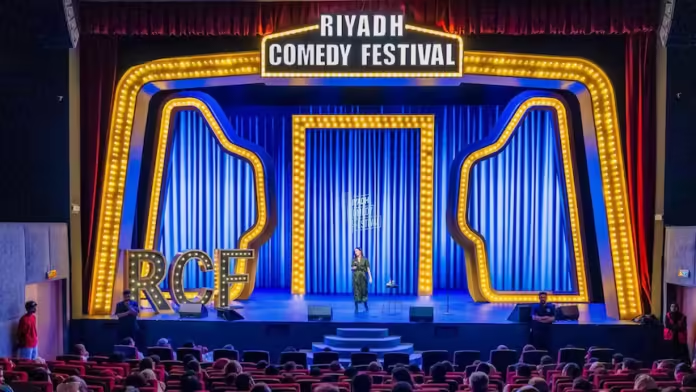
Riyadh Comedy Festival 2025: Dates, Lineup, and Events

Riyadh Comedy Festival: Where Laughter and Desert Lights Entwine

Laughter seems to cut through cultural barriers like nothing else, and right now, Riyadh is packed with laughter. Saudi Arabia’s capital is welcoming the world’s best comedians for two weeks of nonstop laughter, mixing biting humor with new forms of entertainment for the people of the Middle East. The Riyadh Comedy Festival marks a new and bold start for international comedy audiences seeking punchlines that cross borders.

This article will cover the essentials of the festival, including its history, line-up, dates, things to see, and tips and tricks for visitors, alongside the controversy.

What is the Riyadh Comedy Festival?

The Riyadh Comedy Festival is the biggest comedy event in the world, with more than 50 international comedians spread out over a vibrant program of stand-up, satire, sketches, and improv. The festival is being held from September 26 to October 9, 2025, as part of Saudi Arabia’s Vision 2030 plan to innovate the kingdom’s position as a cultural and artistic destination. The festival was promoted as the first of its kind to host international stars in Riyadh, a city known for its hustle and bustle, creating laughter and friendships in what is now an entertainment destination.

The festival is taking place in Boulevard City, a lively neighbourhood full of venues great for lively shows. Attendees are mostly comedy fans from both inside and outside the country. The event offers both English and Arabic sets, guaranteed to have something for everyone’s taste. In addition to laughter, the festival is part of overall efforts to encourage a steady flow of tourism and to open Saudi hospitality, making the desert capital a temporary comedy destination.

The Star-Studded Lineup

The Riyadh Comedy Festival is showcasing mega-stars, bringing in A-listers that guarantee laughs all evening. At the top of the list is Kevin Hart with his high-energy style, followed by Dave Chappelle’s sharp rants and Bill Burr’s unfiltered observations. Then you have Aziz Ansari with his clever cultural commentary; Gabriel Iglesias, aka Fluffy, spins relatable real-life narratives.

The list goes on with Pete Davidson’s dark and funny stories; Sebastian Maniscalco’s frenetic physical comedy; Jo Koy’s family-related jokes; Chris Tucker’s rapid-fire humor; and Russell Peters with his cross-cultural one-liners all around the world! Whitney Cummings gets straight to the point with antics on relationships, and Tom Segura gets a little raunchy and tells it like it is!

The mix of styles is on display: Jimmy Carr is a dry one-liner, Jim Jefferies is edgy or controversial, Andrew Schulz is roast-of-the-crowd, Hannibal Buress is very chill, Wayne Brady is improvisational, Mo Amer is Middle Eastern, Maz Jobrani is cutting satire, Louis C.K. is self-reflection, and Jimeoin has odd Australian humor. There is absolutely something for every taste, as a result, from family-friendly lifting moments to edgy pieces.

However, not everyone signed; comedians Mike Birbiglia, Shane Gillis, Marc Maron, and Atsuko Okatsuka all turned down an invitation for varying reasons. Tim Dillon was cut after having a couple of his jokes being totally the wrong side of local sensibility, and Nimesh Patel pulled out on moral grounds.

Venue and Schedule

Boulevard City is the heart of the festival, with performances being staggered across three key locations: the Mohammed Al-Ali Theatre for intimate performances, the ANB Arena for crowd-pleasers, and the SEF Arena for production numbers. This staging format enables several acts to be available at the same time, with visitors having the flexibility to switch between acts.

The two-week stint begins on September 26 and ends on October 9, with nighttime performances daily in an effort to avoid the heat. Specific times change by act, but most of them start around 7 PM local time, running 60 to 90 minutes in length. Weekends are more loaded with activity, featuring double headers headlined by acts such as Hart and Chappelle.

Visitors may visit the official schedule at visitsaudi.com or webook.com for updates. Boulevard City itself adds to the excitement with pre-show atmosphere, get street food, patron cafés, or visit gaming areas prior to the main acts.

Highlights and Must-See Acts

Standout moments are what make the festival so appealing. Kevin Hart’s high-octane energy tends to hijack the event, pulling enormous crowds with his down-to-earth stories of fame and life. Dave Chappelle’s off-the-cuff dives into society guarantee wild rides, and Bill Burr’s rants about the frustrations of everyday life strike hard and quick.

Don’t miss Gabriel Iglesias for the light-hearted laughs that are akin to talking with a friend, or Aziz Ansari’s witty takes on contemporary culture. For something different, Whitney Cummings delivers on gender roles with wit, and Russell Peters seamlessly bridges East-West humor.

Special events encompass themed nights, such as improv nights with Wayne Brady or satire performances with Maz Jobrani. The festival’s size—more than 50 acts—gives rise to an electricity, with surprise duets and audience engagement adding a moment of unpredictability. Preliminary reviews cite the charged atmosphere, where laughter ebbs and flows through the venues like waves.

The Controversy Around the Event

The event provokes controversy, primarily about Saudi Arabia’s human rights track record and content regulations for entertainers. Critics, such as Human Rights Watch, label it as an attempt to whitewash cases such as imprisoned activists and previous attacks, and urge comedians to take a stand. David Cross makes fun of participants as “disgusting” for accepting the engagements, and Marc Maron satirizes the connections to scandalous events in his acts.

Conversely, performers come to the defense of their decisions. Bill Burr cites comparable errors in America and argues hypocrisy in boycotts. Jim Jefferies echoes that, comparing America’s record to that of other countries. Pete Davidson confesses that the paycheck influenced him, even with his reservations. Defenders view it as an opportunity to initiate conversations and bring people together, in sync with Vision 2030’s cultural initiative.

This bifurcation mirrors wider tensions in entertainment, where global tours confront ethical issues. The event goes forward amidst the hubbub, with fans concentrating on the humor.

How to Attend: Tickets and Tips

Tickets are available for purchase at webook.com, ranging from general admission to VIP areas for better vistas and extras. Prices begin at around 100 SAR (approximately $27 USD) and increase for more premium seating. Get your tickets early, as well-known acts tend to go quickly. Seating is accessible for all requirements.

Travel smart: Fly into King Khalid International Airport, then take a rideshare or taxi to Boulevard City. Verify visa policy on visitsaudi.com; numerous nationalities receive e-visas. Dress in warm-weather comfort, and don’t challenge local mores; no booze at shows.

Make the most of the trip by visiting Riyadh’s souks or high-end malls between performances. Drink plenty of water, get there early to avoid lines, and download the festival app for schedule changes.

Conclusion

The Riyadh Comedy Festival heralds a fresh opportunity in an entertainment landscape merging global perspectives of laughter with Saudi aspirations. On October 1, 2025, with the festival about to commence in earnest, throngs gather at Boulevard City venues and absorb performances that transport them across emotional narratives into bold satire. The early highlights feature sold-out performances by superstars Kevin Hart and Dave Chappelle, where fans from all types of societal and cultural backgrounds share in an international experience of humor and, ultimately, memories focused on laughter that surpass the moment itself and the existence of actual lights lowering and the curtain falling on the performance.

Yet, the public discussion surrounding the festival rounds out its storyline as well. Human rights advocates and comedians alike have weighed in on the matter, saying this serves as an example of entertainment washing amid ongoing inequity in the kingdom. Marginalized perspectives contend that a chance of collaboration exists with global representation in a performing arts setting, and having global talent land in Riyadh serves as a hopeful opportunity for dialogue and growth in the hopes of Vision 2030. This tension expands into a larger conversation in the industry, the conflict of artistic opportunity or moral responsibility.

Al Khawaneej 1: A Peaceful Residential Community in Dubai

0
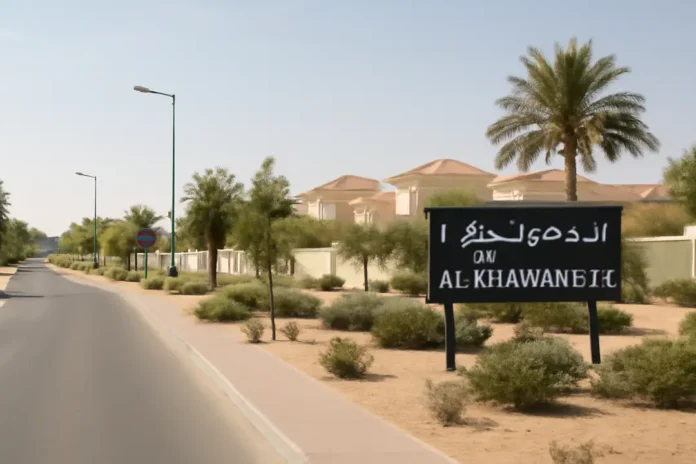
Al Khawaneej 1: A Peaceful Residential Community in Dubai

Have you ever discovered a place that feels removed from Dubai’s frenzy but still connects you to its heart? Al Khawaneej 1 is just that place. A community where fresh (literally – there’s a large farm every few blocks) farm-fresh mornings and modern conveniences mesh perfectly, all the while avoiding the bright lights and metropolitan pulse of downtown. No wonder visitors make a point to visit; nothing quite like sipping a cappuccino while surrounded by greenery, and then being in a mall or a desert (in different directions, of course) moments later.

Are you interested in discovering what makes this corner of Dubai so special? This article will explore all that Al Khawaneej 1 has to offer, from its lush heritage to its family-friendly community, so you are able to discover if Al Khawaneej 1 is to be your next home or weekend retreat.

A Farming Heart in Dubai’s Al Khawaneej

Tucked away in Dubai’s agricultural hub, Al Khawaneej 1 thrives as a sub-district that’s as green as it gets in this desert city. Known for its sprawling farms and date palm groves, this area is where Dubai’s food scene starts, think fresh veggies and fruits grown right in your backyard. Bordered by Al Warqaa to the west, Mirdif to the south, and brushing up against Sharjah’s edge to the north, it’s about 25 minutes from downtown Dubai. Here, the government’s push for sustainable farming meets suburban charm, creating a laid-back vibe that’s perfect for anyone craving a break from glass towers. It’s Dubai’s nod to its roots, with Emirati families and expats mingling in a place that feels like a small town in a big city.

Villas for Rent: Spacious and Family-Friendly

Located in Dubai’s agricultural district, Al Khawaneej 1 is a super district that seems as green as it gets in the desert. With its vast farms and groves of date palms, Al Khawaneej 1 is where Dubai’s food scene starts with fresh vegetables and fruits grown right in your backyard! Bordering Al Warqaa to the west, Mirdif to the south, and the northern border of Sharjah, it’s only about 25 minutes from downtown Dubai! Here, Dubai’s government interest in sustainable farming meets the charm of a suburb, lending itself to a relaxed community vibe perfect for anyone needing a break from the cold glass towers. It’s Dubai’s homage to its roots, with Emirati families and expats converging in a community that feels like a small town in a big city.

Stylish Interiors with Modern Touch

You will enter an Al Khawaneej 1 villa and find homes that balance an aesthetic of comfort with modernity. Warm wooden elements, casual fabrics in soft neutrals, and color accents draw the eye in every room. The interiors continue the clean modern aesthetic in the open-plan kitchens with sleek countertops, and in the master suites with bathroom amenities reminiscent of a spa. The living rooms open onto patios that are perfect for entertaining at dusk. Each villa comes with central heating and air conditioning, and the floor plans maximize utility with many details such as a dedicated laundry area or built-in closet space. These fully furnished villas have a warm sense of comfort from the moment you unpack, whether to entertain or snuggle with family, while feeling presentable enough to people who require a little elegance in their lives.

Mushrif Park: Your Desert Backyard

Just a short distance away is Mushrif Park, a large desert-style getaway that feels like it could be an extension of your backyard. It spans over 2 square kilometers; everyone can find a spot to enjoy. Cyclists ride along the dirt tracks lined by dunes, families set up barbecue stations, there are horse trails for the brave, kids love the play areas, and runners enjoy a shaded running path to avoid getting scorched by the heat. It’s a crowd pleaser for laid-back weekends – pack and picnic, let the kids roam free, or enjoy some time sitting quietly and calm in the shade of a palm tree. Compared to the glitzy attractions of Dubai, Mushrif Park feels unpolished and genuine, as a part of nature, a rarity along the main thoroughfare of Dubai.

Mirdif City Centre: Shopping and Fun Nearby

Looking for retail or entertainment? Mirdif City Centre, just a 5-10 minute drive away, has conveniently bundled over 400 retail shops all in one hub. Whether you want to restock on wardrobe basics from H&M and Zara or pick up an item from brand-name stores like IKEA or Carrefour, it’s got what you need, whether you want to bulk shop or have retail therapy. You could grab sushi at the food court, go see a new release at the Cineplex, or let the kids roam free at the indoor play area. This location is a one-stop shop for running errands or entertainment establishments; it’s buzzing with people on weekends with activity. With expansion plans, this mall keeps Al Khawaneej 1 feeling like an extension of the urban city of Dubai, while not feeling too pressured or heavy with humanity.

The Yard: Adventure Around the Corner

The Yard is a leisurely jewel, located just minutes away near Emirates Road, and perfect for a fun day out.  It is an outdoor adventure park, where you can experience excitement with the zip lines that cross through sandy terrain, climbing walls if you prefer a challenge, or ATV tracks for adrenaline kicks. Families frequently make it to The Yard to celebrate birthdays or hang out on the weekend. There are cafés in shaded areas to eat a snack and chat after a round of archery or ropes course encounters.  It is inexpensive, relaxed, and a means to break up the week without fighting crowds at bigger attractions. The Yard provides an element of recreational fun to Al Khawaneej 1; it is a simple way to keep the weekends lively and local.

Community Overview: A Neighborly Vibe

Al Khawaneej 1 is home to approximately 3,000 residents: Emirati families connected to the agriculture community, and expats who are drawn to the neighborhood’s ease and tranquility.  Al Khawaneej 1 is a place where you can feel safe and live simply; neighbors wave to one another, and young children are free to bike ride in green patches. Life is uncomplicated in the neighborhood, as you can pick up groceries from the local shop, fresh vegetables from the roadside vendor, or a quick check-up at Al Khawaneej Health Centre. There are schools from nursery to high school in Mirdif or Al Warqaa. Gym and fitness facilities, as well as tracks in Mushrif, will please those who want an active lifestyle. The mosque is a short walk from the church and temple, such as the Shiva Temple, which is a 30-minute drive away. Community social media groups, such as ‘Al Khawaneej Team-Dubai’ on Facebook, keep us all updated with great deals and meet-up opportunities. The neighbourhood is also getting better, along with a mall (with cinemas and a supermarket) being built.

Transportation and Parking

Traveling around Al Khawaneej 1 is easy enough if you drive, and pretty doable if you take public transport. Major routes like Emirates Road (E611) and Sheikh Mohammed Bin Zayed Road (E311) place the airport about 15-20 minutes away, and downtown approximately 30 mins. Parking is easily found – villas come with private parking, and the streets rarely have heavy traffic. Taxis, as well as rideshare services like Uber and Careem, are very cheap if you are making short trips. For the bus, Route 66 connects various points to many of the hubs, like Al Ain Road. Starting from Rashidiya station, the metro is a short 10-minute drive away, or you may use the bus system to connect. Just make sure you have an NOL card to use public transport, as their options are limited. Cars seem to always be king here. Some road upgrades will soon make the routes even quicker. The whole setup is designed to keep things flowing without any traffic, per se.

Conclusion

Al Khawaneej 1 is where the soul of Dubai leaves the noise of the city behind to enjoy farm-fresh calm. From large villas to desert parks, shopping areas, and everything in between, Al Khawaneej has whatever you need to exist without having to wrap yourself in chaos. If you are raising a family, looking for adventure, or seeking a piece of Dubai that is quieter than the rest, Al Khawaneej serves all objectives. Whether you are searching for a rental or visiting for the weekend to experience The Yard or Mushrif, you will find the calm that you have been yearning for in a city that never sleeps.

Dr. Saniya Habboub: Lebanon’s Quiet Revolution in White Coats

0
Dr. Saniya Habboub

Dr. Saniya Habboub: Lebanon’s Quiet Revolution in White Coats

In 1931, a Lebanese woman stepped onto a stage in Pennsylvania bearing an American medical school diploma as the first Arab graduate. The crowd broke into applause, but for Saniya Habboub, the applause rang out in the streets of Beirut, where doors had been shut for women like her for centuries. Entering this profession at the time meant resisting familial expectations, enduring societal pressure, and potentially risking her own health. She found a way forward. But what inspired her? It was a mother’s whispered promise on a train, a father’s quiet encouragement, and a fire found deep within her soul that refused to go out.

This article follows her footsteps from the markets of Beirut to Lebanon’s frontlines of healthcare, showing how the grit of one doctor changed pathways for many women after her – and continues to do so.

Roots in a Changing Beirut

Saniya Habboub was born in 1901, in the lively Ain Mreisse neighborhood of Beirut, where the aroma of leather tanneries converged with the sound of the call to prayer. Her father, Mustapha Habboub, a self-made man, was a merchant who built and grew his business with remnants. He hosted poets and intellectuals in their home. As children, Saniya and her siblings were exposed to evenings filled with discussions on literature and reform that sparked their curiosity. Her mother was Adla al-Jazairy, a Turkish woman who was illiterate, and the lack of education gave her extra motivation. On the train ride from Istanbul to Beirut, she had observed a European lady read a newspaper and vowed to her husband, “if I have a daughter, she will do that too”. Saniya, the second of five children, was the fulfillment of that promise.

Not all of Saniya’s experiences were mind-expanding. When she was 14, typhoid fever hit like a ton of bricks. For a full month, Saniya lay in and out of consciousness, and then awoke only to discover that her younger sister, Afifeh, had passed while lying in the other bed. The fever left a permanent mark, namely phlebitis in her left leg, which caused her to drag her foot for the rest of her life. But rather than retreating, those early blows appeared to harden her resolve. After Saniya received Quran lessons at home, she then secured a spot at the American School for Girls, one of the only available venues for someone with her intellect to flourish.

By the age of 16, Saniya had a pull back to tradition. She was married to a neighbor, a doctor, not exactly arranged, as he sought the permission of her parents to marry first. They were only married for two years, and the built-up tension with her mother-in-law led to the divorce, though they remained on good terms. After the divorce, Saniya enrolled back in an academic place, illustrating that detours did not define her journey.

First Steps Toward the Stethoscope

Beirut in the 1920s buzzed with post-World War I energy. French mandate rule brought new schools and ideas, but medicine remained a man’s domain at places like the American University of Beirut. Saniya joined the freshman class at the American Junior College for Women in 1924, graduating two years later with honors that turned heads. She set her sights on AUB’s medical program, dreaming of healing the community that raised her.

Society had other plans. Whispers of scandal followed women chasing such ambitions, and even her own circle urged caution. But Saniya’s family backed her, her father especially, who saw in her the scholar he hosted at his table. When AUB’s doors stayed closed to female applicants, she looked westward. No Lebanese woman had crossed the Atlantic for a medical degree, but that only made the challenge sharper. In 1929, she boarded a ship for America, the first of her kind to chase that horizon.

Landing in the U.S. meant more than new classrooms; it was a crash course in reinvention. She adapted to a world of bobbed hair and bold conversations, earning nods from American papers for her “occidental ways.” Yet homesickness and the drag of her leg tested her daily. Through it all, she pressed on, her focus laser-sharp on the white coat waiting at the finish line.

Diploma Across the Ocean

America’s medical world opened wide at the Woman’s Medical College of Pennsylvania, a haven for trailblazers since 1850. But Saniya started her formal training at Western College in Cincinnati, Ohio, earning her MD in 1931 amid a class of determined women from around the globe. She stood out not just as the only Arab student, but as a symbol of quiet defiance, her Beirut roots fueling every late-night study session.

The true hard work came next, two years of specialized training at a hospital in Philadelphia in gynecology and obstetrics. To her classmates, her tenacity was awe-inspiring, especially the way she limped and made what often felt like a marathon out of just walking. By 1932, she had completed her training, diploma in hand. She was appreciative; later, she set up a scholarship fund at her medical college to help other women like herself. Her graduation was on June 10, 1932, the same date recognized by Google in a Doodle in 2022, drawing attention to her pioneering role as a doctor to serve the Lebanese community. All personal milestones aside, this moment represented breaking barriers.

That moment wasn’t just a personal victory; it shattered ceilings. Back home, families began whispering her name to daughters eyeing books over veils. Saniya returned in 1933, suitcase packed with knowledge and a resolve to give back what she’d gained.

Clinic Doors Swing Open in Beirut

Beirut welcomed her with skepticism. In Bab Idriss, she hung her shingle for obstetrics and general practice, the city’s pulse beating just outside her window. Patients trickled in at first, mistaking her for a midwife rather than a fully trained physician. But word spread like wildfire, here was a doctor who made house calls, who treated the poor for free, who listened without judgment.

For 50 years, her clinic became a lifeline for women sidelined by poverty or tradition. Expectant mothers from the hills arrived by cart; orphans got check-ups alongside the elite. Saniya’s leg slowed her, but never stopped her from climbing stairs or crossing town. She retired in 1965, yet her hands stayed busy, mending more than bodies.

In 1937, life added new layers. She married Muhammad al-Naqqash, a journalist 12 years her junior, after he profiled her work. Their home is filled with two daughters, blending stethoscopes and story deadlines. Through Lebanon’s turbulent decades, wars, mandates, and independence, Saniya balanced family with a calling that demanded everything.

Hands in the Red Cross, Heart in the Community

For Saniya, medicine was more than just private practice; it was a public service that was interlaced into the fabric of the nation. As a founding member of the Lebanese Red Cross, she had a hand in building this organization from the ground up and was best known for coordinating aid to the country during crises that tested the spirit of Beirut, as floods and earthquakes collided with the scars of conflict. She was there, organizing clinics and providing volunteer training

Saniya’s outreach extended to the Muslim Orphans’ Home, where she was a model of the care that could be provided, mending kids battered by hardship, and the Young Women’s Muslim Association, where she nurtured ambition in girls as well as their health. When she finally returned to work at her old school, the American School for Girls, she institutionalized her role as a resident doctor providing care in hallways as if for mere mortals attending a speaking engagement.

These were not part-time jobs; they were ways for her to multiply her efforts as a doctor into a movement. In 1982, the Lebanese national government pinned the Health Medal of Merit on her chest, recognizing a lifetime of selfless effort with this award after a half-century of work. At 81, and with the same steady gaze as her graduation picture taken so many years ago, she took it not for herself, but to use it to motivate the next day.

Facing Shadows with Steady Grace

No tale of overcoming skips the shadow. In every shift of her leg, Saniya always felt the nagging sensation from that fever she had had in childhood. The turmoil, civil wars, and recession of Lebanon dealt one last blow to her clinic, but she measured out supplies, and in turn hope, in the same way she had in Lebanon’s toughest times. In her final years, pancreatic cancer appeared. She self-diagnosed herself once again, together with the clarity she exemplified to every patient.

She died in September of 1983 at the age of 82, while Beirut remained transformed. And today, a street in Ramlet al-Baida bears her name, Sania Habboub Street, a small salute to a woman who lived in paths untrodden, so others could run straight.

Echoes That Outlast the Years

Dr. Saniya Habboub wasn’t just a physician; she was a prescriber of possibility. Her choices, whether funding scholarships abroad for women she had never met or starting networks of aid for the women of her own community, fanned out to include, and elevate, her sisters, daughters, and dreamers. And, in an area of the world where women’s voices are often barely whispers, she spoke through her deeds: through the free care she offered, for the forsaken; through all of the doors she kicked wide open for the next wave of women that would follow.

Her legacy lives on in each Lebanese woman who now picks up a scalpel, or a textbook; in each of the Red Cross tents that proudly still stand; and, it is recorded within our own memories, Google’s Doodle offered a glimpse into her work and significance, but her legacy is infused within the stones of a city, and intertwined with the stories of its people. Saniya Habboub led the way to showing that one determined step, even when dragged, could cover oceans and change worlds.

Why Payroll Services in Dubai is Important

0
Why Payroll Services in Dubai is Important

Managing payroll in the United Arab Emirates is vastly different from cutting cheques in other states. Businesses here operate under a sophisticated regulatory framework that prioritises employee welfare and transparency. Since July 2009, every private‑sector employer (including free‑zone companies) has been required to register with the Wage Protection System (WPS), an electronic salary‑transfer platform jointly developed by the Ministry of Human Resources and Emiratisation (MOHRE) and the UAE’s Central Bank.

WPS obligates employers to pay salaries through accredited banks or financial institutions and creates a verified trail of payments to protect workers and employers alike. Non‑compliance is not tolerated; penalties range from fines of AED 5,000 per unpaid employee to bans on new work permits for repeat violations.

Yet payroll compliance is only one part of the story. A good payroll services in dubai must calculate basic salaries correctly, allowances, overtime, bonuses, statutory deductions, social security contributions for UAE and GCC nationals and end‑of‑service gratuity. Employers must issue salary slips and maintain records that stand up to scrutiny by auditors or the MOHRE.

With evolving labour laws, corporate tax, VAT and data‑protection regulations, even seasoned entrepreneurs can feel overwhelmed. In this guide we explore why comprehensive payroll support matters, how to stay compliant, and how to choose a partner who can ease your burden. We’ll also introduce some of the leading payroll firms in Dubai 

Understanding Payroll Obligations in Dubai

The Wage Protection System (WPS)

The WPS is at the heart of the UAE’s payroll regime. It requires all private sector companies, including free‑zone entities, to pay employees electronically via approved banks or money‑exchange houses. The system ensures wages are honoured on time and provides a transparent record of payments. Employers submit a Salary Information File (SIF) each month with details of every employee’s wage, allowances and deductions. MOHRE and the Central Bank review the file, verify employee data and authorise payments. If any names or ID numbers don’t match official records, the SIF is rejected.

The benefits of WPS are tangible. Workers receive timely salaries and clear evidence of transactions. Employers gain digitised records, legal protection against disputes and peace of mind knowing they’ve met labour‑law obligations. But the system is unforgiving of errors: failure to pay even one employee on time triggers penalties that can jeopardise operations. This is why accurate data management and regulatory knowledge are critical.

Labour‑law requirements

In addition to WPS, payroll must comply with the UAE Labour Law, which defines minimum notice periods, overtime rules, annual leave pay, sick‑leave entitlements and end‑of‑service gratuity. Employers must calculate gratuity based on an employee’s last basic salary and years of service. National insurance contributions are compulsory for UAE and GCC nationals; these include monthly pension deductions that must be paid to the General Pension and Social Security Authority. Employee benefits such as housing, transportation or education allowances should be documented in the contract and reported through the SIF. All payroll records must be retained for at least five years and may be inspected during audits.

Corporate tax and VAT implications

While corporate tax in the UAE applies to business profits rather than payroll directly, proper payroll records are essential for calculating taxable income and claiming deductions. As of mid‑2023, corporate tax is 0 % on taxable income up to AED 375,000 and 9 % above that threshold, with special rates for multinationals. VAT at 5 % applies to most goods and services, and businesses must register if their taxable supplies exceed AED 375,000. Payroll expenses, staff accommodation and allowances should be accurately recorded to support input‑VAT claims and corporate‑tax filings. For free‑zone companies, preferential tax treatments depend on meeting substance and compliance requirements, so WPS registration and proper payroll management remain mandatory.

Why Outsourcing Payroll Makes Sense

Many companies like start‑ups and multinationals choose to outsource payroll to specialist firms. Here’s why:

  1. Compliance and risk mitigation: An experienced payroll provider stays current with labour‑law amendments, WPS updates and changing tax rules. They ensure salaries are processed and paid on time, file accurate SIFs and help avoid fines and legal disputes. The WPS guide notes that all private employers must register and follow WPS procedures, leaving no room for shortcuts.
  2. Accuracy and timeliness: Payroll errors erode employee trust and create administrative headaches. Providers use automated systems to calculate wages, overtime, leave balances, social-security contributions and gratuity. They reconcile variances each month and generate payslips quickly. Sovereign PPG, for example, prepares customised payroll reports and guides clients through WPS set‑up, SIF preparation and monthly payslips.
  3. Cost efficiency: Hiring an in‑house payroll team comes with visas, medical insurance, gratuity provisions, office space and training costs. Outsourcing converts these into a predictable monthly fee and eliminates recruitment and retention expenses. Sovereign highlights that their fixed monthly fees often cost less than employing a full‑time accountant.
  4. Confidentiality and data security: Handling payroll internally risks exposing salaries to unauthorised staff. Outsourcing to firms with robust data‑protection standards (e.g., ISO 27001 compliance) protects sensitive information and reduces the chance of misuse.
  5. Focus on core activities: Payroll is a non‑core function. Outsourcing frees owners and finance teams to concentrate on strategy, sales and customer service while specialists manage the administrative burden.

Choosing the Right Payroll Partner

Selecting a payroll service is about more than price; it’s about trust and alignment with your business needs. Consider these factors:

Local expertise and WPS knowledge

Your provider should understand UAE labour law, free‑zone regulations and WPS procedures. They must be able to advise on salary structures, work permits, end‑of‑service benefits and pension deductions. Ask whether they have experience with companies of your size and industry.

Technology and integration

Modern payroll involves more than spreadsheets. Look for providers using secure, cloud‑based systems with automation, analytics and integration with accounting or HR software. Providers like Mercans highlight their cutting‑edge technology and seamless integrations to enhance payroll efficiency.

Data protection and confidentiality

Ensure the firm holds information‑security certifications and has clear protocols for handling employee data. Breaches can result in penalties under data‑protection laws and reputational damage.

Transparency and communication

A payroll partner should be responsive, provide detailed reports and explain changes in regulations. They should offer service‑level agreements and provide a point of contact for queries. Transparent pricing and no hidden fees are essential.

Scalability

Your payroll requirements may grow as you hire more staff, expand into new Emirates or set up free‑zone branches. Choose a firm that can scale services up or down, handle complex payroll structures and offer additional support such as HR advisory or tax consulting.

Best Payroll Service Providers in Dubai

Here are five payroll partners that stand out for their expertise, technology and client‑centric approach.

1. Bestax Chartered Accountants (Bestax Accountant in Canada)

Bestax Chartered Accountants is a global accounting and advisory firm with offices in Dubai, UAE and Mississauga, Canada. Founded in Dubai, the firm has grown into a trusted provider of tax, audit, accounting, and business advisory services. In Canada, it operates as Bestax Accountant, supporting expatriates, entrepreneurs, and small to mid-sized businesses with tax filings, bookkeeping, payroll, and compliance. Bestax’s expertise spans corporate tax, GST/HST, international taxation, and cross-border structures, making it a go-to partner for businesses with operations in both Canada and the UAE. The team includes chartered accountants, tax specialists, and payroll professionals who ensure full compliance with CRA regulations while delivering practical solutions.

Why they stand out:

  • Comprehensive Payroll & Compliance: Bestax manages payroll processing, deductions, pension contributions, and CRA submissions with full confidentiality.
  • Integrated Tax & Accounting Advisory: They go beyond processing transactions by advising on structures that optimise corporate tax, GST/HST, and cross-border positions.
  • Technology & Security: Cloud-based platforms allow clients to access real-time reports and encrypted payslips while ensuring data security.
  • Personalised Service: Bestax offers dedicated, tailored support for entrepreneurs and SMEs, with expertise across industries and free zones.

2. Sovereign PPG

Overview. Sovereign is a long‑established provider of corporate services in the Middle East. Its Payroll Management and Processing unit (PPG) in Dubai offers a bespoke service for businesses of all sizes. The company emphasises that its service is scalable, from two employees to several thousand, and tailored to each client’s needs.

Why they stand out.

  • Comprehensive support. Sovereign prepares customised payroll reports, helps set up WPS, creates the Salary Information File and issues monthly payslips.
  • End‑of‑service benefits. They calculate gratuity and handle final settlements according to the UAE Labour Laws.
  • Regulatory guidance and compliance. Sovereign provides ongoing advice on labour‑law changes and WPS updates. They highlight the high penalties for non‑compliance and help clients avoid them
  • Cost efficiency and security. Outsourcing to Sovereign reduces recruitment costs for a full‑time accountant and offers fixed fees while protecting data with ISO 27001 and GDPR compliance.

3. Mercans

Mercans positions itself as a global leader in payroll technology. Its UAE unit emphasises precision and compliance, noting that managing payroll in Dubai demands meticulous attention to local labour laws and regulations. Mercans leverages state‑of‑the‑art payroll technology to simplify tasks, from initial set‑up to processing, ensuring precise and punctual payment.

Why they stand out.

  • Technology‑driven solutions. Mercans uses advanced software to automate payroll calculations, tax remittances and reporting. Their technology integrates easily with HR systems, reducing manual effort.
  • Global reach with local focus. As a multi‑country payroll provider, Mercans can serve businesses operating across the GCC and beyond, ensuring compliance in each jurisdiction.
  • Seamless integrations and analytics. They offer dashboards and analytics that help management monitor salary trends and forecast labour costs.
  • Support for establishing entities. The firm’s country‑intelligence resources advise on setting up businesses in free zones or onshore, an added benefit for new entrants.

4. OPS (Outsourced Payroll Solutions)

OPS (ops.ae) is a Middle‑East–based HR and payroll firm that emphasises customised solutions. Their service menu includes managed payroll, HR management, payroll training and HRMS implementation. OPS recognises that payroll obligations vary across countries and states that their bespoke solutions help businesses meet local compliance requirements. They also offer HR consulting and software to streamline employee administration.

Why they stand out.

  • Tailored approach. OPS designs payroll processes around clients’ structures—whether a small start‑up or a multinational with multiple pay cycles.
  • Comprehensive HR coverage. Beyond payroll, OPS provides employee self‑service portals, leave management and performance tracking, offering an integrated HR solution.
  • Training and support. They offer payroll training and ongoing support to ensure that clients understand the system and can interpret reports correctly.

5. Payroll Middle East / SimplySolved

Payroll Middle East is a regional platform specialising in outsourced payroll and HR services across the Gulf. SimplySolved (hr.simplysolved.ae) is another provider with a strong focus on compliance and cloud‑based HR solutions. Both firms offer WPS registration, SIF preparation and monthly processing, along with HR advisory services.

Why they stand out.

  • Flexible service plans. They provide pay‑as‑you‑go pricing, making them accessible for small businesses.
  • Cloud‑based solutions. Their portals allow employees to access payslips, request leave and update details online, reducing HR workload.
  • Regulatory updates. They keep clients informed of changes to labour law, WPS guidelines and social‑security contributions.

Tips for a Smooth Payroll Experience

Even with the best service provider, your cooperation as an employer is crucial. Here are some practical tips:

  1. Maintain accurate employee records. Ensure that names, passport numbers and bank details match official documents. Mis‑matched data is a common reason for SIF rejection.
  2. Plan ahead for payroll cut‑off dates. Schedule monthly payroll reminders and finalise overtime and leave adjustments well before salary deadlines. Late uploads can trigger fines.
  3. Communicate changes promptly. Inform your provider about new hires, resignations, salary changes and loan deductions early in the month. WPS submissions must reflect the latest employee status.
  4. Train HR and finance teams. Even if payroll is outsourced, your internal staff should understand WPS rules and know how to prepare supporting documents
  5. Review payroll reports. Take time to review the payroll summary and variance reports provided by your partner. This helps catch anomalies, plan budgets and ensure that allowances and deductions align with company policy.
  6. Leverage analytics. Use dashboards and metrics from your provider to monitor labour costs, overtime trends and staff turnover. Data insights can inform decisions about hiring, bonuses and incentive programmes.

Conclusion

Compliance is more than a checkbox in the UAE; it’s a commitment to fair treatment of workers and the stability of your business. The Wage Protection System underscores the government’s dedication to timely salary payments and transparency. For business owners, navigating these obligations requires diligence and the right support. Outsourcing payroll ensures that specialists handle the complexities of WPS registration, SIF preparation, gratuity calculations and compliance with labour laws. It frees you to focus on growth, innovation and customer service. When choosing a partner, look for local expertise, robust technology, data security and a track record of client satisfaction.

Ultimately, the best payroll services are those that blend technical proficiency with a human touch. Firms like Bestax Chartered Accountants, Sovereign PPG, Mercans, OPS and Payroll Middle East deliver precisely that. They act as extended members of your team, guiding you through regulation changes, ensuring accuracy and confidentiality, and providing insights that support sound business decisions. With their help, managing payroll in Dubai becomes less of a regulatory minefield and more of an opportunity to build trust with your employees and stakeholders.

By understanding your obligations and partnering with the right provider, you can transform payroll from a compliance headache into a strategic advantage.


Limestone House in Dubai: Luxurious Living in the City

0
Limestone House in Dubai

Limestone House in Dubai: Luxurious Living in the City

Although Dubai is celebrated for its extravagant lifestyles and audacious architecture, relatively few buildings engender quite the same sense of professional dynamism and quiet comfort as Limestone House. Set back from the Dubai International Financial Centre (DIFC), this residential building showcases a well-proportioned façade and design that pays homage to both its Arabian heritage and Mediterranean influences. Residents wake up to views of glowing towers of the city every morning, while having an enviable proximity to finance, dining, and arts.

This article is a thoughtful examination of Limestone House, its unique location, design, apartments, and necessary in-house amenities. Ove

Overview of Limestone House

Limestone House is a component of a mixed-use development by Limestone Holdings Ltd, creating luxury residential units in DIFC. As a low-rise building, there is a contrast to the surrounding high-rises and a more intimate feeling amidst the energy of the district. Completed with input from the architect company, Gensler, it is for individuals with an eye for quality finishes and a sense of space. The apartments available range from small one-bedrooms to expansive penthouses, attracting singles, couples, and larger families. Renters will find prices starting from 165,000 AED annually, while buyers are often attracted to the long-term investment aspect as well as the prime location. Comfort is emphasized in the building, with features such as natural light and high ceilings improving daily living.

Prime Location in DIFC

Situated at Sheikh Zayed Road (E11), Limestone House positions a resident in the heart of the DIFC area and offers access to a major commercial district, allowing hassle-free commuting to any finance professional. Public transportation is ample, as the Emirates Tower metro station is approximately a ten-minute walk from the development. There are also multiple bus stops around the metro station, such as Emirates Tower MS Landslide, which would take about eight minutes on foot. A resident may also choose to drive their car to work since the development is near the Financial Center station, which connects to trams and additional transportation options and solutions. Aside from work, it could not be a better location because you will be close to all the must-see sites of Dubai, such as the Dubai Mall, a short eight-minute drive away, as well as the Marjan Islamic Art Gallery, which is about a fifteen-minute drive.

Architectural Design and Features

Drawing inspiration from both Arabian and Mediterranean styles, Gensler developed a distinctive aesthetic for the Limestone House by combining rich colors and clean lines. The exterior utilizes light limestone materials to resonate with the colors of the Dubai desert, while the richly finished interiors provide warmth through tasteful hardwood flooring, marble accents, and polished chrome fixtures that create sophistication. From the window treatments, in many cases, the windows are floor-to-ceiling to provide abundant natural light and beautiful views of the city. Some units will also include solariums for those times when residents wish to stay seated while enjoying a relaxed morning. The low-rise structure keeps the experience grounded, so residents don’t experience vertigo from a higher tower, while promoting the experience of community.

Apartment Types and Layouts

The Limestone House offers something for everyone with one-bedroom units beginning at 1,100 square feet, and penthouses exceeding 5,800 square feet. The one-bedroom layouts feature an open kitchen, two baths, and recessed lighting for a modern feel. The two-bedroom configurations, which are the biggest layouts at 1,600 to 1,700 square feet, include three bathrooms and built-in closets for added space. The apartments with three bedrooms are 2,600 to 2,800 square feet of living space, have four bathrooms, a master suite with an en-suite bath, and emphasize a modern minimalist appearance with high-caliber ceramic tiles. Four-bedrooms and penthouses are spacious units with maid’s quarters and laundry rooms, study rooms, and cradles close to large terraces. The bigger units have living spaces and dining rooms, suitable for entertaining guests or family dwelling. The apartments in all configurations include living functional areas with built-ins throughout for storage or for efficiency.

Parking Facilities

Parking is a top priority in the bustling city of Dubai, and Limestone House has assigned secure parking spaces in the underground parking for each resident. Each four-bedroom unit includes two spaces, and the penthouses come with four spaces, with even more space for other vehicles. Friends and guests can also take advantage of the parking associated with the building, taking away the pain of parking on the street. The parking garage leads easily into the elevator to your apartment, and you may find the parking garage much less crowded when accessing your apartment when the elevators are less busy. This type of layout is well-suited to city living, where entrance and exit situations are important.

Security Measures

Safety is a major focus at this location, with comprehensive CCTV coverage in the property and common areas. The dedicated staff monitor the property around the clock, and housekeeping is always available in case of emergency. With access control to the property and all of the features of Limestone House built to DIFC standards, residents will experience an enviable level of safety and security.

Maintenance Services

Central air-conditioning provides year-round comfort for the residents. The building’s professional maintenance teams can often respond to issues immediately when they arise. Regular maintenance supports almost every aspect of the building, from plumbing to electrical. Therefore, residents can experience inconveniences safely and minimize their experience. They can even request on-site service teams to assist with repairs and cleaning, which frees them up to focus either more time on work or leisure. Ultimately, the building’s approach to maintenance protects the building’s luxurious quality and prevents small inconveniences from becoming much larger issues.

Gym and Fitness Facilities

Fitness enthusiasts appreciate the well-equipped gym. The gym is equipped with four to five treadmills and a small handful of all-one machines for cardio and strength training. The gym promotes effective workouts, no matter the intended workout – from short, quick workouts to full workouts. There are other amenities adjacent to the gym, such as a sauna, steam room, and Jacuzzi for recovery, each of which provides amenities for post-workout recovery. The setup prevents the need for gym memberships and promotes a healthy workout every time you work out within the building.

Pet Policy

Limestone House has a no-pet policy in order to ensure the shared spaces and property as a whole are well-maintained. This policy helps us to mitigate allergies and maintain cleanliness. While there may be disappointment for those who love animals, we ask that you factor this in when considering the property.

Safety Features

As per Dubai Municipality standards, there are fire extinguishers located on each floor and concrete staircases in case of emergencies, should you ever have to evacuate quickly. These safety features are accompanied by fire drills and daily checks for maintenance. Together with the safety systems in place, these measures provide a significant safety net in an urban setting.

Additional Amenities for Lifestyle Enhancement

In addition to the amenities mentioned above, Limestone House offers both indoor and outdoor swimming pools for relaxing or swimming laps. There is also an event space for hosting gatherings, and a 24-hour concierge service to assist with bookings, deliveries, and questions. Convenience is enhanced by both a passenger lift for residents and a service lift for moving and transporting groceries or furniture. All of these features take the average daily experience to an enhanced experience, allowing the property to become its own living community.

Nearby Conveniences and Attractions

The life of the resident extends beyond the building, as there are gastronomic and dining options located only two minutes (Gourmet Burger Kitchen) to five minutes (Carnival by Trèsind) away. The shopping experience at nearby Dubai Mall, a downtown area with great restaurants and entertainment options such as Virtual Reality Park, is a short drive away and easily accessible as well. Neighbors at the Limestone House include The Ritz Carlton and Al Attar Tower, contributing to the upscale lifestyle. This connectivity will be suitable for the clientele who desire city lifestyle benefits without needing to travel far.

Insights from Resident Reviews

Feedback from sites like Booking.com and Airbnb agrees that the size of the apartments is spacious and the location of the venue is a plus, often averaging a rating of 8.0 out of 10. Guests often comment on the aesthetics of the fully furnished room with free Wi-Fi and access to the pool and gym. Additionally, guests have commented on the convenience of the location for short stays, and categorizing it as close to the business area as an amenity. In short, older reviews commented on normal noise due to activity in nearby redevelopment sites; however, new reviews, published just three or four days ago, emphasize the quiet of the immediate surroundings. Overall positive ratings far outweigh the negative comments; residents do appreciate the comfort and proximity to Downtown or business commitments.

Conclusion

Limestone House encompasses the finest of Dubai’s vibrant presence, juxtaposing aspirations with daily casualness in a high-end yet grounded milieu. The gorgeous melding of handsome architecture, full amenities, and unbeatable location in DIFC is attractive to anyone looking for an elevated urban lifestyle. Those seeking a stylish yet practical/design, this ticks all the boxes for living. Take a look at available units and/or book an appointment to see if it meets your lifestyle.

Recent Posts

Property Inspection Services in Dubai

Property Inspection Services in Dubai

0
Conducting a property inspection is one of the most important steps when purchasing or leasing a property in Dubai. Property inspection Dubai checks the...
Tips for Longer-Lasting UAE Perfume

Tips for Longer-Lasting UAE Perfume: Expert Tips

0
Regarding luxurious fragrances, few places are as famous as the UAE. Its long perfume tradition possesses some of the world's most captivating and long-lasting...
Al Ain Mosque

Al Ain Mosque: A Majestic Blend of Tradition and Modern Design

0
Introduction:  Al Ain presents a distinct atmosphere which differs from other places.Al Ain offers a peaceful experience which contrasts with Dubai's high skyscrapers and Abu...

Al Safa Tower Dubai | Luxury Living with Prime Location

0
INTRODUCTION The city of Dubai stands recognized for both its lavish lifestyle and unique architectural masterpieces which include several renowned worldwide buildings. Al Safa Tower...
Currency Pair Trading Strategies for UAE Investors

Currency Pair Trading Strategies for UAE Investors

0
Introduction: Advanced Approaches to Forex Markets The United Arab Emirates has positioned itself as a sophisticated financial center where investors increasingly seek advanced strategies beyond...