
Home Blog Page 37

Signs Your Business Needs Professional Accounting Help

0
Signs Your Business Needs Professional Accounting Help

Is your business thriving rapidly? It is tough to keep up with accounting work. The larger your business grows, the harder it is to handle money. You must understand when to look for assistance.
In the UAE, businesses can get assistance from accounting services in Dubai to provide helpful business expertise. They can help manage money and regulations compliance. As your business grows, keep an eye out for indicators that you require professional accounting assistance. Getting proper advice can make your business grow in a healthy and stable manner.

Warning Signs You Need Accounting Assistance

In the complex modern financial environment, it will be significant to recognize when your company requires accounting assistance. As companies expand, they have numerous money issues. Expert accounting is more significant than ever before. Disregarding these signals may result in money issues, legal issues, and reduced profits. Below are the primary signs that your company requires accounting assistance.

Consistently Late Financial Statements

One big sign is always being late with financial statements. Quick financial reports are vital for smart decisions and following the law. If you’re always late, you might need business advisory services to fix your financial flow.

Cash Flow Problems Despite Profitable Operations

Having cash flow issues when you’re profitable is a big warning. It often means your financial management needs to work. Getting help from auditors in UAE can fix these problems and improve your cash flow.

Mounting Tax Compliance Issues

Tax issues are serious and can hurt your business a lot. If you’re having trouble with taxes or getting audited a lot, you need accounting experts. They can help you deal with these problems.

Difficulty Securing Business Financing

Having trouble getting loans is another warning sign. Lenders want to see clear financial information. Better financial reports can make you more attractive to lenders. Spotting these signs early can save your business. Getting professional internal audit services in Dubai can solve these problems. It also gives you insights to grow and stay strong.

UAE-Specific Accounting Requirements You Can’t Ignore

Companies in the UAE are required to adhere to complex accounting regulations. The regulations keep the finances stable and in proper condition. Companies are required to adhere to the regulations or risk being fined and their reputation ruined.

VAT Compliance and Reporting Obligations

The UAE now has Value Added Tax (VAT). What this entails is that companies need to register for VAT if they receive over a specific amount. A tax consultant in Dubai will be able to help them with VAT rules and ensure compliance.

Economic Substance Regulations

The UAE Economic Substance Regulations (ESR) require specific businesses to demonstrate that they are indeed operating within the country. The businesses must have sufficient assets, personnel, and an address. They are required to report annually to be in compliance with these regulations. If you are struggling to follow these regulations, seek ESR Consulting Services in Dubai immediately.

Free Zone vs. Mainland Accounting Differences

Businesses in the UAE have different rules depending on whether they are in free zones or mainland areas. Free zone companies may have simpler rules, but they still have to follow federal laws such as VAT and ESR. Understanding these differences is important to stay legal and manage money properly.

International Financial Reporting Standards (IFRS)

The UAE adopts International Financial Reporting Standards (IFRS) in financial reporting. IFRS must be adopted by companies to ensure their financial reports are easy and comparable. Hiring accounting professionals can simplify compliance with IFRS.
In summary, UAE businesses must follow many accounting rules, from VAT and ESR to IFRS. Working with a tax consultant in Dubai or accounting services can help. This ensures companies meet all requirements and stay financially healthy.

Benefits of Professional Accounting Services Dubai

Dubai businesses gain a lot from professional accounting services. They improve their financial management and follow rules better. A VAT consultant in Dubai helps them deal with financial rules and improve their finances.

Strategic Financial Planning and Analysis

Professional accounting services help businesses plan and analyze their finances. They do financial forecasting, budgeting, and find ways to cut costs. Good financial planning helps businesses reach their goals and stay ahead in the market.

Risk Mitigation and Compliance Assurance

Accounting experts assist businesses in staying safe from financial risks and adhering to rules. This entails following VAT rules, economic substance rules, and International Financial Reporting Standards (IFRS). Abiding by these rules shields businesses from penalties and having a good image.

Technology Integration and Process Optimization

Utilization of high-tech accounting technologies aids companies in enhancing their financial operations. They comprise computerized accounting packages and accounting reports. Technology assists companies in performing optimally and concentrating on their strengths.

Access to Specialized Expertise

With the help of business advisory services, you can possess unique know-how of the market landscape and your business. They provide tax planning, auditing, and financial advisory. This know-how is crucial for firms to comprehend the financial landscape of the UAE and make appropriate financial choices.

How to Choose the Right Accounting Partner in Dubai

Dubai companies require an accountant with local law knowledge and one who offers good financial advice. Since there are numerous accounting companies, finding the best
auditors in UAE has become challenging.

Industry-Specific Experience and Expertise

When looking for an accounting company in Dubai, have a look at how long they have been in your line of business. A partner who understands your field can offer more advice and services. For example, a company that understands accounting services in Dubai within the real estate sector can handle real estate financial matters better.

Service Offerings from Auditing Companies in Dubai

A good auditing company in Dubai should have many services. These include audit and assurance, financial statement prep, tax advice, and forensic accounting. Checking their services helps see if they can meet all your needs.

Technology Capabilities and Digital Solutions

Now, it’s very crucial to have a tech-savvy accounting partner. Choose companies that use the most recent accounting software and digital tools. This makes financial work smarter, faster, and more secure so that you can have instant insights into your finances.

Conclusion: Taking the Next Step Toward Financial Excellence

UAE companies have intricated financial issues and must obey the law and handle money. Dubai accounting services can improve their finances and drive growth. With an established accounting company, there is access to business advisory services.
They assist in managing money, minimizing risks, and remaining compliant with regulations. This data assists businesses in making wise decisions, enhancing financial performance, and remaining competitive.
To improve finances, businesses ought to know their desires and needs. Businesses ought to have a reliable accounting partner with the skills needed. With appropriate mentorship, Dubai businesses can correct financial problems and thrive in the future.

How Local Expertise Enhances Logistics Operations in Emerging Markets

0
Logistics Operations in Emerging Markets

Emerging markets offer enormous growth potential for the global logistics industry, but they also present unique challenges, including unstable conditions, supply chain disruptions, rising costs, inadequate infrastructure, and labour shortages. Changing trade rules only adds more uncertainty.

Due to these challenges, traditional logistics strategies that prioritise speed and cost often fail to be effective in these markets. To succeed, companies need to be resilient, flexible, and really understand local conditions. That’s why local expertise matters so much, because “no one knows the market better than someone who’s in it.” 

Building strong local teams and partnerships enables companies to handle regulations more effectively and gain acceptance more quickly. Platforms like WareOne are a great example, offering end-to-end fulfilment solutions that leverage local networks to help businesses stay agile and competitive in rapidly changing environments.

In this blog, you’ll explore how local expertise can unlock smarter logistics operations in emerging markets.

Common Logistics Challenges for SMEs in Emerging Markets

Emerging markets offer major opportunities, but they come with a unique set of hurdles. Let’s take a closer look at some of the key challenges logistics businesses face on the ground.

1. Economic Volatility and Currency Fluctuations

Emerging markets often face economic instability. Inflation and currency values change unpredictably. These changes drive up supply chain costs and complicate financial planning. For example, when the local currency loses value, imported goods cost more. This reduces profit margins.

2. Infrastructure Limitations

Many emerging markets have underdeveloped transportation networks. Ports are outdated, and energy supplies can be unreliable. These issues cause delays and increase costs. Congested highways and poor rail systems force logistics providers to use multiple transport methods. This adds complexity to deliveries.

3. Regulatory Complexity and Trade Barriers

Regulations in these markets are often complex. Customs rules, import/export restrictions, and compliance requirements vary widely. Long-term warehouse contracts and hidden fees add extra challenges. Even small mistakes can lead to costly delays or penalties. Working with logistics platforms like WareOne, which are familiar with local regulations, can simplify processes like customs clearance and reduce the likelihood of disruptions.

4. Cultural and Communication Barriers

Cultural differences shape business practices and negotiation styles. In regions such as the Middle East, hierarchical decision-making can hinder operations. Misunderstanding local customs can block communication. This makes it more challenging to establish trust with stakeholders.

These challenges are significant, but they’re not insurmountable. The key to navigating them? Local expertise.

How Local Expertise Enhances Logistics Operations In Emerging Markets

Using local knowledge in emerging markets offers many benefits. It improves how businesses operate, saves money, and strengthens their position in the market.

1. Building Stronger, More Flexible Supply Chains

Local suppliers are often more adaptable to changes, helping businesses maintain smooth operations in the face of global disruptions. By working with partners who are close to the market, companies can respond faster to shifting conditions, speeding up product development and reducing wait times.

2. Cutting Costs and Protecting Finances

Sourcing locally shortens supply chains, reducing transportation costs, fuel usage, and packaging waste. Additionally, working within the local economy helps protect against the risks of currency fluctuations and trade disruptions that could make imports more expensive or unreliable.

3. Speeding Up Product Launches and Improving Quality

Proximity to suppliers fosters quicker communication and problem-solving. With shorter transport distances, perishable goods stay fresher for longer. Local suppliers are often more inclined to customise products to meet specific needs, ensuring higher quality and more tailored offerings.

4. Navigating Rules and Culture

Local experts are familiar with the laws and customs, enabling companies to avoid mistakes. They understand how business works in each place, building trust and making relationships smoother.

5. Building Trust and Boosting Brands

Buying local supports communities and creates jobs. This earns customer trust and loyalty, with many people willing to pay more for local products. Sharing stories about local partners in marketing makes brands feel more genuine and attracts more attention.

Local expertise lowers risks, cuts costs, speeds up delivery, and builds strong brands. It’s finding a way to connect deeply with communities and succeed in complex markets.

How You Can Strategically Implement Local Expertise for Operational Excellence

Building local expertise takes a strategic approach. It involves having a physical presence, developing local talent, and wisely using technology.

1. Set Up a Physical Presence and Build Local Partnerships

Being on the ground lets you understand how things work. Local partners know the market’s quirks, from the best routes to key contacts. This cuts down on guesswork and speeds up problem-solving. Strong partnerships also give you access to networks and resources you can’t reach remotely. Platforms like WareOne thrive on these deep local connections to deliver reliable last-mile support in complex markets.

2. Invest in Training and Growing Local Talent

Technology won’t work if people don’t know how to use it. Local employees who understand the market and data can spot issues early. Training turns them into problem solvers who can handle the unexpected, a standard in emerging markets.

3. Combine Technology with Local Know-How

While advanced tools help streamline operations and offer valuable data, they often overlook real-time disruptions and cultural nuances. That’s where local expertise comes in. Blending the speed of automation with the adaptability of local insight gives businesses a better edge, making them more reliable and responsive. WareOne, for example, uses its digital platforms but still taps into local knowledge in places like Qatar to stay ahead.

4. Balance Global Standards with Local Adaptation

Global best practices set high standards for quality. However, applying them rigidly can lead to delays and compliance issues. Adapting them to local needs ensures smoother implementation and better acceptance.

5. Put People at the Centre of Technology Use

Technology is only as good as the people using it. Skilled employees interpret data, make decisions, and solve problems that machines can’t predict. Investing in people ensures that technology works well with local conditions.

By now, it’s clear: local expertise isn’t just a nice-to-have, it’s a must-have for succeeding in emerging markets.

Final Thoughts

Local expertise is a critical asset for logistics operations in emerging markets. When your business combines granular regional knowledge with global best practices, it turns challenges into an advantage. Hence, your future logistics strategies should focus on hyper-localisation. 

Ghantoot COVID Test: What You Need to Know in 2025

0
Ghantoot COVID Test


Introduction: 

If you’ve ever driven from Dubai to Abu Dhabi, chances are you’ve heard of the Ghantoot border checkpoint — that infamous line between two emirates that brought fame during the COVID-19 pandemic. What was once a normal stop became an overnight sensation, a buzzword that became synonymous with PCR tests, EDE scanners, and border control. For many commuters, it wasn’t just a checkpoint; it was an every-day ritual, a small but significant chapter in the pandemic story of the UAE.

Flash forward to 2025, and although the height of the pandemic is gratefully in the rearview mirror, there are still questions surrounding the Ghantoot COVID test. What’s the latest? Do you still need to get tested to enter Abu Dhabi? Are EDE scanners still in use? 

The Ghantoot Checkpoint: A Brief History

To follow the topic,  let’s take a quick return.

Early 2020: While COVID-19 engulfed the world, the UAE responded quickly. Abu Dhabi, being cautious and measured in its approach, established checkpoints to contain the spread.

Mid-2020: The Ghantoot border between Abu Dhabi and Dubai was a prime screening location. PCR tests 48 or 72 hours in advance became required for entry.

2021–2022: EDE scanners — pain-free machines capable of identifying potential COVID cases within seconds — were placed at Ghantoot. Passengers were stopped if identified as high-risk and underwent rapid antigen or PCR testing on the spot.

2023: With increasing vaccination levels and decreased case counts, limits were phased out. But Ghantoot stayed representative of public health wariness.

Ghantoot COVID Test in 2025: Do You Still Need It?

Here’s the good news: as of 2025, there is no more mandatory COVID-19 test to pass through the Ghantoot checkpoint.

There are, however, a few caveats to mention:


 When You Don’t Need a Test:

  • Traveling between Abu Dhabi and Dubai for school, work, or personal purposes.
  • If you are fully injected  and show no manifestation .
  •  When there are no explosions or special orders in place.

When Testing May Still Be Needed

  • During outbreak surges: Authorities may reinstate checkpoints temporarily.
  • For Grand events in Abu Dhabi with global attendance.
  • If you’re flagged by the EDE scanner as possibly infected (yes, the devices are still around in limited use!).

Pure Health Ghantoot Screening Facility


What Is the EDE Scanner, Exactly?

Let’s break it down.

The EDE scanner is a UAE-developed, contactless COVID-19 screening device that scans for possible viral particles by reading electromagnetic waves radiated by the body. Sounds like science fiction? It sort of is.

Non-invasive: No swabbing or sample taking.

Speedy: Results are out in seconds.

Accuracy: Studies revealed an efficacy rate of more than 90% during peak usage.

Privacy-conscious: No personal data is retained.

Even in 2025, certain public structures, particularly in Abu Dhabi, might employ EDE scanners as a precautionary step  especially during busy seasons.


Where to Get COVID Testing Near Ghantoot (If You Still Require It)

Suppose you get detected by an EDE scanner or require testing for work or travel. You have some easily accessible choices near the checkpoint:

Best Testing Centers Near Ghantoot

1.Tamouh COVID-19 Screening Center – Seih Shoaib


  • Most proximate to the Ghantoot border.
  • Provides PCR tests, antigen tests, and drive-thru facilities.
  • Results: PCR within 12-24 hours, rapid antigen within 30 minutes.


  • Much sought after by commuters.
  • Attached to Al Hosn app for convenient record-keeping.
  • Prices begin from AED 40 for antigen tests.

Life Medical Center – Dubai side


  • Around 15 minutes from Ghantoot.
  • Best for those traveling towards Abu Dhabi and prefer to be pre-cleared.

Real-World Stories: Commuter Chronicles

Ahmed, a school teacher who lives in Dubai but works in Abu Dhabi, writes:

“Back in 2021, I would have to get a PCR test every two days. It was something that became life — coffee, test, then school. The Ghantoot checkpoint was a bottleneck, but it also felt like a bubble of protection. Now it’s smooth sailing, but I still have my vaccine and Al Hosn records, just in case.”


Lina, a nurse, contributes:

I was previously flagged by the EDE scanner in Ghantoot despite having no symptoms. I had a rapid test done onsite, and fortunately, it turned out to be negative. But I honored the system — it made me feel protected.”


Ghantoot COVID Testing Approach Pros and Cons

 Pros:

  • Safety first: Effectively contained the virus in Abu Dhabi.
  • Quick detection: EDE scanners were a lifesaver.
  • Innovation-driven: The UAE spearheaded tech-led solutions.

 Cons

  • Inconvenience: Particularly for regular commuters.
  • False positives: People were unnecessarily flagged by some scanners.
  • Cost burden: People ended up spending a lot of money frequently testing. 

Practical Traveler’s Tips for 2025

If you’re going from Dubai to Abu Dhabi — be it a regular or infrequent trip — here’s what you should remember:


  • Always have Al Hosn app updated: Although less rigorously checked, it remains your digital health pass.
  • Have a recent test record if attending big events: Organizers may request it, even if border officials don’t.
  • Be prepared for random checks during peak times: Like national holidays, festivals, or flu surges.

Government Updates and Expert Opinions

Dr. Farida Al Hosani, spokesperson for the UAE Health Sector, stated in a recent 2025 interview:

Though the need for testing has eased up, our surveillance networks continue to operate. EDE technology and data consolidation through Al Hosn continues to operate silently but effectively in early detection.”

Since 2020, according to the UAE Ministry of Health and Prevention (MOHAP), more than 300 million tests have been carried out with the country having one of the highest per capita testing rates in the world.


What the Future Holds

The Ghantoot border crossing is a testament to how adaptable and proactive the UAE has been throughout the COVID period. In 2025, the border crossing is symbolic rather than operational  but it is still a symbol of resilience, safety, and ingenuity.


In the future, the Ghantoot COVID test may fall out of use. But its impact will continue in the way that health systems react to future emergencies, combining technology, accountability, and inter-community cooperation.


1. “From Checkpoints to Check-ins: How Ghantoot Became a Model for Public Health Screening”

  • Tone: Story-driven article documenting Ghantoot’s evolution from a border checkpoint to a gold standard for intelligent health surveillance.
  • Ghantoot’s contribution to pandemic handling.
  • How EDE scanners and artificial intelligence-based health screening established new international standards.
  • What other nations can learn from the UAE model.

2. “What’s Left of COVID Travel Restrictions in the UAE? A 2025 Traveler’s Guide”

  • Angle: Expand beyond Ghantoot to provide an overall update on inter-emirate travel, airport procedures, and international entry.
  • Border procedures currently in place between Abu Dhabi, Dubai, Sharjah.
  • COVID testing requirements for international passengers.
  • The current state of the Al Hosn app and how it is used.

3. “Inside the EDE Scanner: UAE’s Contactless COVID Detector Explained”

  • Angle: An in-depth look at the EDE scanning technology that has become legendary at Ghantoot and other checkpoints.
  • How it works (in plain English).
  • Research and accuracy facts.
  • Public opinion: privacy vs. safety.


4. “Life After PCR: How the Ghantoot Testing Site Pivoted to a Health Tech Hub”

  • Tone: Look at how testing facilities at Ghantoot and other such locations have changed.
  • Are they still up?
  • New services: flu tests, general health checkup, AI diagnosis.
  • Interviews with doctors and commuters.


5. “COVID Test Prices in the UAE in 2025: Where to Go and What to Expect”

  • Angle: A service-oriented blog with a focus on test convenience and price for travelers and residents.
  • New list of cheap centers close to Ghantoot.
  • Analysis of types of tests and which is ideal for what scenario.
  • Insurance and employer reimbursement advice.


6. “Commuter Diaries: Stories from the Ghantoot Checkpoint”

  • Angle: A human-interest blog post with brief vignettes from actual people who experienced the pandemic-testing period.
  • Teachers, healthcare workers, delivery drivers, and office workers share their habits.
  • Humor, frustration, and resilience embedded in the fabric of everyday life.
  • Before-and-after contrast of their experience on commuting.


7. “Ghantoot’s Role in UAE’s Pandemic Playbook: A Strategic Perspective”

  • Angle: Examine the role of Ghantoot in the UAE’s larger pandemic playbook from a public policy or health system perspective.
  • What went well and why.
  • What could have been improved.
  • How this will shape future response systems.


Would you like me to write one of these articles in full next? Or maybe combine two of them into a long-form post with more visual storytelling and human elements?

Key Takeaway:

 Stay updated, have your health apps at the ready, and be aware of your test options — because even though the Ghantoot test may no longer be a part of everyday life, it is still relevant in pending  times.


Conclusion: Ghantoot – More Than a Checkpoint

The Ghantoot COVID test is no longer a daily requirement for tourists in 2025, but it leaves behind a legacy that continues to resonate through the UAE’s health, safety, and smart governance. What was once a logistical inconvenience between two emirates turned into a beacon of resilience, innovation, and public responsibility during one of the most trying global crises of the modern era.

Today, Ghantoot stands as a reminder of how far we’ve come — from swabs and scanners to seamless, safe movement backed by data and preparedness. And while testing requirements have eased, the infrastructure, awareness, and vigilance developed during that time are still very much alive.

Whether you’re commuting, attending a large event, or simply staying informed, understanding the evolution of the Ghantoot COVID test is not just about health protocols — it’s about appreciating a moment in history where collective effort turned a crisis into an opportunity for smarter public health.

Stay safe, stay updated, and if you’re ever passing through Ghantoot, give a nod to the checkpoint that once watched over millions.


Dubai Alcohol Tax Explained: Costs, Changes, and Rules

0
Dubai alcohol tax

Introduction: Cheers to Change

In a city famous for its luxury living and vibrant nightlife, Dubai’s announcement to bring back a 30% alcohol sales tax on January 1, 2025, has started up a conversation with residents, tourists and business owners. After a 2-year suspended tax period to promote tourism and retailer sales, this new tax signals a shift in the Emriate’s finances. But what does it mean for your budget, your weekend and your bottom line? Let’s unpack the details.

What makes back the tax: Why the tax suspension happened

In January 2023, Dubai paused its long-established 30% municipality tax on alcoholic drinks depreciation to attract tourists and expatriates to keep Dubai competitive with destinations across the globe. Retail alcohol retailers saw marked price declines with such distributors as Maritime and Mercantile International (MMI) and African + Eastern offering better priced beverage options. 

The hospitality industry, and bars in hotels mainly did not change their pricing from March 2023 as the operational costs were still higher.

Why Did Dubai End the Alcohol Tax?

In January 2023, Dubai paused the 30% alcohol tax for one calendar year. Following this date, breaking the Dubai alcohol tax extended the suspension to the end of 2024. 

It also aimed at supporting local bars, restaurants and hotels to compete with similar bars, restaurants and hotels in other nearby countries. 

What the Alcohol Tax Applies To

Dubai applies a 30% tax on everything alcohol sold. The tax applies to any drink that has at least 0.05% alcohol. It also applies to food if it is made with alcohol at that level or higher. 

The tax is charged to the companies that import, sell, or furnish alcohol, like hotels, restaurants and nightclubs.


What’s changing with the reinstatement?

As of January 1, 2025, Dubai has reinstated the 30% alcohol sales tax on all alcoholic beverages sold in the emirate. All licensed establishments (retail and hospitality) must comply with the Dubai Municipality requirement of uniform application of the tax.

What Will Change After the Tax Returns

In the two years without the tax many hotels and bars did not pass the savings on to the customers and drinks prices were not unreasonably cheaper.

Now the 30% tax returns there is a chance that as prices rise alcohol prices could be higher than they were.

This may lead to people reducing their alcohol consumption levels particularly whereas many are looking to cut back costs. It may lead to hotels, bars and restaurants wanting to compete harder and offer better prices and deals. 

Already some clever businesses in Dubai have committed to not raising their drink prices until 2025 while others are going to market more happy hours and discounted deals to try and pull in customers.

Some outlets will hopefully even convert some of their marketing from alcohol to non-alcoholic beverage products or tasty food helping compensate for their future lower alcohol revenues.

Impact on Consumers: Will it cost you more?

With a 30% tax indicated, one would think their drink price would significantly change. But the level of impact varies:

Hospitality: Bars and restaurants will adjust drinks prices, but this adjustment may not be the full 30%. Therefore, if a drink was AED 50, the cost to consumers may modestly increase – as wholesale pricing has a level of discretion with restaurant pricing – the final cost may be 10-20%.

Dubai Returns to 30% Alcohol Tax — But Don’t Worry, Prices May Not Change

There’s some good news: Two large alcohol distributors in the UAE have assured customers that they will not be paying higher prices! 


MMI (Maritime & Mercantile International), a speciality drinks company, has said it is absorbing the tax cost for over 200 of their most popular brands — both online and in-store. Their CEO Tyrone Reid said that they still want to provide great value to residents and visitors of Dubai. So, even with the tax in place in 2025, the prices of a number of drinks will not go up at MMI. 

Likewise, African + Eastern, another large distributor of drinks in Dubai, has also said their drinks prices in Dubai will remain the same in January 2025, even though the 30% tax is coming back. 

The previous alcohol tax was removed initially at the beginning of 2023 — as a one-year trial — to make Dubai more attractive to tourists and residents. 

As a result, for almost two years people were able to enjoy lower prices on drinks from some bars, restaurants, and hotels. Now that the tax is back, many places are trying to keep those prices low.

Commercial Strategies: Moving Forward Post-Reinstatement

For the business sector, the reintroduced tax brings uncertainty and opportunity:

  • Operational Decisions: Hospitality operators will weigh the options of absorbing the tax or passing it onto consumers, as they navigate their profitability and obligations to the customer experience.
  • Marketing Strategies: Establishments may pursue discounts or discounts to lessen the perception of affordability of products.
  • Supply Chain Changes: Several distributors are currently reviewing their pricing and stocking approaches to comply with the newly imposed taxation system..

Tourism and Economic Considerations

Before the new tax was suspended, the tax was touted as a direct driver of potential image and perception of Dubai as an affordable destination in attracting tourism-based sectors, adding to its international appeal. This begs the question as to whether the recent tax will similarly affect visitor levels again. A growth in visitor levels during the tax suspension suggests that tax is reinstated or not, Dubai is a desirable destination with a significant amount of diverse, non-revenue generating attractions which all aid visitor satisfaction and likely desensitize visitors to the potential implications of higher prices. Avoiding a situation where unwanted tax-added prices accumulate will require individual business strategies and marketing to handle consumer perception.

Legal and Regulatory Environment

This outline and process establishes a comprehensive plan for the systematic local planning, implementation, and management of the tax across the emirate of Dubai.

Consumer Recommendations: Adjusting to the New Price Environment

  • Stay Updated: Keep an eye on the announcements from your favorite venues regarding new prices or promotions. 
  • Explore Alternatives: Consider buying alcohol from a retail outlet where prices may remain relatively more stable.
  • Budget for Slightly Higher Costs: Plan for a slight increase in entertainment costs so you can plan your outings effectively.

Conclusion: Embracing the Change

The reinstatement of Dubai’s 30% alcohol sales tax changes the landscape of taxation in the emirate. The average consumer will likely see a slightly higher price, however, business considerations and Dubai’s established reputation as a destination are likely to signal that Dubai will maintain its position as a global destination. As the price concerns evolve, we will be focused on being informed, adaptable, and finding solutions for residents, tourists and businesses.


Mina Port Watch Removal

0
Mina Port UAE Watch Removal

Introduction: The Unexpected Request at Mina Port

As you exit through Mina Port, a friendly security officer inquires if you could remove your watch. A simple request, but it catches you off-guard. Why? Is this normal protocol? What happens next?

In this ultimate guide, we’ll explain why they ask you to be without a watch at Mina Port, your expectations while this is happening and how you can make this non-more unpleasant than it needs to be.

Mina Port in the UAE serves as an important busy port with significant ship traffic for trade and travel. For anyone arriving or departing from Mina Port – travelers, crew members, or visitors – they all undergo customs checks. Customs may ask for some travelers or crew members to remove/hand over some watches or personal items. For anyone that may be confused as to why or what is going on, knowing why customs may ask to remove items will speed up transit for everyone involved.

Understanding Mina Port – A Brief Primer

Mina Port is located in the United Arab Emirates and is an extremely busy place for both international travelers and cargo. Because of it’s central and strategic location in the UAE, Mina Port has enhanced security measures in place that will protect all passengers and goods moving through the port.

Why are Watches Removed at Mina Port?

Security Protocols

Watches, especially smartwatches, can introduce security concerns, because they can store a range of data and also store or record audio, and connect to other devices. Removing watches allows security personnel to identify and inspect them, checking to see if they have any prohibited features or materials.

Metal Detection

Commonly, watches will have metal parts that can trigger a metal detector. 

Cultural Sensitivities

In some cultures, certain types of jewelry and/or accessories may be deemed inappropriate or may require inspection from a religious perspective. Although this is customized, it is another reason why you may be asked to remove watches.

Checking for Fake Watches:

The UAE has strict laws against fake products. Customs may check expensive or branded name watches for authenticity, particularly if you are carrying a new or expensive watch.

Declaring Expensive Items

If you import an expensive item such as a luxury watch into the UAE, it may require customs declaration. The customs officer may check your watch to determine its value and if you had to pay any taxes upon entry into the UAE.

Security checks:

Occasionally, going back to the watch example, some watches might be evaluated further when they possess hidden parts or are particularly unusual. This is to ensure they aren’t hiding something dangerous or illegal.

Preparing for a Watch Take-off Request

More often than not, taking off your watch passes through Mina Port. No hullabaloo. In other words, these are quite simple tips to facilitate: 

What You Should Know: 

Familiarize yourself with the UAE customs rules, especially if you are carrying an expensive or special watch. A receipt or paper proving the authenticity and cost may come in handy. 

Properly Secure Your Watch: 

Prior to reaching the port of entry, place your watch and other valuables in a secure place such as your hand bag or a small pouch. 

Listen and Comply: 

Whenever a customs officer makes a request to remove your watch, comply, as it hastens the process while making it easier on all counts. 

However, if at any time you have any doubts about the whole checking of your watch, politely, you may ask, and the officers will explain to you what they are doing.

Customs Declaration for Watches

When bringing valuable watches into the UAE, one must know customs declaration considerations:

Threshold for Declaration:

The traveller is allowed to bring personal effects and gifts into the UAE without customs duties, provided the total value of those items does not exceed AED 3000. This means that items above this limit have a tendency to be declared.

Documentation:

A receipt, warranty card, or certificate of authenticity should be retained for the respective watch. These documents are required sometimes in respect of proving its value and origin.

Customs Duty and Taxes:

If the watch is above the minimum threshold, the customs officials may consider calculating duties and taxes based on the declared value of such watches. 

Re-export Considerations:

If re-exporting is intended when leaving the UAE, inform customs officials at the time of making a declaration. They will then issue documentation to enhance duty refunds or avoid double-taxation. 

Luxury Watches and Counterfeit Concerns

Being a global hub for luxury goods-from Rolex to Omega, Patek Philippe, and Cartier-the UAE also attracts the counterfeit watch trade. The Customs Declaration personnel are trained to identify counterfeit products, thus rendering inspection of high value watches rigidly applied with respect to the anti-counterfeiting laws of the UAE.

To avoid any hustles:

Watches are to be bought from an authorized dealer, and relevant proofs for all purchases are to be kept.

The Watch Removal process

  • Approaching a Control Screening: As you approach the checkpoint you may be requested to remove your personal items, including your watch, out of your pockets for X-ray inspection and place them in a tray.
  • Screening: The security personnel may screen your watch and inspect for unusual items or materials.
  • Cleared: Once cleared, you would find your watch and other items and proceed.
  • This is usually streamlined, efficient and designed to minimize inconvenience to you while maintaining high levels of security.

Suggestions for a smoother experience.

  • Arrive early: Allowing yourself extra time to account for screening procedures is never a bad idea.
  • Know the policies: The better you educate yourself about the port security policies, the less problems you may encounter.
  • Be cooperative: Following directions from security personnel will assure a positive experience.

Common Questions About Taking Off Your Watch

What if I don’t want to take off my watch?
If you say no or don’t follow instructions, it might cause delays or extra checks. It’s best to just follow the rules so things go smoothly.

Can I put my watch back on after the check?
Yes, once the check is finished, you can get your watch back and wear it again.

Will my watch get damaged?
Customs and security staff are trained to handle your things carefully. But if you’re worried, you can kindly tell them before giving it to them.

What if they keep my watch for checking?
Sometimes they might need to look at it more closely. If that happens, they’ll give you a paper with instructions on what to do next. Make sure you get all the info before you leave.

Final Thoughts

Knowing what to expect at Mina Port makes the whole customs and security process easier. Whether you’re traveling, working, or visiting, being ready and following the rules helps everything go faster. Mina Port is one of the UAE’s busiest entry points. By being polite, listening to the officers, and understanding the simple rules, you can enjoy a smooth and stress-free journey.


Corporate Tax UAE Registration: What Every Business Must Know in 2025

0
Corporate Tax UAE Registration guide 2025

Introduction: A New Chapter in UAE’s Business Landscape

For decades, the UAE has been a destination for entrepreneurs and companies, aided largely by its tax-free charm. But all this is changing. With the launch of Corporate Tax (CT), companies now have to deal with a new regulatory environment—one that means responsibilities as well as opportunities.

You’re a business owner, accountant, or entrepreneur based in the Emirates, and you may be wondering:

  • “What’s the deadline?”
  • “What’s the process like?”

These are all questions (and more) that this post will address in simple English. So grab a coffee and let’s go through this new world together.


Why Is the UAE Introducing Corporate Tax?

Let’s begin with why. The UAE has traditionally enticed international investment through a zero-tax policy. But with increasing pressure from international economic organizations such as the OECD (consider Base Erosion and Profit Shifting – BEPS 2.0), and demands for increased transparency and equity, the UAE has joined the world tax movement.


Here’s what you need to know:


  • Corporate Tax became effective on June 1, 2023.
  • It will cover most business entities and specific foreign entities carrying out business in the UAE.

Who Is Essential  to Schedule for Corporate Tax in the UAE?

In short: nearly every business carrying out business in the UAE will need to register, whether or not they are required to pay tax.

 Entities Required to Register

  • UAE entities (LLCs, PSCs, PJSCs, etc.)
  • Free Zone Persons (yes, even if they benefit from a 0% CT rate—more on that below)

 Note: Sole proprietorships (natural persons) can be exempt unless their earnings exceed a certain threshold (AED 1 million annually from business operations).


 Entities Not Mandated to Register (Exempt Persons)

Government bodies


  • Government-controlled entities
  • Extractive companies (oil, gas—if subject to other rules)
  • Qualifying public benefit organisations
  • Pension or investment schemes (if qualifying)

Let’s get down to business. Here’s how you can register your agency for corporate tax:

Step 1: Log In or Create Your EmaraTax Account

Visit the Federal Tax Authority (FTA) portal:https://eservices.tax.gov.ae

Log in with your current account or register with your Emirates ID and company information.


Step 2: Have Necessary Documents Ready

Have the following documents ready before you begin:


  • Trade license
  • Memorandum of Association
  • Shareholders/directors’ Emirates ID
  • Copies of passports
  • Tenancy agreement (Ejari)
  • Working phone number and valid email address

Step 3: Submit Corporate Tax Registration Form

  • Complete the online CT registration form in EmaraTax:
  • Choose if you’re a resident or non-resident.
  • Provide business activity information.
  • State financial year (normally Jan–Dec unless approved otherwise).


Step 4: Await TRN (Tax Registration Number)

You’ll be issued a Corporate Tax Registration Certificate and an individual TRN for Corporate Tax apart from your VAT TRN (if relevant).

Deadlines You Can’t Afford to Miss

Registration Deadlines Based on License Date (As of 2025)

The FTA has released a staggered registration schedule based on when your business license was issued:


License Issue Date Corporate Tax Registration Deadline

Jan–Mar 2023 May 31, 2024

Apr–Jun 2023 Jun 30, 2024

Jul–Sep 2023 july 31, 2024

Oct–Dec 2023 Aug 31, 2024

Jan–May 2024 Sep 30, 2024

What Is the Corporate Tax Rate?

  • 9% on taxable income exceeding AED 375,000
  • 15% for Multinational Enterprises (MNEs) under the OECD Pillar Two regulations (with consolidated revenues of €750M+)

Free Zone entities may be eligible for a 0% rate for qualifying income, but still need to register and fulfill substance requirements.

Advantages and Disadvantages of the UAE Corporate Tax

 Advantages

  • Global credibility: UAE is in line with OECD tax behavior, drawing in responsible investors.
  • Low tax rate: 9% is still the lowest in the world.
  • Encourages transparency: Boosts investor confidence.

Cons

  • Added compliance burden: Particularly for small enterprises not used to tax submission.
  • Risk of penalties: For late or improper submission.
  • Increased administrative cost: Accounting systems, perhaps the engagement of tax advisors.

Real-World Example: Tech Startup in Dubai

You are a Dubai Internet City-based tech startup. You have been operating under a Free Zone license, with a 0% tax rate since day one.

What you need to worry about in 2025 is:


  • You will be required to register for Corporate Tax even if your income is “qualifying.”
  • You will need sufficient substance—actual operations, staff, and control in the UAE.
  • If your income is non-qualifying (say, services to UAE mainland clients), you may pay 9%.
  • You’ll need to submit your return each year and keep good books of accounts.


  • 9% on taxable income exceeding AED 375,000
  • 15% for Multinational Enterprises (MNEs) under the OECD Pillar Two regulations (with consolidated revenues of €750M+)

Free Zone entities may be eligible for a 0% rate for qualifying income, but still need to register and fulfill substance requirements.


Advantages and Disadvantages of the UAE Corporate Tax

 Advantages

  • Global credibility: UAE is in line with OECD tax behavior, drawing in responsible investors.
  • Low tax rate: 9% is still the lowest in the world.
  • Encourages transparency: Boosts investor confidence.


Cons

  • Added compliance burden: Particularly for small enterprises not used to tax submission.
  • Risk of penalties: For late or improper submission.
  • Increased administrative cost: Accounting systems, perhaps the engagement of tax advisors.

Real-World Example: Tech Startup in Dubai

You are a Dubai Internet City-based tech startup. You have been operating under a Free Zone license, with a 0% tax rate since day one.

What you need to worry about in 2025 is:


  • You will be required to register for Corporate Tax even if your income is “qualifying.”
  • You will need sufficient substance—actual operations, staff, and control in the UAE.
  • If your income is non-qualifying (say, services to UAE mainland clients), you may pay 9%.
  • You’ll need to submit your return each year and keep good books of accounts.


Moral of the story: Tax-free doesn’t mean compliance-free.


False Beliefs (And the Reality)

❌ “I’m in a Free Zone, so I don’t need to register.”

✅ You do need to register, even if you anticipate 0% tax.


❌ “Startups don’t pay tax.”

✅ All startups are required to register; tax applies over AED 375,000 in profit.


❌ “I do freelance work only, so that does not apply to me.”

✅ It still applies if you are earning AED 1 million+ from business operations.

Submit Corporate Tax Registration Form

  • Complete the online CT registration form in EmaraTax:
  • Choose whether you’re a resident or non-resident.
  • Provide business activity information.
  • State financial year (usually Jan–Dec unless otherwise approved).


Wait for TRN (Tax Registration Number)

Acclaim you will furnish  a Corporate Tax Registration proof and an exclusive TRN for Corporate Tax well defined from your VAT TRN (if any). 

Keep Proper Accounting Records

  • Income statements
  • Balance sheets
  • Invoices and receipts milestone
  • Audit reports (optional)


Submit Your Corporate Tax Return Each Year

  • First return due 9 months from when your financial year ends.
  • Submit through the EmaraTax portal.

Check if You Are Eligible for Small Business Relief

If your turnover is below AED 3 million per annum (up to 2026), you can be eligible for Small Business Relief, which relieves you of tax—but not of registration or filing!

Pro Insight

Samer Younis, a tax consultant based in the UAE, opines:

“We’re advising all our clients—big and small—to take corporate tax seriously. The FTA is very clear: there’s no leniency for ignorance. If you’re doing business in the UAE, it’s your responsibility to register, report, and comply.”


Final Takeaway: Act Now, Not Later

If you’re a startup entrepreneur, a veteran business owner, or a freelancer with a trade license, registration is now the law of the land.

The silver lining? With the guidelines set forth and aid tools like EmaraTax, the registration process is doable—especially if you get an early start.

Register today, stay compliant, and future-proof your business.


Conclusion: 

Don’t Just Comply—Prepare to Thrive

The application of corporate tax in the UAE is a change but not one reverse it’s the mark of puberty and onward motion. Yes, the new regulations might seem daunting initially, particularly for small enterprises or startups that have never encountered taxation. But realistically speaking, this shift is opening doors to increased transparency, international trust, and economic strength in the long run.

The point to take away? Registration’s not voluntary—it’s your path to compliance. And compliance isn’t about staying out of trouble; it’s about creating a business that’s well-organized, responsible, and primed for growth.

Whether you’re operating a one-person consultancy in Abu Dhabi or a technology company in Dubai’s Free Zone, you’ve got the tools and time to get it right. Begin with registration, know your requirements, and if necessary, obtain professional advice.

The sooner you adjust, the less complicated it is to work your way through the system—and potentially even gain from it in the long term.


Replacing the AC Expansion Valve: When and How

0
Replacing the AC Expansion Valve

Have you ever driven through Dubai’s blistering summer with a weak car AC? You know the struggle is real. Sometimes, your AC works just fine. You feel nice and comfortable, and out of nowhere start sweating through your shirt. Wondering what went wrong. 

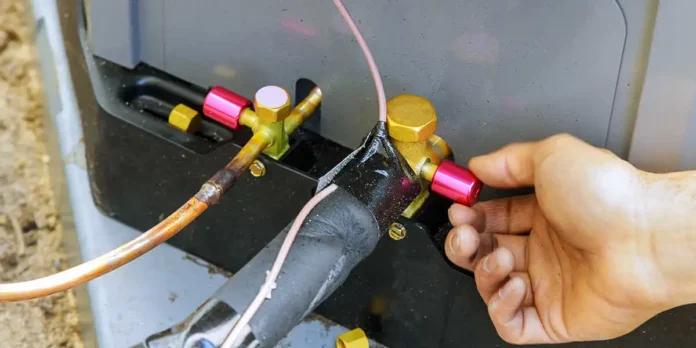
Your vehicle’s AC system is a complex part. There’s a whole cycle of pressure, temperature, and flow. The AC expansion valve, a tiny part, does this big job of regulating the flow of refrigerant into the evaporator. The very process that makes sure your AC works fine. 

But this little valve often gets ignored. When it fails, your whole system takes a hit. That’s why so many people end up needing car AC repair. This is not because the whole system is compromised, but because this one little component quit doing its job. 

Not clear? Let’s discuss in depth.

What is an AC Expansion Valve? 

The AC expansion valve controls how much refrigerant flows into the evaporator. This is to make sure that the AC does not cause things to freeze up or slow down.

Your vehicle AC system works by changing the refrigerant’s pressure and temperature.  The expansion valve plays the middleman. It takes high-pressure liquid refrigerant from the condenser and releases it into the evaporator at low pressure. That’s what lets the refrigerant absorb heat and cool the air before it reaches your vents. 

Some vehicles use an orifice tube instead of the tiny valve. The orifice tube is fixed. It does not adjust based on conditions. The valve, on the other hand, is smart. It senses temperature and pressure. Then it can adjust flow in real-time. That makes a big difference in how effectively your AC works. 

If the valve is clogged or worn out, your AC loses its balance. It might blow warm air or cool unevenly. In Dubai, where reliable cooling is a must, that’s a problem you want to fix fast. 

Signs Your Expansion Valve Needs Replacement

One of the most common culprits behind your ineffective AC is a failing expansion valve. When this tiny valve starts acting up, your AC cannot cool properly. Sometimes, it lets too much refrigerant. Sometimes, it does not. That’s why your AC might feel cold one minute, and warm the next. You might even notice ice forming on the evaporator coils. That’s a red flag. 

A strange hissing sound from under the hood? It’s another symptom. It means pressure is building up in places it should not. If you ignore these signs for long, your compressor could be the next victim. Replacing a valve is a lot easier (and cheaper) than replacing the compressor. 

And Dubai’s temperatures make it worse. Your car’s AC has to work overtime. So, when the expansion valve starts to wear out, the system breaks down. 

That’s why many drivers end up searching for car AC repair in Dubai around the summer months. It often starts with a small issue and turns out to be a bigger one. Catch it early and your car will thank you. 

Causes Behind a Faulty Expansion Valve

Like most car parts, expansion valves don’t last forever. Over time, normal wear and tear can slow them down. Contaminated refrigerant is another reason. Besides, moisture or debris in the system clogs the valve. 

Using the wrong refrigerant or oil can also cause damage. If the AC system does not get regular checkups, small issues turn into major repairs. A little maintenance can go a long way. 

Step-by-Step Guide to Replacing the Expansion Valve 

Replacing an expansion valve is no rocket science. But you need to practice precision and patience. Before that let’s discuss the tools you will need for this:

  • Refrigerant recovery kit
  • Wrench set
  • Safety gloves and goggles
  • New expansion valve
  • O-rings (always replace the old ones)
  • Vacuum pump and AC recharge kit

Now let’s break down the steps for you:

Recover the Refrigerant 

First things first. Never release refrigerant into the air. Use a proper recovery machine to safely pull it out of the system. If you don’t have the machine, visit a certified garage for this step. 

Find the Valve

You will find the valve near the evaporator core (usually it is there). Sometimes, that could be under the dashboard or near the firewall in the engine bay. Your car’s service manual will help you know the exact spot. 

Remove the Old Valve

Once you found the expansion valve, be careful with loosening the fittings. Use a wrench to remove the valve. Take note of how everything is positioned. Thus, you will be able to install the new one. 

Install the New Valve with Fresh O-Rings

Never reuse old O-rings. They don’t seal properly. Fit the new valve in place and tighten. Make sure it’s not overtightened. 

Vacuum and Recharge the System

Use a vacuum pump to remove air or moisture from the system. It’s time to recharge with the correct amount of refrigerant. This is the part that needs precision. Make sure it’s enough (not too much or not too little). Otherwise, your AC won’t work right. 

Test the System

Fire up the engine. Switch on the AC. And check the airflow now. Is it cooling properly? Do you hear any weird sounds or fluctuations? 

A word of Caution

Replacing the expansion valve at home is not for everyone. A small mistake can hurt you big time. If you are unsure, opt for car AC repair in Dubai from licensed professionals. They have the right tools, training, and know-how to get it done without risk. 

Conclusion

The expansion valve is a small part of your car’s AC. But the role it plays in keeping your car cool is big. In Dubai’s heat, it’s a lifeline. 

So, don’t wait for your AC to give out completely. Have it checked on a regular basis to be on the safe side. This is especially important during the summer months. If you notice the signs we talked about, act early. It takes a quick fix today to solve bigger problems of tomorrow.

How to Prepare Your Car’s AC for Sharjah’s Summer

0
How to Prepare Your Car's AC for Sharjah's Summer

The significance of a well-functioning air conditioning (AC) system becomes a source of relief when the summer sun starts to shine. A cool and cozy automobile interior is a comforting necessity whether running errands, traveling to work, or on a weekend trip. 

We at Deutsches Auto Service Centre understand the importance of your car’s air conditioning system, particularly in the sweltering summer months. For this reason, we’ve created this comprehensive guide to give you peace of mind knowing your car’s air conditioner is in the best possible condition. We can assist you with everything from auto AC repair to maintenance suggestions, ensuring your comfort and safety on the road.

Why Is Summertime Auto AC Maintenance Important?

The air conditioning system in your automobile works tirelessly to keep you comfortable during the relentless summer heat. However, your air conditioner may struggle to operate effectively without regular maintenance, leading to discomfort and potential health risks. 

Regular maintenance ensures your air conditioning system operates efficiently, providing optimal cooling and increased fuel efficiency. Therefore, it must be checked to prevent potential health hazards and keep running efficiently throughout the warmer months.

Indications That Your Vehicle’s AC Needs Repair

Ensuring your car’s air conditioning system operates correctly before the summer heat gets too much is crucial. The following are some typical indicators that your air conditioner may require maintenance or diagnosis:

  • Insufficient Airflow: Weak airflow from the vents may be caused by a clogged filter or a malfunctioning AC blower fan.
  • Warm Air: If your air conditioner blows warm air rather than chilly air, it may have a compressor problem or low refrigerant.
  • Unusual Sounds: Unusual sounds, such as rattling or screeching, may indicate an issue with the belts or AC compressor.
  • Foul Odours: A musty or disagreeable odor from the vents frequently indicates a buildup of mold or bacteria in the system, which calls for cleaning or eliminating AC germs.
  • Leaks: Water or refrigerant puddles beneath your vehicle indicate that your air conditioning system needs maintenance, which may involve professional leak detection or repair of the AC gas leak.

The Best Advice for Car AC Maintenance

  1. Frequent Inspections for Maintenance

The air conditioner in your car needs to be correctly and consistently maintained. During your car’s periodic maintenance in your city’s garage, you must ensure that your vehicle receives regular inspections and AC repairs from a qualified professional. This ensures that the AC repair service is done correctly, giving you confidence in your car’s cooling capabilities and helping to minimize and eliminate possible issues.

  1. Replace or Clean Air Filters

Air filters for cars are another essential part of air conditioners’ cooling efficiency. Over time, the AC filter accumulates dust and debris, decreasing airflow and the vehicle’s ability to cool. Therefore, you should focus on replacing the air filters before summer arrives. We advise only purchasing or replacing car air filters from reputable and validated car AC repair in Sharjah.

  1. Verify and Maintain the Levels of Refrigerant

The AC in your car won’t operate if the refrigerant level is low. The refrigerant is the primary component of your car’s heating and cooling system. If everything is operating as it should, but you are not receiving cool air, the refrigerant level in your automobile air conditioner is low. You shouldn’t avoid it because a low refrigerant level can harm the car’s air conditioning compressor. 


We advise you to check the car’s air conditioner’s refrigerant level at each scheduled maintenance. Don’t hesitate to replenish it right away if you see that it is becoming low. Always schedule or hire a car service from a reputable auto repair specialist who will be open and honest with you, give you a clear picture of your vehicle’s condition, and advise you on the best course of action.

  1. Maintain Clean Evaporator and Condenser Coils

The other two crucial car air conditioning parts are the condenser and evaporator coils. These parts work together to produce cooling and heat exchange. Condensers, evaporators, and air filters collect dust and debris, which impairs performance and raises the pressure on the AC compressor. The health of the car’s condenser and evaporator should also be a priority for routine maintenance.

  1. Park in the Shade

When you leave your automobiles in direct sunlight, the temperature rises, making it difficult for your air conditioner to regulate or cool it. To lessen the impact of the sun, you should use sunshades on your windscreens or windows. You should always park your cars under trees or in shaded spots, such as a building parking lot.

Following the advice above can help any car owner ensure that their vehicle’s air conditioning system is operating correctly. Additionally, by monitoring your car’s air conditioning system, you can determine whether it has been serviced during routine auto maintenance.

Conclusion

In summary, these are the fundamental automobile AC maintenance guidelines that all car owners should adhere to to maintain their air conditioners’ longevity and good health. Additionally, it’s time to keep your car’s air conditioning system fully functional now that the sweltering summer has arrived.

Mina Rashid Testing Center: All You Need to Know in 2025

0
Mina Rashid Testing Center

Introduction : The Gateway of Testing: Why Mina Rashid Is Important

You’re traveling, coming back from vacation, or perhaps going to a high-pressure event in Dubai. Whatever it is, there is one thing that separates you from your next step — a COVID test. That’s where the Mina Rashid Testing Center steps in.

Tucked in one of Dubai’s famed and calculated locations, Mina Rashid is more than just a cove. In recent years, it has transformed into a vital health checkpoint for residents, travelers, and frontline workers alike. Whether you’re chasing PCR clearance for travel, attending a major event, or just being proactive, this center has earned its place in the city’s public health map.

In this blog post, we’ll cut through the confusion and dive deep into the services, process, tips, and even some of the behind-the-scenes facts of Mina Rashid Testing Center.

What is Mina Rashid Testing Center?

Let’s begin with the fundamentals. Mina Rashid Testing Center is a PCR COVID-19 testing center strategically situated close to the Port Rashid area of Dubai. It became a go-to place for most people  particularly those in and around Bur Dubai, Deira, and Satwa  due to its convenience, streamlined process, and midtown location over time.

In contrast to smaller clinics or hospital-based testing centers, Mina Rashid was established as a stand-alone, high-volume testing facility  capable of running thousands of tests per day with minimal waiting times.

 Location and Accessibility

Where Exactly Is Mina Rashid Testing Center?

The Mina Rashid Testing Center is located at Gate 3, Mina Rashid Port, close to the Seafarers’ Club and Customs Building. It is conveniently accessible from:


  • Al Mina Road
  • Sheikh Rashid Road
  • Al Shindagha Tunnel
  • Bur Dubai and surrounding areas

How to Get There

  • By Car: There is plenty of parking space, but traffic becomes slow during peak times (afternoons especially).
  • By Taxi: Instruct the driver “Mina Rashid Port Gate 3 Testing Center.” Most taxi drivers know it.
  • By Public Transport: Although the center isn’t on a metro line, nearby bus stops can drop you within walking distance.
  • Pro Tip: Ask Google Maps or Careem’s location pin — simply type “Mina Rashid COVID Testing Center.”

Services Provided

COVID-19 PCR Testing

The main service is, obviously, COVID-19 PCR testing. If you require a test for travel, work, contact tracing, or for peace of mind, this is the place to come.


Types of PCR tests offered:

  • Standard PCR: Results in around 24 hours.
  • Express PCR: Results in 4-6 hours (at extra charge).
  • Emergency PCR: 1-2 hour results (restricted slots, usually for medical/travel emergencies).

Travel Certificates

International flight accepted negative PCR test certificates, DHA approved, are issued to travelers. These are sent via email and may be printed locally at nearby kiosks or sent directly to airlines or immigration.

Rapid Antigen Tests (Occasionally Available)

In certain instances, particularly during event season or peak travel periods, the center also provides express antigen tests, but this is not guaranteed.


The Testing Experience: What to Expect

Booking Your Test

You can walk in, but it’s strongly advised to book in advance through the DHA app or website.

Steps:


  • Download the DHA app.
  • Register or log in with your Emirates ID.
  • Select Mina Rashid Testing Center.
  • Select time slot and test type.
  • Walk-ins are welcome, but you may be waited on for as long as one hour during peak hours.

Arrival and Check-In

When you arrive:


  • Present Emirates ID and confirmation of booking.
  • Temperature and ID check at the gate.
  • Queue in Express or Regular lane.
  • The personnel are effective, multi-lingual, and courteous — usually speaking Arabic, English, Hindi, and Tagalog.

Tips for a Smooth Visit

Book online to prevent lengthy queues.


  • Get there 10–15 minutes ahead.
  • Bring your Emirates ID and confirmation email.
  • Wear a mask, even though it’s no longer mandatory everywhere.
  • Check timing updates during holidays on the DHA app.

Is It Still Relevant in 2025?

This is the big question. With many countries relaxing COVID testing requirements, is Mina Rashid still necessary?


Absolutely  and here’s why:

Some destinations still require PCR for entry (especially in Asia and parts of Africa).

Testing is still necessary for medical clearances, work visas, or travel to high-risk areas.

The UAE maintains its “test-and-isolate” policy for most institutions, schools, and companies.

And as viruses mutate (remember the 2024 flu-COVID double whammy wave), testing facilities like Mina Rashid are vital fallbacks to public health.

Mina Rashid Testing Center Alternatives

  • Should Mina Rashid be too far or booked solid, here are some highly-rated alternatives:
  • Al Khawaneej Testing Center
  • City Walk DHA Testing Center
  • Dubai International Airport COVID-19 Lab (for travelers)
  • Private hospitals (Mediclinic, Aster, NMC – higher cost, more comfort)

1. Behind Mina Rashid Testing Centre Scenes

Angle: Narrative or in-depth style article about what actually happens behind the scenes. Imagine interviews with the staff, how high-volume testing is organized, the process of handling samples, and what happens once your swab is taken.

Why it’s interesting: Helps readers appreciate the effort and mechanisms involved.


How to Create a Strong Brand Presence for a Restaurant in Competitive Markets

0
Strong Brand Presence for a Restaurant


Your restaurant’s mission, value, and personality are the three main factors that will help you in the branding decisions of your restaurant brand. They will also help you stand out in the highly competitive market and have something that makes you unique from the customer’s perspective.

Starting from defining the restaurant’s mission

This stage is to understand what the restaurant stands for and what it wants to achieve. So, start by asking yourself what the restaurant does. The answer is to define the specific cuisine you are going after and the dining experience your restaurant will be capable of providing to its guests. For example, if your restaurant is focused on business events, where the cuisine is more professional and sophisticated, or if your restaurant is dedicated to food of specific roots, including Armenian, Chinese, etc, and where the atmosphere is more family-friendly for casual dining experiences.

The next question is to understand the reason behind opening the restaurant of those criteria. So, you can ask yourself why you’re opening that specific restaurant. In this stage, you can reflect on the purpose behind opening the restaurant, is it maybe the passion for food, a desire to bring people together, or a wish to make something your own, a functional public space that belongs to you? 


The last stages of defining the mission

You can proceed to how and what you do to reach the desirable results. To understand “how”, describe the methods you will use, including the sourcing of the local ingredients and providing excellent service, paying attention to cleanliness, and other key factors that will slowly add up to your company branding. And to understand “what to do for the desirable results” you can set the main goals that reflect your mission. The letters can be the restaurant’s community engagements and even the culinary innovations.


Lastly, what are your restaurant’s unique selling points (in other words the USPs)? This stage is to help you define some factors, including procedures, special offerings, the menu, signature dishes, hall color palette, etc,  that could be unique and available only in your restaurant. This is not only a uniqueness, but also a part of your restaurant branding, that will help you in the long run.


Now, it’s time to understand the concept of values for your restaurant


The values of your restaurant are the principles that represent the restaurant’s operations and interactions. These mostly cover the quality, which is recommended to be high, regardless if it’s the ingredients of the dishes you will make, or the meals and dishes themselves. The next value that a reputable restaurant should follow is the concept of community support, for example, whether your restaurant values the local community or not. 


The last two values are about the sustainability and innovation of your restaurant. The sustainability is about whether you’re integrating eco-friendly practices in your business’ sourcing and operations. The innovation refers to continuous upgrades that will keep your guests in suspense and create an intriguing atmosphere for them. This can be, for example, the regularly changing menus. Keep in mind that complete changes can backfire, so, keep it simple but interesting. 


It’s time to understand your restaurant’s personality


This one is about your communication with your customers and how they perceive you. If you want it to be casual and friendly, or formal and sophisticated. So, how do you establish this personality? 


Start by identifying who your customer is. To do so, you can identify your target audience and the values they have. Now, that you have a brief picture, you can work on your brand voice and make it suited to your customer criteria.


The unique concept of your restaurant


The restaurant market is crowded as it is. This means that additional steps to making your restaurant unique are welcomed more than ever. For example, you can think about making some thematic elements that will support your mission and values. For example, if your restaurant is focused on organic and healthy menus, then you can include special health-conscious meals, including vegan, and gluten-free. In this concept, your restaurant can also offer some dietetic meals, including keto-friendly options. You could also widen the spectrum and include herbal teas or superfood smoothies.


One more tip that would help you stand out is making interesting menus that would reflect the brand’s personality. Here’s an example, if your restaurant has a business/formal environment, then you can personalize the menu as such, including business lunches and formal dinner menus. On the other side, if your restaurant has a family-friendly concept, then you could make the menus with interesting meal names and include the ingredients for them to have a better understanding. Keep in mind, that the menu of your restaurant is one of the first things your guests pay attention to, so make them interesting and special.

Conclusion

Develop the concept of your restaurant by the three core factors, which are the mission, value, and personality of your brand. Integrate changes that would freshen your restaurant’s identity and help it stay on top of the market. This is basically how to start to create a strong brand presence for your restaurant.

Recent Posts

Oud Al Muteena

Discovering Oud Al Muteena: Dubai’s Hidden Gem

0
Nestled inside the coronary heart of Dubai, Oud Al Muteena is a community that's been catching the eye of locals and expats alike. This...
UAE Petrol Prices

UAE Petrol Prices: Latest Updates and Trends

0
The petrol prices in the UAE are already a key economic indicator in the world and it is not something that is new. The...
Al Khawaneej 1: A Peaceful Residential Community in Dubai

Al Khawaneej 1: A Peaceful Residential Community in Dubai

0
Have you ever discovered a place that feels removed from Dubai’s frenzy but still connects you to its heart? Al Khawaneej 1 is just...
Banksy Mall Of The Emirates

Banksy Mall Of The Emirates

1
The Unexpected Arrival of Banksy in Dubai’s Mall of the Emirates Let's be realistic when one hears Banksy, the UAE is likely the last destination...
Dubai’s Viral Fix Chocolate

Dubai’s Viral Fix Chocolate: Is It Worth the Taste?

0
Dubai is the city of luxury that has always been known for the fact that food trends tend to become viral overnight. The city...