Where is the Workers Village Mussafah Located?
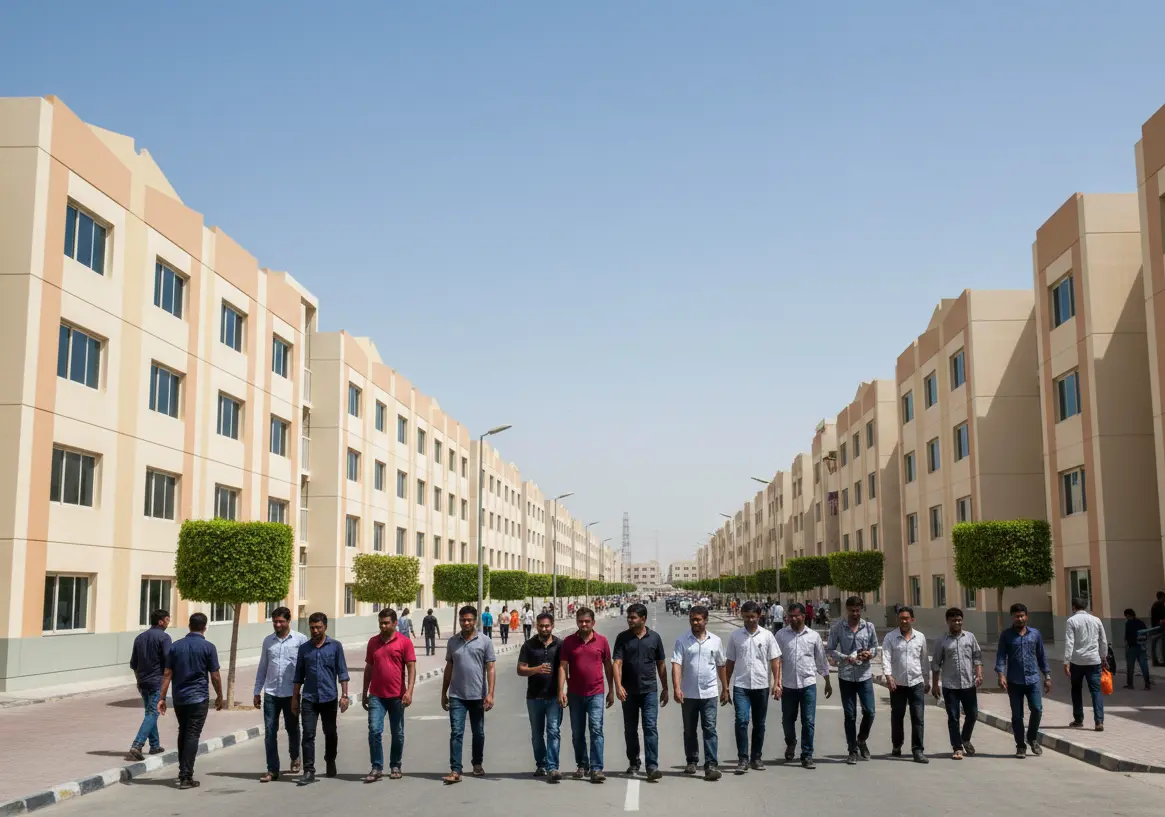
Workers within villages are scattered throughout the Mussafah Industrial Area, one of the biggest industrial destinations in the Middle East. Some 25-30 kilometers away is Mussafah from the city center of Abu Dhabi, rather strategically located to support:
- Construction companies
- Manufacturing units
- Logistics and transports firms
- Oil & gas support services
- Usually, the disposition of these villages lies within the Mussafah ICAD (Industrial City of Abu Dhabi) zones, and hence workers live close to job sites.
Why is this Location Important?
- Living near work provides less:
- Daily travel distance.
- Transportation cost for companies.
- Worker fatigue and absenteeism.
- This factor is all the more crucial for industries which work with fairly tight schedules.
What Is a Workers Village, really?
A worker’s village is a purpose-built residential complex designed specifically to house blue-collar and industrial workers. In Abu Dhabi, these are regulated facilities, not informal labor camps.
- Typical Residents Include–
- Construction workers
- Technicians and electricians
- Factory operators
- Drivers and logistics staff
- Maintenance crews
- Most residents are expatriates from South Asia, Southeast Asia, and parts of Africa, forming diverse micro-communities within the industrial zone.
Living Conditions: What Daily Life Looks Like
Let us talk plain-the life in Workers Village Mussafah is simple, laid-down, and practical.
- Accommodation Setup
- Shared rooms (usually with 4-8 persons)
- Bunk beds with personal lockers
- Central air conditioning
- Regular maintenance and cleaning
- Facilities and Amenities
- Large common bathrooms (cleaned daily)
- Dining halls or kitchens
- Prayer places
- Laundry areas
- Standards, over the past ten years, were improved a lot due to stricter labor housing regulations in UAE.
- “It’s not luxury, but it’s safe, clean, and near work. That’s what matters.”-Site Supervisor, Mussafah.
Government Regulation and Standards
Labor accommodation standards are strictly enforced in Abu Dhabi by the Department of Municipalities and Transport (DMT).
Some Salient Regulations Are-Namely,
Minimum space per person
Good ventilation and air conditioning
Fire safety system
Pest control and hygiene protocol
Conducting regular inspections
If workers earn under a certain threshold salary, according to these regulations, employers are legally obliged to provide housing in compliance.
It is this regulatory framework that changed the classification of Mussafah’s workers’ villages from slum-like substandard camps to organized residential regions.
Facilities and Amenities in Workers Village Mussafah
- Modern workers’ villages go far beyond mere sleeping quarters.
- General Features
- Grocery shops on location
- Medical clinic or first aid centers
- Recreation rooms (TV, carrom, table tennis)
- Outdoor sports areas
- Wi-Fi zones (limited but improving)
- Some bigger villages even house barber shops and mobile repair kiosks, making it a self-sustained little township around.
Transportation & Connectivity
Transportation is one of the biggest advantages of living in Workers Village Mussafah.
How Workers Commute
Company buses and vans
Shared transport pools
Public buses that take Mussafah to Ad city
Travel Time
Mussafah to Abu Dhabi city: 30-45 minutes; Internal industrial zones: 5-15 minutes
This efficiency preserves energy for workers; very important in demanding jobs.
Cost of Living: Reasonably Pacified
Workers normally don’t pay rent; housing is provided by employers; beyond this, their daily expenses are not much.
Average Monthly Expenses
Food (self-cooking): AED 300-500
Mobile & data: AED 50-100
Personal items: AED 100-200
Compared to the city lifestyle, it is extremely cheap, allowing workers to save and transfer through remittances.
Social Life and Community Culture
Life is communal here. Privacy is limited, while community ties grow stronger.
What an Evening Looks Like
Cooking and sharing meals
Watching cricket or football matches
Calling home
Casual gathering after prayers
Quiet celebrations for festivals such as Eid, Diwali, and Onam, usually organized among oneself.
This affinity helps stave off homesickness, a palpable challenge for expatriate workers in the long run.
Pros & Cons of Living in Workers Village Mussafah
Pros
Proximity to worksites
Low cost of living
Regulated safety standards
Strong community support
Utilities managed by the employer
Cons
Limited privacy
No arrangement for visitors
Distance from city entertainment
Very basic living (not luxurious)
A trade-off between comfort and convenience.
What Workers Village Mussafah Means to Abu Dhabi
Behind every skyscraper, road, and pipeline is a workforce in need of safe, decent housing. Workers’ villages are not merely accommodations, but they are part of the infrastructure.
Abu Dhabi is frequently pointed out by urban planners as a model for:
Centralized labor housing
Less urban congestion
More worker welfare
In many ways, Mussafah’s workers’ villages are the silent backbone of the capital’s growth.
Prospect of Workers Housing in Mussafah
Going forward, some trends indicate:
Smart monitoring system
Better recreational areas
Faster internet
Increased mental health support
Greener energy-efficient buildings
As Abu Dhabi industrializes, worker housing will keep up with it.
Flat rent in Workers Village Mussafah:
Where workers generally stay
In Mussafah, in a purpose-built workers village and shared accommodation for staff:
Rent per worker:
~AED 250–500 per month. This is much like the general price per person for shared accommodation (sharing a room with people), and it depends on room size and availability of air conditioning.
Most times, it is paid for by employers:
In most cases, the rent is paid directly to the employees by the company as part of the employment package, particularly for industrial workers.
Utilities are included in the rent:
Usually, water, electricity, and waste collection are covered in the rent, as a result of which workers do not receive any separate utility bills every month.
Key point:
For most labourers, rent is not a personal monthly expense — it’s a company responsibility.
Other housing options (commercial rent)
A commercial staff accommodation is also available in the Mussafah industrial area, outside regulated workers villages, for companies or groups accommodating larger groups:
Annual Rent (group accommodations / larger shared units):
Typically AED 15,000–24,000 per year (about AED 1,500–2,000 per month) for a unit suitable for two or more persons cohabiting (most often multiple rooms).
Typical Size:
These rooms are approximately 200-250 sq. ft. each.
This type of rent usually applies when a company or a group rents out an entire building or several rooms and then divides costs amongst workers or where workers rent privately instead of living in regulated workers’ villages.
Other daily costs for the workers
Even if rent is covered, there will still be some amount of living costs for the workers. Typical worker budgets can include:
Food & Groceries
If cooking meals: ~AED 300-500/month
Budget meals and sharing groceries can be very cheap if meals are prepared in common kitchens.
Mobile & Data
AED 50-100/month
Prepaid mobile plans are cheap and quite popular amongst workers.
These rates agree with the basic cost of living estimates across Abu Dhabi for ordinary groceries and mobile services.
Transportation Costs
Free transportation from the village to work sites is mostly arranged by the company. If not:
Low monthly rates for public bus or shared transport, compared to living in the city center.
As a baseline context, a monthly public transport pass in Abu Dhabi costs under AED 300/month for city commuting — but workers often have arrangements made by their corporations.
In most cases, rent isn’t included in the worker’s budget, so their real expenses could be even lower than this for basic sustenance.
Important notes
Employer Coverage
Rent + utilities = more commonly covered by employers for workers tied to visa permits in industrial work.
Workers often only handle personal costs like food, phone, and little personal items.
Cost Differences
Workers’ village housing is much cheaper than city rental options (like apartments or shared flats in central Abu Dhabi), where shared housing can cost AED 1,200–2,500/month or more.
Gulf Careers Hub
Living outside the workers village — such as private shared housing — increases monthly expenses significantly.
Domiciles of Residing Employees Main Building-Mussafah
Workers’ Village in Mussafah Address: Sector M24, 12th Street, Mussafah, Abu Dhabi, United
Types of Residential Units in Workers Village Mussafah
Workers Village Mussafah is not merely one kind of dormitory but a multi-tier housing community to cater to a diversified workforce, from laborers to supervisors and administrative staff. The layout and unit types show what job roles and responsibilities require space and privacy in different scales.
Manager & Administrator Apartments
Studio Apartments – Compact single-room units equipped with kitchenette and bath.
Bedroom Units – Bedroom with living area and kitchen.
Bedroom Units – Larger layout for on-site executives or families.
Usually features: private kitchen, bath(s), wooden cabinets, central A/C, TV and internet access. These units feel more like small flats than typical worker rooms.
These suit managers or staff having family needs, in comfort and providing more privacy than general worker housing.
Supervisor & Technician Residences
Along with the privacy requirements of living alone, shared accommodation is paramount for these technical staff and team leaders:
Small Shared Rooms Sizes around 22 – 50 m².
Occupancy: Usually for 1 – 6 residents.
Amenities include attached bathroom, central air-conditioning, basic furnishings (wardrobes, even TV, fridge), and in many cases, included shared recreation areas.
Between dormitories and apartments.
Projected Worker Dormitory-Style Residences
Most typical of housing, it is functional and community oriented.
Large Shared Rooms: About 50-60 m2.
Capacity: Around 6-10 people per unit.
Features:
Shared living space with bunk beds.
Centralized ablution and bathroom areas.
Lockers/storage units for personal items.
Centralized A/C, sometimes multiple units per room.
TV/Satellite (optional) and internet (mostly optional as well) access, sometimes limited.
It is economical and community centric – workers share daily living spaces but still have basic comforts and essentials.
Other (Less Common) Options
Mostly, the official Workers Village follows the stated three categories. However, staff accommodations that are adjacent or attached to it may include other categories.
Family Accommodation Units: Smaller clusters or large rooms specifically designed to accommodate married workers with dependents — rather limited in number, though.
Workers Village Mussafah offers cheap accommodation choices: very cheap by Abu Dhabi standards (especially when rents and utility bills are and are likely to be paid by employers). Workers who live carefully can save money to send back home; outside rent there are not many expenses.
Rent per person (in Village): Dh 250-500/month (paid very often by company)
Various Shared Commercial Housing: Outside the “official” village, stand-alone staff units or rooms are for rent in Mussafah – they generally house 4-7 beds or more ideal for companies and workers requiring flexible configurations. Less standard, but generally common across the industrial area.
How These Units Differ in Daily Life
This is how the unit type differs, according to real-life experience:
Unit Type Privacy Per Person Space Resident Typical
Manager/Apartment High Big Supervisors, Admin Staff
Modified Middle High Average Technician, Middle-level-supervised
Worker dormitory Low Limited General laborers
It is assigned in accordance with role and responsibility rather than just a company budget.
Why Does It Matter?
Worker moving to Mussafah: Knowing what type of room you will end up in will help with budget, expectations, and daily routines.
Employer arranging accommodation: Match unit types to job grade-increasing satisfaction and compliance.
Planner or policymaker: The clear categories will enhance regulation and welfare improvements.
Nothing in Mussafah Workers Village fits all-the Workers Village is a built and structured multiscale accommodation ecosystem servicing a gigantic and diverse workforce under one roof.
Core Amenities Inside Workers Village Mussafah
For this, Workers Village Mussafah has been carved into a residential niche providing for all needs: not just a place to sleep, but also a habitat that sustains daily life, restful comfort, and health of its residents.
Accommodation Aid
Shared and private rooms come fully furnished with beds, lockers, and climate control (most units have air conditioning).
Regular cleaning and housekeeping services would help maintain a decent level of hygiene in respect to shared spaces.
Food & Dining
Food and dining is one of the most salient daily amenities:
These are mess halls / dining halls where the foods were served, and residents have often praised them for their hygienic and nutritious alternatives.
Cheap cafeterias serving multi-cuisine dishes suited to the diverse worker population.
On-site supermarket and petty supermarkets for daily provisions and snacks.
Food being available within the village saves up on time and money; more importantly, it saves on travel after long shifts.
Health & Safety Services
First-aid rooms and small clinics right inside the village for prompt attention to minor injuries/illnesses.
Healthcare support linked with local hospitals (e.g., partnerships with providers such as VPS Healthcare’s Lifecare).
24/7 security teams and CCTV surveillance for community safety.
This focus on health and safety gives workers peace of mind knowing that urgent needs are around the corner.
Religious & Spiritual Spaces
Prayer rooms and mosque facilities within the village complex.
These spaces support the spiritual needs of the diverse workforce, who may observe different practices throughout the year.
Facilities for Daily Life
Laundry and Hygiene
Laundry on-site, or service with collection and delivery, if the laundry facilities are not on-site.
Clean Bathroom & Toilets
Regularly maintained and cleaned shared bathrooms and sanitation facilities.
Connectivity Wi-Fi zones / internet access in different parts of the village to help residents keep in touch with family and friends.
Recreation & Common Spaces
Workers Village Mussafah is functional yet allows for leisure and social needs:
Sports courts (e.g., football/soccer fields, basketball courts).
Gym or fitness spaces for workout and recreation.
Chillax areas or parks for the use of workers to unwind, meet friends, or otherwise relax post-their work.
Village Mall or retail shops to go shopping and social-life without stepping beyond the complex.
These places help develop a sense of community and are really important for the well-being of workers far away from home.
Support Services
Security guards and emergency systems like fire alarms and exhortation for the exit.
The Dubai Web
Transport arrangements for picking and dropping workers to the job sites, coordinated with the employers.
Services available in the immediate vicinity-walking distance-clinics, pharmacies, ATMs, and mobile recharge shops.
These services help workers manage daily needs without incurring additional costs or wasting time traveling far.
The Dubai Web
Importance of These Amenities Why This Matters
Workers Village Mussafah is not only just housing; instead, it is an entire ecosystem that is supportive towards:
safety and hygiene
day-to-day comfort
social and recreational needs
connectivity to job locations and services
In an integrated way, this uplifts the quality of life of the residents; thereby assisting companies to comply with housing and labor standards in Abu Dhabi.
Conclusion
✨ The Workers Village Mussafah is one of the cheapest accommodation options for workers in Abu Dhabi-most especially when rent and utilities are paid for by the employers.
Basic living expenses for the workers (other than rent) are low enough, enabling many of them to save and send money home if they manage their income well.