
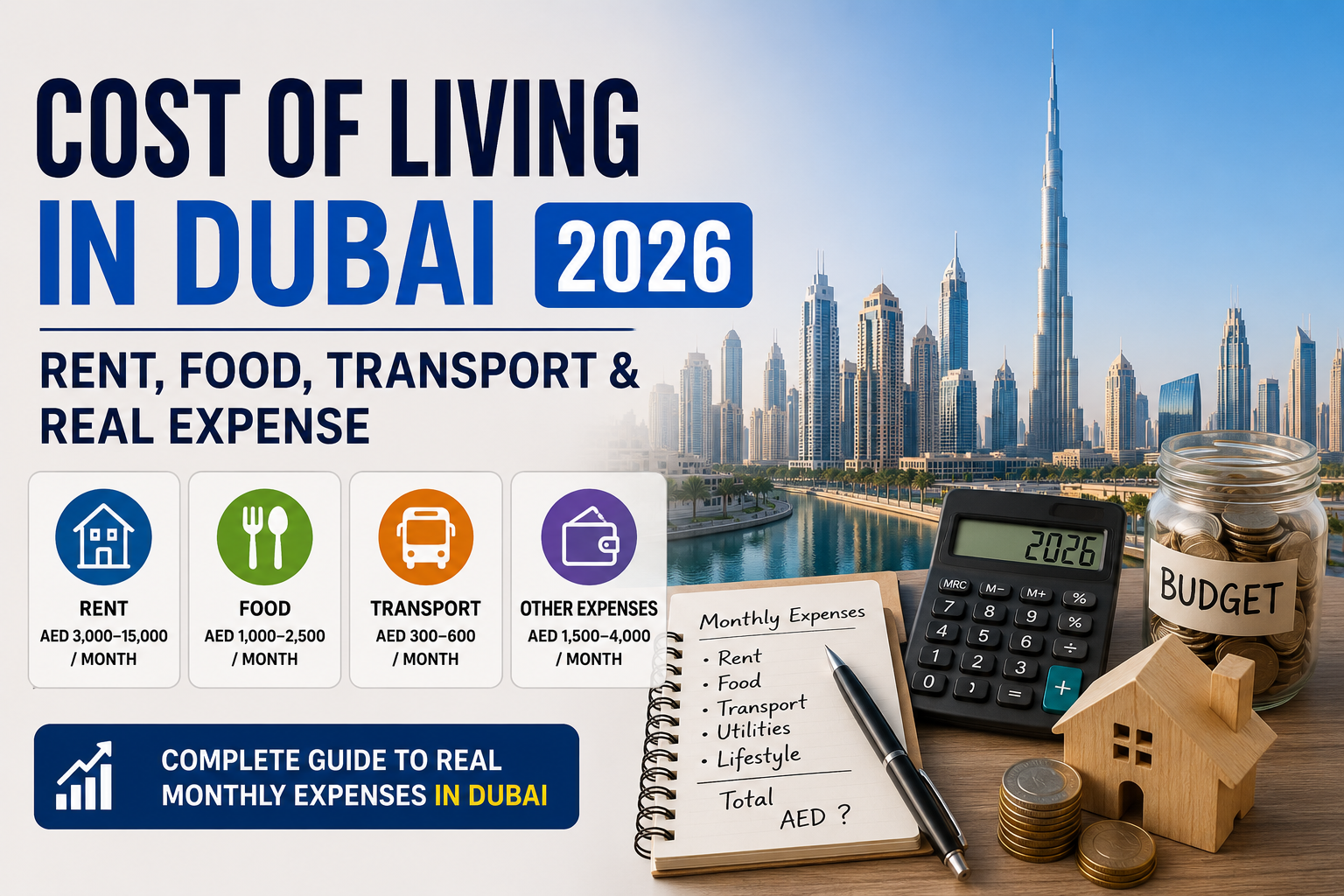
Dubai continues to attract thousands of expats, digital nomads, and professionals every year — and for good reason. The city offers world-class infrastructure, a tax-free salary structure, and a lifestyle that blends luxury with practicality. But before you pack your bags, you need to understand the real cost of living in Dubai in 2026.
This guide breaks down every major expense — rent, food, transport, healthcare, schooling, and entertainment — so you can plan your finances with confidence.
Is Dubai Expensive to Live In?
The short answer: it depends on your lifestyle.
Dubai has a reputation for luxury, but it’s entirely possible to live comfortably on a mid-range budget if you make smart choices. However, it’s also one of the few cities in the world where your monthly bills can vary by 300–400% depending on your neighbourhood, habits, and family situation.
The good news? There’s no income tax in Dubai. Your salary is your take-home pay — a significant financial advantage compared to Western cities like London or Toronto.
Monthly Cost of Living in Dubai 2026: Quick Summary
| Expense Category | Single Person (AED) | Family of 4 (AED) |
|---|---|---|
| Rent | 4,500–9,000 | 9,000–20,000 |
| Food & Groceries | 1,200–2,500 | 3,500–6,000 |
| Transport | 500–1,500 | 1,500–3,000 |
| Utilities | 400–800 | 800–1,800 |
| Healthcare | 300–600 | 800–2,000 |
| Entertainment | 500–1,500 | 1,000–3,000 |
| Total Estimate | 7,400–15,900 | 16,600–35,800 |
Note: AED 1 ≈ USD 0.27. All figures are approximate 2026 estimates based on current market data.
Also Read This: Dubai Travel Guide 2026: Everything You Need to Know Before You Go

1. Rent in Dubai 2026: The Biggest Monthly Expense
Rent is the single largest cost for most residents in Dubai — and it has continued to rise in 2026, especially in premium neighbourhoods.
Popular Areas and Average Annual Rents (2026)
Budget-Friendly Areas:
- Deira — Studio: AED 28,000–40,000/year | 1BR: AED 40,000–55,000/year
- Al Quoz — Studio: AED 26,000–38,000/year | 1BR: AED 38,000–52,000/year
- International City — Studio: AED 22,000–30,000/year | 1BR: AED 30,000–42,000/year
Mid-Range Areas:
- Jumeirah Village Circle (JVC) — 1BR: AED 55,000–75,000/year | 2BR: AED 75,000–100,000/year
- Al Barsha — 1BR: AED 65,000–85,000/year | 2BR: AED 90,000–120,000/year
- Dubai Silicon Oasis — 1BR: AED 50,000–70,000/year | 2BR: AED 70,000–95,000/year
Premium/Luxury Areas:
- Downtown Dubai — 1BR: AED 110,000–160,000/year | 2BR: AED 160,000–250,000/year
- Dubai Marina — 1BR: AED 95,000–140,000/year | 2BR: AED 140,000–220,000/year
- Palm Jumeirah — 2BR: AED 200,000–350,000/year | Villas: AED 400,000+/year
Key Things to Know About Renting in Dubai
- Most landlords request 1–4 cheques per year. Fewer cheques often means a higher rent price.
- Rent increases are regulated by RERA’s Rental Index, but many landlords test the market with above-index pricing.
- Agency fees are typically 5% of annual rent, paid once.
- Security deposits are usually 5% for unfurnished and 10% for furnished apartments.
- Always verify the property on the Dubai REST app before signing.
2. Food & Grocery Costs in Dubai 2026
Dubai has a wide spectrum of dining options — from AED 3 shawarmas to AED 500 tasting menus. Your food budget depends heavily on how often you cook at home versus eating out.
Grocery Shopping
Monthly grocery costs for a single person typically range from AED 800–1,500, while a family of four spends AED 2,500–5,000 per month.
Affordable supermarkets:
- Lulu Hypermarket
- Carrefour
- Nesto
Premium supermarkets:
- Spinneys
- Waitrose
- Géant
Sample grocery prices (2026):
- Chicken breast (1kg): AED 18–28
- Rice (5kg): AED 22–40
- Eggs (12): AED 12–18
- Milk (1L): AED 6–10
- Fresh vegetables (weekly basket): AED 60–120
Eating Out
- Budget meal (local restaurant/fast food): AED 15–35
- Mid-range restaurant (two people): AED 120–250
- Casual café lunch: AED 50–90 per person
- Fine dining (two people): AED 400–900+
Cooking at home saves a lot. A person who eats out 3–4 times a week can expect to spend AED 2,500–4,000/month on food alone.
3. Transport Costs in Dubai 2026
Dubai is a car-centric city — but that is slowly changing as the Metro expands and bus networks improve.
Option 1: Public Transport
The Dubai Metro, buses, and water taxis are affordable and air-conditioned — a major plus in summer.
- Metro ride: AED 3–8.50 depending on zones
- Monthly Metro pass: AED 300–350
- Bus fare: AED 2–5 per trip
- Tram (JBR/Marina area): AED 3–4 per trip
A person using the Metro daily can get around on AED 350–500/month.
Option 2: Owning a Car
Car ownership is common but comes with significant additional costs.
- Petrol: AED 2.80–3.20/litre (2026 estimate — prices are updated monthly)
- Car insurance: AED 2,500–6,000/year depending on vehicle
- Salik (toll): AED 4 per gate crossing; AED 300–600/month for regular users
- Parking: Free in many areas; AED 2–6/hour in paid zones
Monthly car-related costs (excluding loan): AED 1,200–2,500
Option 3: Ride-Hailing
- Careem/Uber: AED 15–40 for a short trip within the city
- Using ride-hailing daily: AED 1,500–3,500/month — the most expensive option
4. Utilities in Dubai 2026
Utility bills in Dubai can surprise newcomers — especially in summer when air conditioning runs 24/7.
Average monthly utility bills:
- Electricity & water (DEWA): AED 400–800 for an apartment (AED 800–1,500 in summer)
- Internet (home fibre): AED 250–400/month (100–1,000 Mbps plans)
- Mobile phone plan: AED 150–350/month for a standard postpaid plan
Many apartments advertise “utilities included” in the rent — always clarify before signing.
5. Healthcare Costs in Dubai 2026
Dubai has an excellent healthcare system — both public and private — but quality comes at a price.
Health Insurance
All employers are legally required to provide health insurance to employees. If you are self-employed or a freelancer, you must purchase your own.
- Basic plan (individual): AED 600–1,500/year
- Comprehensive plan (individual): AED 2,500–8,000/year
- Family plan (spouse + 2 kids): AED 6,000–18,000/year
Out-of-Pocket Costs Without Insurance
- GP consultation: AED 200–500
- Specialist consultation: AED 400–900
- Dental cleaning: AED 300–600
- Prescription medication: AED 30–150 per item
Having good health insurance in Dubai is not optional — it’s essential.
6. Education Costs in Dubai (For Families)
If you’re moving to Dubai with children, education will be one of your biggest expenses. Dubai has a strong private school sector but it comes at a steep cost.
Annual school fees by curriculum (2026 estimates):
- Indian curriculum (CBSE/ICSE): AED 12,000–30,000/year
- British curriculum: AED 30,000–70,000/year
- American curriculum: AED 35,000–80,000/year
- IB (International Baccalaureate): AED 50,000–95,000/year
Additional costs include uniforms, books, school transport (AED 4,000–8,000/year), and extracurricular activities.
Public schools are available for UAE nationals only. Expat children must attend private schools.
7. Entertainment & Lifestyle Costs in Dubai 2026
Dubai is renowned for its entertainment, nightlife, and shopping. Here’s what to budget:
Monthly entertainment estimates:
- Cinema (2 tickets): AED 80–120
- Gym membership: AED 250–700/month
- Beach club access: AED 150–500/visit
- Theme parks (one-time): AED 100–400/person
- Streaming services (Netflix, Spotify, etc.): AED 80–150/month
- Weekend dining/socialising: AED 500–2,000/month
Dubai also offers plenty of free and low-cost activities — public beaches, parks, hiking in Hatta, and souks — which can significantly reduce your entertainment spend.
8. Miscellaneous Costs to Budget For
Often overlooked, these costs can add up quickly:
- Visa renewal/residency fees: AED 3,000–5,000 every 2–3 years
- Emirates ID renewal: AED 300–370
- Home contents insurance: AED 200–500/year
- Domestic help (cleaning, part-time maid): AED 50–100/visit
- Clothing & personal care: AED 500–2,000/month depending on lifestyle
- Annual flights home (if expat): AED 1,500–6,000/year depending on destination
Sample Monthly Budgets in Dubai 2026
Budget Expat (Single Professional)
- Rent (studio in JVC): AED 5,000
- Food & groceries: AED 1,200
- Transport (Metro): AED 400
- Utilities: AED 500
- Entertainment: AED 600
- Total: ~AED 7,700/month
Comfortable Expat (Single Professional)
- Rent (1BR in Dubai Marina): AED 9,500
- Food & dining out: AED 2,500
- Car costs: AED 1,800
- Utilities: AED 700
- Entertainment: AED 1,500
- Total: ~AED 16,000/month
Family (Two Adults, Two Children)
- Rent (3BR in Al Barsha): AED 14,000
- Food & groceries: AED 4,000
- Car + fuel: AED 2,500
- Utilities: AED 1,200
- School fees (2 kids): AED 5,000/month equivalent
- Healthcare & insurance: AED 1,500
- Entertainment: AED 2,000
- Total: ~AED 30,200/month
Is Dubai Worth the Cost in 2026?
For many expats, the answer is a clear yes — but with caveats.
Reasons Dubai makes financial sense:
- Zero income tax on salaries
- No capital gains tax
- Strong job market in tech, finance, healthcare, and real estate
- High average expat salaries compared to many Western countries
- World-class safety and infrastructure
Reasons to be cautious:
- Rent has risen sharply since 2022 and shows no major signs of cooling
- Education and healthcare costs are significant for families
- The lifestyle is easy to over-spend on
The key is matching your expectations to your income. A gross salary of AED 20,000/month is comfortable for a single person, while a family realistically needs AED 35,000–50,000+ to live without financial stress.
Final Verdict: What Salary Do You Need to Live Well in Dubai in 2026?
- Single professional (comfortable): AED 15,000–20,000/month
- Couple (no kids): AED 22,000–30,000/month
- Family of 4 (school-age children): AED 35,000–55,000/month
Dubai rewards those who earn well and spend wisely. With proper financial planning, the city offers an exceptional quality of life — and the tax-free income advantage alone can help you save more than in most global cities.
Frequently Asked Questions
Q: Is Dubai more expensive than London? Rent in certain Dubai areas is cheaper than central London, but education, healthcare, and the lack of subsidised public services can make Dubai costly for families.
Q: Can I live in Dubai on AED 10,000/month? Yes, but with limited lifestyle choices. You’d need to live in a budget neighbourhood, cook at home often, and use public transport.
Q: Are utility costs really high in Dubai? In summer (June–September), DEWA bills can be 2–3x higher due to air conditioning. Budget accordingly.
Q: Is Dubai a good place to save money? With no income tax and disciplined spending, yes. Many expats save 20–40% of their salary in Dubai.