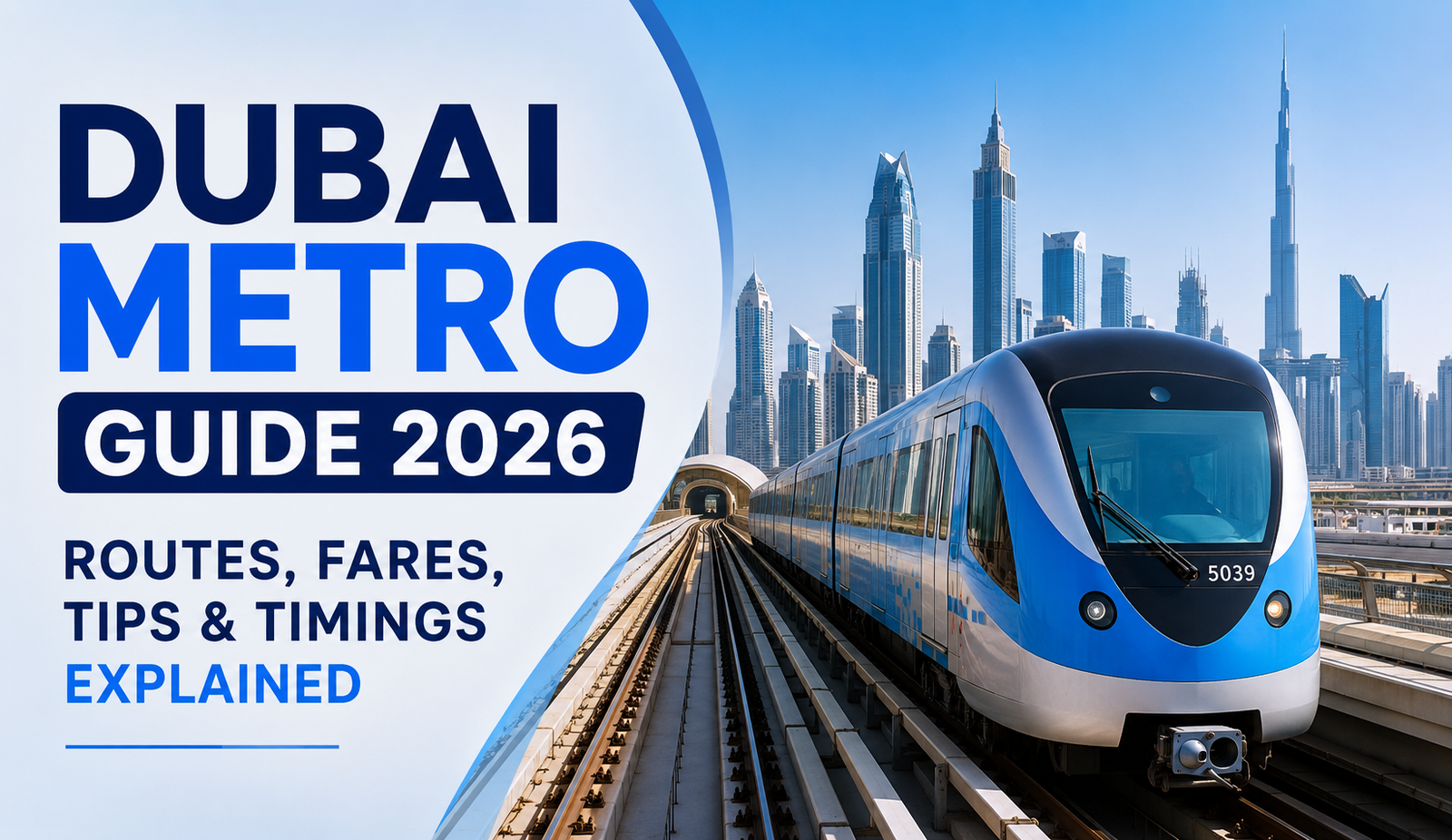
If you’re planning an excursion in one of the largest connected cities of the Middle East, understanding how the Dubai Metro works will save you time, money and lots of confusion. This guide will cover all you need to learn regarding how to use the Dubai Metro in 2026, starting with its two major stations and lines to fares for NOL cards as well as operating hours and some insider info that tourists tend to do not know about.
If you’re a first-time visit or making sure you are up to date for this year’s season, this thorough guide can assist you in navigating your city confidently.
What Is the Dubai Metro and Why It Matters in 2026
It is the Dubai Metro is the backbone of Dubai’s public transport system. It is operated through the Roads and Transport Authority (RTA) it’s the longest urban metro that is driver-free system anywhere in the world. an achievement it has maintained since the beginning of its operation in. The network by 2026 has seen a significant increase in capacity as well as passenger numbers and has become an indispensable transportation option not only to residents, but also for thousands of visitors who come through every year.
Important reasons why the metro is important for 2026 visitors:
- It links Dubai International Airport directly to Dubai’s city centre, as well as Marina, Marina Malls, as well as the major ones.
- Prices are less than taxi charges for the same distances
- Trains are frequently running and there are zero traffic delays
- Air-conditioned networks are an absolute relief in the those hot summer months
- It connects to trams, buses, as well as water taxis to provide complete city coverage.
In terms of sustainability From a sustainability perspective, in terms of sustainability, Dubai Metro also aligns with Dubai’s larger Smart Dubai and green mobility initiatives, which are pushing to reduce the dependence on private vehicles. This makes the metro more significant than it has ever been to 2026.
Dubai Metro Lines: Red Line and Green Line Explained
Dubai Metro Dubai Metro currently operates two main lines.
Red Line Red Line The Red Line is longest and most heavily utilized of both. It runs across Rashidiya located in east until UAE Exchange station in the west. It is in a parallel line to Sheikh Zayed Road through the central city. It is 52 kilometers long and comprises 35 stations.
The most important Red Line stops include:
- Dubai International Airport Terminals 1 and 3
- Union as well as BurJuman (interchange stations)
- Financial Centre (DIFC)
- Dubai Mall and Burj Khalifa
- Business Bay
- Dubai Internet City
- Dubai Marina
- Jumeirah Lake Towers (JLT)
- Ibn Battuta
If you’re a traveler then you’ll use the Red Line for the majority of your trips.
Its Green Line is shorter and runs starting from Creek station until Etisalat station. It covers around 23 km through 20 stations. It connects the more affluent areas, with more significant historical significance within the metropolitan area.
The most important Green Line stops include:
- Al Ras and Gold Souk (Deira markets)
- Al Fahidi (Old Dubai and the historic district)
- Al Seef (Dubai Creek waterfront)
- Union as well as BurJuman (interchange along with Red Line)
The two lines cross paths between Union and BurJuman and allow passengers to change between the two lines without having to pay an extra cost.
Another line, called the Blue Line is currently under construction in phases as part of the Dubai 2040 Urban Master Plan. Check its status on the RTA site prior to traveling.
Dubai Metro Stations: Key Stops Every Visitor Should Know
Instead of simply listing the 55 stations, they are strategically crucial stations to visit 2026.
Airport Terminal 3 The busiest airport station in the system that serves Emirates airlines directly in the hall for arrivals. Terminal 1 is a stop away, serves other international airlines.
Union in addition to BurJuman BurJuman two interchange stations that each metro line connects. It is possible to pass by one of these stations whenever you need to changing lines.
Dubai Mall and Burj Khalifa is one of the busiest stops across the entire network. It is important to note that the station connects to the mall by an air-conditioned pathway that can take about 10 to 15 minutes. Budget extra time here.
Dubai Marina and DAMAC Properties together both stations service both the Marina area, JBR, and are connected to JBR and the Dubai Tram. The area is an ideal destination in the search for what to enjoy in Dubai during the night. There are bars and restaurants on the rooftop, as well as waterfront bars all in walking distance.
Financial Centre -the main entry to DIFC Dubai’s nightlife and dining district.
Ibn Battuta -Ibn Battuta HTML0 – Western part of the Red Line, serving Ibn Battuta Mall as well as the hotels surrounding it.
Also Read This: Dubai Travel Guide 2026: Everything You Need to Know Before You Go
NOL Card: How to Buy, Top Up, and Use It
The NOL card in Dubai is the city’s credit card for transit, which is that is accepted on metros busses, trams, and water busses, and even the Palm Monorail. The cash card isn’t accepted at gates for fare, therefore each rider must have a card or single-use ticket.
The four different types of NOL cards:
- Red NOL Card A single-trip card that can be used for one or two trips. It costs AED 2 per card, plus the cost of your journey. Great for stays of just a few minutes or for one-off trips.
- Silver Card Standard reuse option that is recommended to the majority of users. The cost is AED 25 in total. This includes AED 19 of preloaded credit. Fill up at any machine at stations or through the RTA application.
- Gold NOL card that is connected directly to Gold Class cabin (premium seating). The same AED 25 price, but the prices are higher. Worth it if you value a quieter, less crowded journey.
- Blue NOL Card The HTML0 Blue NOL Card is a personalised card designed for UAE residents. The card comes that offers monthly pass options as well as loss protection for the card. The majority of visitors will not require this.
What is the best way to replenish:
- Machines for ticket sales at all stations accept cash as well as credit cards.
- The RTA mobile app lets you top up through debit or credit cards
- Make sure you have a minimum balance of AED 7.50 always in case the gate will stop you from boarding if the balance falls below the limit of allowed single-fare
Dubai Metro Fares 2026: Zone-Based Pricing Explained
Dubai Metro fares are calculated using a zone-based method. The cost is determined by the amount of zones your journey traverses.
Standard Silver Card rates:
| Zones Crossed | Fare (AED) |
|---|---|
| 1 zone | AED 3.00 |
| 2 zones | AED 5.00 |
| 3 zones | AED 7.50 |
| The maximum (any distance) | AED 8.50 |
Gold Class tickets are about more than double Silver equivalent of similar travel.
Limits and discounts be aware of:
- Children under 5 travel free
- Senior citizens and people who have a determination to travel receive discounted fare rates with a BlueNOL card.
- The daily spending limit is once you’ve spent AED 20 on metro trips during a single day any subsequent journeys in the same day are totally free — which makes days with heavy usage beneficial value
Dubai Metro Operating Hours: Weekdays, Weekends, and Ramadan
The Metro does not operate 24/7. Its timings change depending on time of day.
Standard weekly schedule:
- Monday through Thursday: 05:00 until midnight
- Friday: 10:00 – 10:00 to (next morning)
- On Saturdays and Sundays: 05.30 until 01:01 (next day)
Ramadan durations generally run through the early hours of the morning in order for late night travel Iftar. The metro can run till 02:00 or later some evenings. Visit the RTA site or application for the exact timetable on the dates Ramadan occurs during your trip.
The public holidays like UAE National Day and Eid usually have longer operating hours in order to accommodate higher visitor numbers at malls and other events venues.
Special Cabins and Zones: What You Need to Know
One of the unique features in one of the distinctive features on Dubai Metro is its designated cabin system. Knowing it prior to boarding helps avoid fines and misinformation.
Gold Class Cabin (front of train)
- This is reserved for gold NOL cardholders only.
- Seats are wider and more peaceful surroundings
- Clearly marked by yellow trim
- Fine AED 100. AED 100 for riding with the gold card
Women and Children’s cabin (second cabin)
- Exclusively reserved to women and children
- The men who travel alone are not permitted entry
- Effectively enforced, with fines for violations
- Adults who are female may share this cabin
General Cabins (remaining carriages)
- Accessible to all travelers
- The majority of commuters go
Dubai Metro Tips That Make a Real Difference
These simple details can help make your journey more comfortable.
Beware of peak hours whenever you can:
- Morning rush from 07:30 to 09:00 on weekdays.
- Evening rush 17:30 – 20:00 during the week.
- Trains get crowded at the window; if you want to travel beyond them is worth planning to be prepared
The train and platform:
- Make sure to stand on the right side of elevators to allow others to go by on the leftit’s the local custom
- Be sure to stay behind the yellow lines until the doors are opened; this is the law.
- Wear a thin layer of clothing during summer. The Metro is air-conditioned and has an extremely low temperature in comparison to temperatures of 40 degrees outside.
Navigation:
- Install the RTA app prior to arriving and it will show the current train time, travel plan across all modes of transportation as well as the balance of your NOL card
- Make sure to add time getting from the metro station to the location; exits from stations can be anywhere from 10 to 20 minutes away from the opening of malls, hotels or towers
Connecting with Other Transport from the Metro
Dubai Metro Dubai Metro integrates with several different modes which allows it for people to get into areas that aren’t directly within the rail network.
Dubai Tram
- Operates within the Marina as well as the JBR region.
- It connects with Red Line Red Line at DAMAC Properties station
- It is essential to get to Jumeirah Beach Residence from the metro
RTA Buses
- Routes that run across the whole city. They connect with metro stations
- Every major station is equipped with an individual bus station
- Make combined journeys by using the RTA app, or the S’hail multi-modal planner.
Abra and Water Buses
- Accessible to Green Line stations, including Al Ghubaiba and Al Seef
- Connect Deira with Bur Dubai across Dubai Creek
- It’s both functional and picturesque — it’s one of the most unforgettable journeys in transit
Taxis and Ride-Hailing
- At every metro station that clearly identifies drop-off and pick-up points
- Careem as well as Uber each have a large presence throughout Dubai
Dubai Metro and Nightlife: Getting Around After Dark
If you are planning activities for the evening Metro trains connect many of Dubai’s most popular night destinations successfully. Understanding the time of last trains is crucial.
Metro access at night via a particular area
- DIFC (Financial Centre station) — Upscale bars, restaurants and rooftop bars; connected to the Red Line
- Dubai Marina and JBR (Marina JBR) (Marina DAMAC stations and Tram) — Waterfront restaurants, nightlife, as well as late-night walks
- Downtown Dubai (Dubai Mall station) — Fountain shows, bars in hotels and late-dining
The most important timing information to travel at night:
- Last trains leave weeknight from terminal stations at midnight. get on by 23:30 at central stations.
- The Friday and Saturday evenings extended closing times at 11:30 which allows you to be more flexible for dinner and other special events
- When the metro is closed the taxi market is soaring instantly. Plan your final journey prior to closing or set aside money for ride-hailing the peak price
Accessibility on the Dubai Metro
It is important to note that the Dubai Metro was built with accessibility as the primary requirements of design, and not as the result of a second thought.
Accessibility functions that are available across the entire network comprise:
- All stations have lifts starting at street level and ending at platform levels.
- Pavement that is tactile to assist visually impaired travelers
- Priority seating in all cabins
- Specially designed boarding areas accessible to wheelchair users on levels below the platform
- Space for pushchairs and prams inside the Women and Children cabin
- Announcements in audio and video format in both Arabic as well as English on every station.
Anyone who is determined and has the Blue NOL card registered have access to discounted fares, as well as for assistance from Station aid points.
Common Mistakes to Avoid on the Dubai Metro
This type of error is common in first-time riders. Being aware of them ahead of time saves the frustration and also money.
- Try to pay using an ATM card or a credit card at the ticket gate gate for the fare will only accept NOL card and single-use tickets. Contactless payments cannot be accepted at the turnstiles.
- The way to enter the Gold cabin of the Silver card The fine amount AED 100. The yellow trim and signs are transparent.
- Consuming alcohol or food during train travel or at stations is prohibited and strictly enforced. Fines as high as AED 100
- Photography of security personnel or the infrastructure is not allowed at any time inside the station.
- Overestimating the distances to walk the distance between your station’s exit to your destination could take as little as 15 minutes in major stations such as Dubai Mall and Burj Khalifa
- Don’t top up before you travel The machines at stations may be packed during peak times. fill up with the RTA application prior to traveling.
Final Thoughts: Is the Dubai Metro Worth Using in 2026
Most visitors will find the response is unquestionably yes. Dubai Metro is Dubai Metro is clean, swift, safe, regular and much less costly than taxis for the majority of journeys. A price of 7.50 and AED 8.50 for 30 to 40 kilometers in a train that is air-conditioned is an incredible in terms of value, regardless of the global standards.
The biggest issue is that of accessibility. Some popular locations, such as Palm Jumeirah, the southern part of Downtown as well as the more affluent neighborhoods of villas, aren’t easily connected via metro. To reach these destinations bus or taxis are essential.
Three things you need to consider prior to your first voyage:
- Make sure you have a Silver NOL card and top it up in the terminal upon your arrival
- Install the RTA app to plan your journey and real-time timings
- Check metro closing times relative to your evening plans
If you have these three factors taken into consideration With those three things in mind, with those three things in mind, the Dubai Metro in 2026 will be a great help from the initial day through your last.