
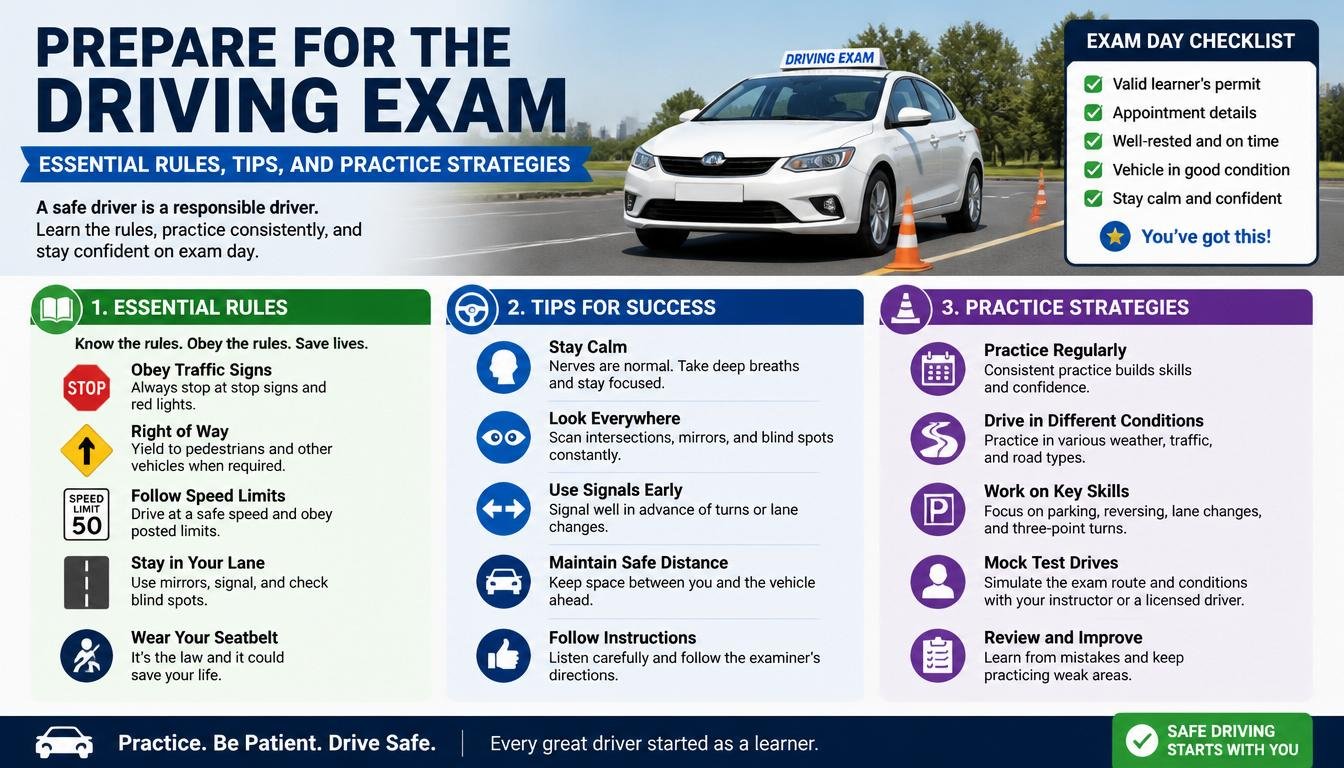
The passage of the driving test is a significant event for which comes independence and responsibility. But being able to drive a car is not enough for success. Students need to know the rules of the road, learn proper driving techniques, and practice, practice, practice before taking the driving test. The chances of passing the test on the first attempt can be greatly improved with proper preparation.
There are a lot of first-timers who are nervous before they take their driving test since they are not quite sure what to expect. The best way to deal with this fear is to get ready. Candidates are more likely to perform well if they have a good understanding of the testing process and adequate practice. The benefit of the time spent in PREPARE is that it increases confidence and allows important skills to be completely developed before the driving exam.
Practice Regularly and Consistently
Driving is a process that can be learned with practice and experience. Regular learners get more at ease dealing with diverse traffic circumstances and road conditions. Practicing in a variety of locations, such as residential streets, busy intersections, and highways (where they are allowed), will help candidates prepare for the driving exam.
Being exposed to a variety of driving situations increases adaptability and enhances decision-making skills. Regular driving practice also enables drivers to get used to parking skills, lane changing, and emergency skills. These skills are often assessed in practical assessments and are very significant in the overall assessment of performance.
Understanding the Driving Exam
The purpose of a driving test is to determine if a candidate can safely drive a car and adhere to traffic rules. There are several skills assessed by the examiner, such as vehicle control, road awareness, decision making, and adherence to traffic regulations. Typically, the test is a combination of written and practical questions. The theory section assesses the understanding of road signs, traffic regulations, and safe driving. The part of the test that assesses skills in a real driving situation. Candidates should concentrate on both equally to be successful in Preparing for the driving exam.
Learn Essential Traffic Rules
Knowing the traffic rules is one of the key components in the preparation for the exam. Examiners are looking for drivers to show knowledge of road signs, lane discipline, speed limits, and right-of-way rules. Candidates need to carefully read through the official driving handbook and know local traffic laws. Road signs and signals are familiar to drivers, enabling them to make safe decisions while driving. It is also beneficial to have a strong theoretical knowledge to do well in the written part of the exam.
Develop Safe Driving Habits
Safe driving practices will not only help you pass the exam, but will also help you to become a safe driver. Practice enables the learner to create a routine to increase the level of safety and confidence when operating a motor vehicle.
- Always look before changing lanes in traffic.
- Keep a distance from other cars.
- Make proper and consistent use of turn signals.
- Always respect speed limits.
- Concentrate and do not distract yourself when driving.
- Carefully obey traffic signs and road markings.
They are good driving habits and will improve candidates’ performance in practical tests.
Managing Nervousness on Test Day
Too many candidates get anxious when it comes time to take their driving test, which is why they’re not performing up to their full potential. When people are nervous, they can make simple errors that they might not have otherwise made. One of the most effective ways to minimize stress and boost self-confidence is to be well-prepared. Candidates can keep themselves calm by getting adequate rest prior to the exam, appearing early, and maintaining a positive attitude.
When learners know that they have prepared and practiced for a long enough period, they will have a healthy sense of confidence. Remember that examiners are looking for safe and responsible driving, not perfection. Minor errors may not have a significant impact on failure if the candidate shows overall competence and awareness.
Common Mistakes to Avoid
Even if a candidate is well-prepared, there is a possibility of him or her committing a mistake during a driving test. Knowing common mistakes helps the learners not to make such mistakes in the actual exam
.
- Not looking at the rear and side mirrors before driving.
- Excessive speeds or idling of a vehicle.
- Not using appropriate communication when changing direction.
- Failure to follow the stop sign through a stop sign.
- Not maintaining proper lane position.
- Distracted by stress and/or external factors.
With these pitfalls avoided, the chance of passing the test successfully can be greatly enhanced.
Benefits of Proper Preparation
By devoting time and effort to preparing for the driving exam, students not only learn to pass a test, but they also take the time to build a solid foundation for driving. They learn skills that will help them to be safe and responsible drivers throughout their lives. The more one is prepared, the more confident, the better decision-making, and the more aware of potential hazards. These benefits continue long after the examination is complete.
Well-prepared candidates are likely to be safer, more responsible drivers throughout their lives. Through regular practice, learning, and positive attitudes, students can pass the driving test successfully and be confident when they take the test.
FAQs
How many times do you need to practice driving before you take the test?
The amount of practice required depends on the individual and local needs. For most learners, a few weeks of regular instruction in various driving conditions proves most effective.
What kind of documents do I need to take to the driving test?
What is required differs from place to place, but identification, learner permits, and any required application or registration paperwork are usually required.
What are the top reasons for failing a driving test?
Typical issues include a lack of observation, traffic sign issues, inappropriate lane choice, speeding, and not being confident with maneuvers.
What can I do to lower my stress level before my driving test?
Good preparation, good sleep, early arrival, and a positive attitude can help to minimize stress and enhance performance in the test.
Do they consider the theory test as important as the practical test?
Yes. Both sections are relevant as they test two different aspects of driving ability. Being knowledgeable about traffic regulations is an important aspect of safe driving.
Conclusion
Safe driving takes practice, commitment, and an understanding of traffic laws. If candidates study regularly and practice driving, then they can significantly increase their chances of passing the driving test. Knowing right from wrong, knowing what to avoid, and knowing how to drive safely can help learners pass with confidence and also set the groundwork for safe driving in the future.